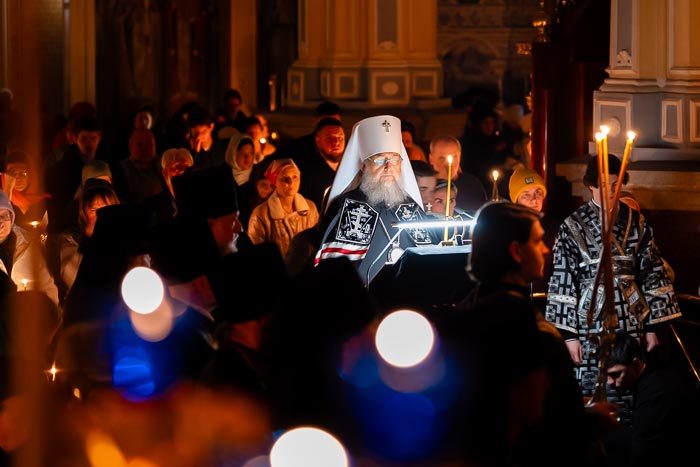
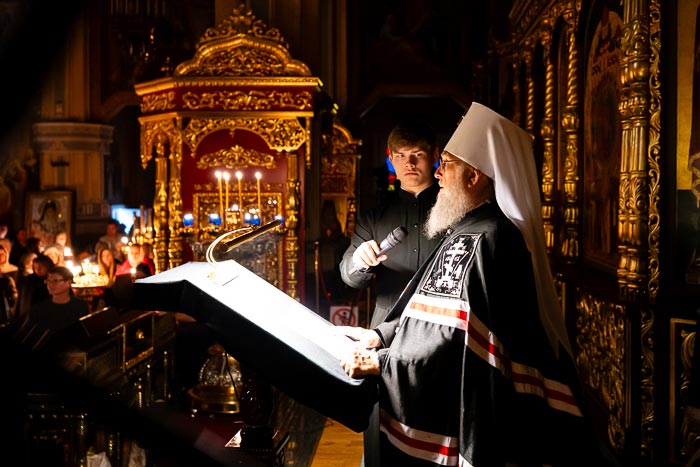
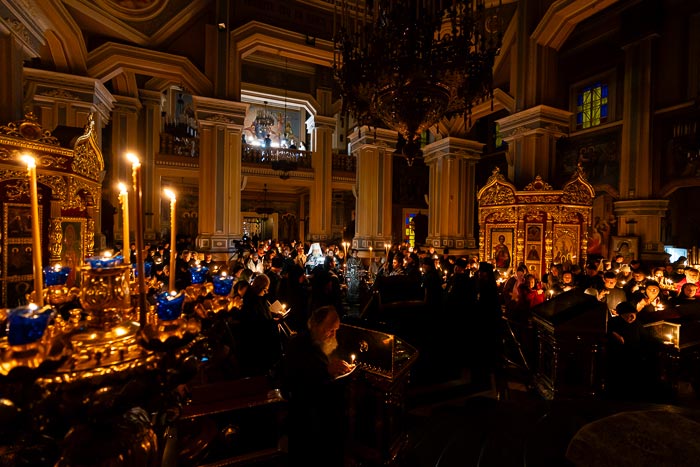
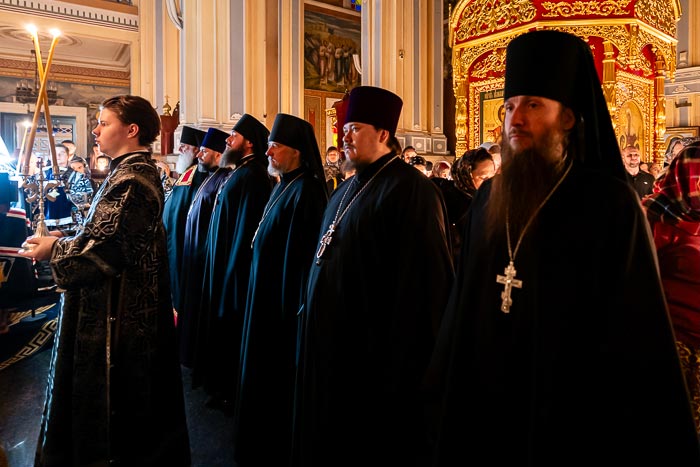
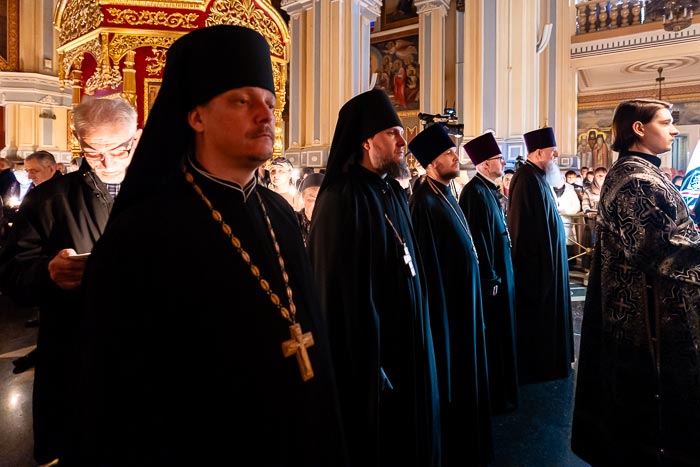
On 25 February 2026, Wednesday of the first week of Great Lent, the Head of the Orthodox Church of Kazakhstan, Metropolitan Alexander of Astana and Kazakhstan, continued the reading of the Penitential Canon of St Andrew of Crete at the Ascension Cathedral of the city of Almaty.
On Wednesday, several troparia in honor of Venerable Mary of Egypt are added to the Great Canon, she who turned from profound spiritual fall to lofty piety.
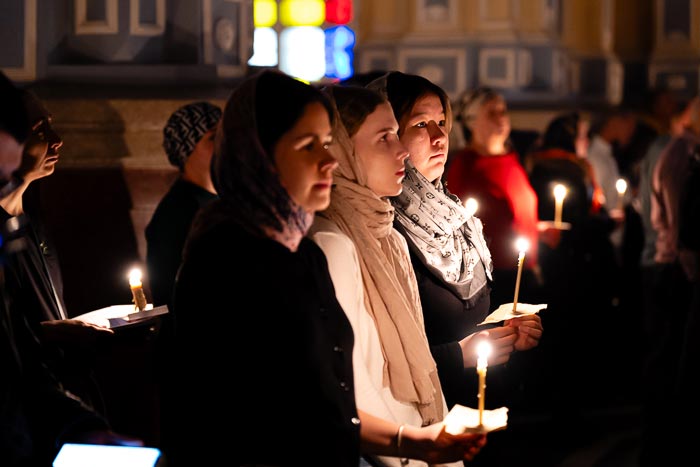
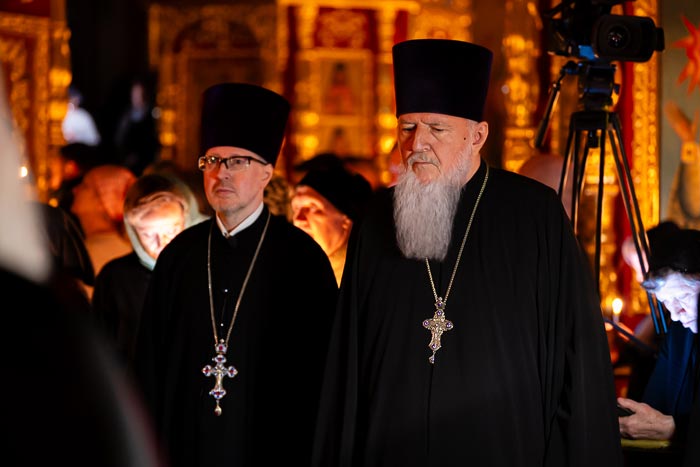
Praying at the service were heads of departments of the Metropolitan District, clergy of the Ascension Cathedral, staff of the Almaty diocesan administration and parishioners.
After the reading of the Canon, the Primate of the Orthodox Church of Kazakhstan addressed those gathered with words of instruction.
The hymns of Compline were sung by the choir of the Metropolitan District under the direction of Honored Artist of Russia O.N. Ovchinnikov and the choir of the Ascension Cathedral under the direction of E. Boguslavets.
A live broadcast of the reading of the Canon of St Andrew of Crete was carried on the YouTube channel of the Kazakhstan Metropolitan District “Semirechie.”
On Thursday, Metropolitan Alexander will complete the reading of the Penitential Canon of St Andrew of Crete in the principal church of the Southern capital.
“On Clean Wednesday the third part of the Penitential Canon of St Andrew of Crete is read. The imagery and richness of its poetry, the succession of events and figures from biblical history, the loftiness of thought, the depth of feeling and the power of expression—all these qualities make the Penitential Canon an outstanding work of Orthodox hymnography. The evening services at which the Canon is read in churches are among the most important services of the entire church year. It is heartening that the majority of Orthodox Christians understand the importance of attending these services.
Today our churches are filled with those at prayer. It is noteworthy that in ancient Constantinople there existed a tradition of reading the Penitential Canon of St Andrew not only during Great Lent but also on days when the city was threatened by danger—during natural disasters, earthquakes or invasions of enemies. The inhabitants of the Byzantine capital clearly understood that human sins bring about various misfortunes and tragedies, and that deliverance from calamities is possible only through the people’s repentance for an unrighteous way of life.
The Canon of St Andrew teaches us repentance, which is understood not as a momentary regret for bad deeds but as the complete rebirth of the soul, the healing of human nature through divine grace. The examples of biblical righteous and sinners become a means of awakening the soul to repentance. Every person praying in the church compares himself with them. The Canon consists of nine odes. In the first eight, Old Testament images are examined—from the first man Adam, who sinned in paradise, to the Prophet Daniel. The purpose of these examples is to show the sinner the desperate state in which he finds himself and to set before him two paths—the path of destruction and the path of salvation. The latter is possible only through a firm resolve to offer God deep and sincere repentance.
Terrible is the path of destruction. Today, on Wednesday, we recalled Old Testament sinners who did not find within themselves the strength to turn to God. In one of the troparia we hear: ‘With hardened character and darkened mind I have become like Pharaoh the cruel, and Jannes and Jambres—in soul and body. But do Thou Thyself help me, O Master.’ In this text the soul is called to fear the deeds of Pharaoh and the pagan Egyptian magicians Jannes and Jambres, who opposed the will of God and sought by magic to resist the Prophet Moses. This is the path of sinners. Let us fear to set foot upon it.
In contrast to the path of sinners stands the path of righteous life, the path of obedience to God. Hearing another troparion, we are transported to the time of the Prophet Elijah: ‘The heaven has been shut for thee, O soul, and the famine of God has overtaken thee, as once it was when Ahab did not obey the words of Elijah the Tishbite; but be like the widow of Zarephath.’ Here a person is urged not to follow the example of the impious King Ahab, who, having become an idolater, persecuted the Prophet Elijah, but to imitate the pious widow of Zarephath in Sidon, who gave shelter to the man of God. Attending to the instruction of the Penitential Canon, the soul acquires the resolve to turn away from the path of destruction and firmly to stand upon the path of righteous life.” From the sermon of Metropolitan Alexander.
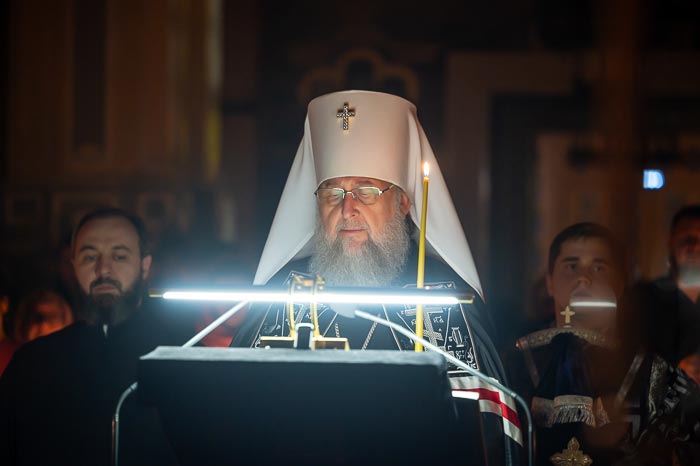
The reading of the Penitential Canon of St Andrew of Crete was concluded during the first week of Great Lent
More details
A meeting was held between the Head of the Orthodox Church of Kazakhstan and the Akim of Almaty, D.A. Satybaldy
More details
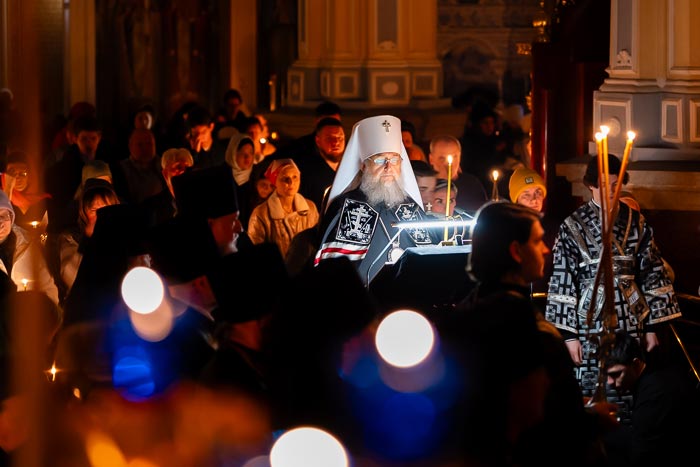
On Wednesday of the first week of Great Lent, the Head of the Orthodox Church of Kazakhstan continued the reading of the Penitential Canon of St Andrew of Crete at the Ascension Cathedral of Almaty
More details




 Main
Main



Login or register, to write a comment!
Your comment has been successfully added and is currently being reviewed by the site administration