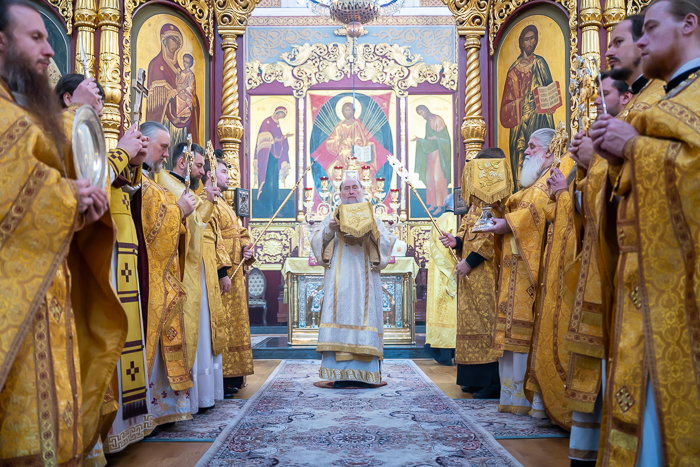
22 February 2026 – Cheesefare Sunday, the commemoration of the Expulsion of Adam, Forgiveness Sunday; the day of remembrance of St. Tikhon, Patriarch of Moscow and All Russia.
In the Synaxarion appointed for this Sunday it is said: “On this day we make remembrance of the expulsion of our forefather Adam from the Paradise of sweetness, which our divine Fathers established before the beginning of the holy Forty Days, thereby showing how beneficial for human nature is the medicine of fasting and, conversely, how grievous are the consequences of love of pleasure and disobedience.”
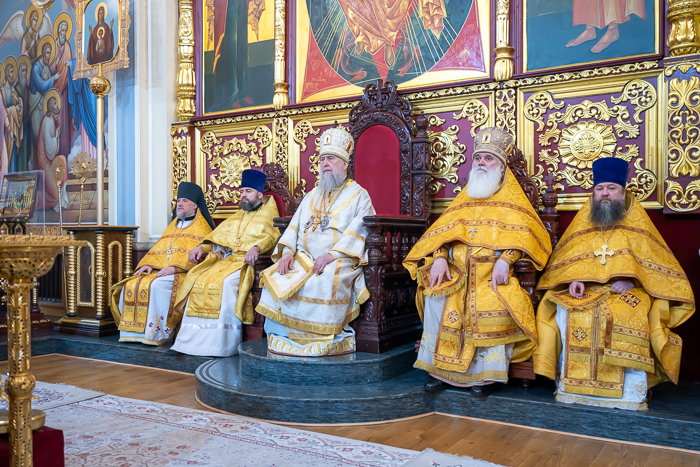
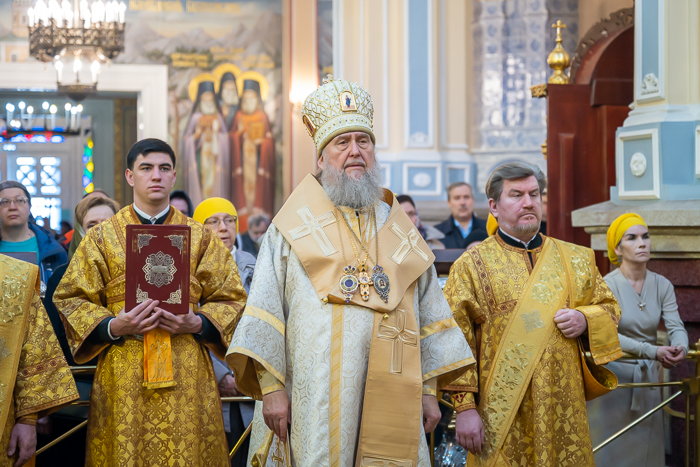
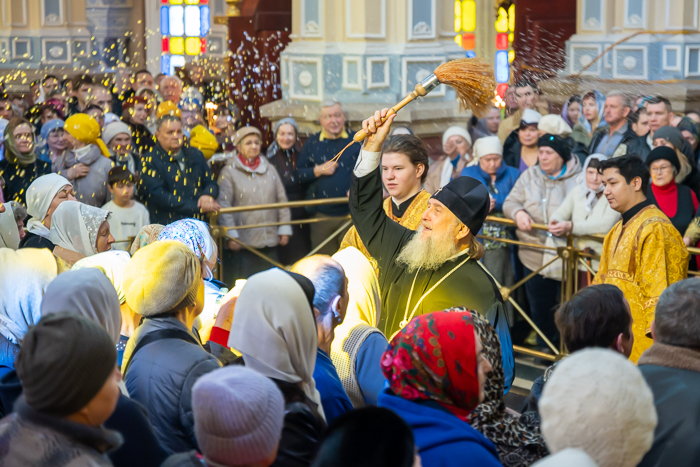
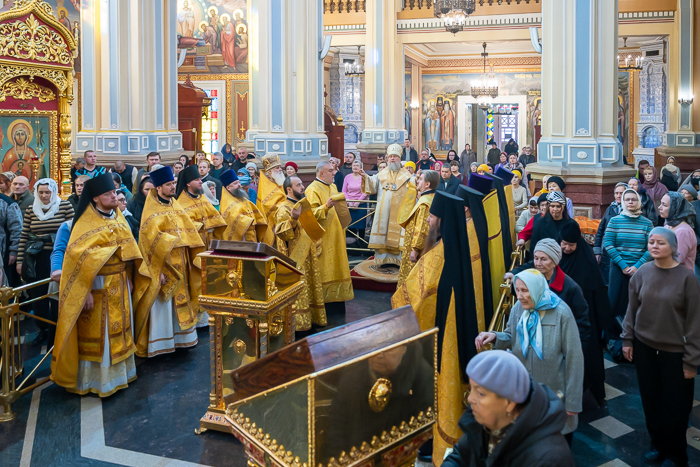
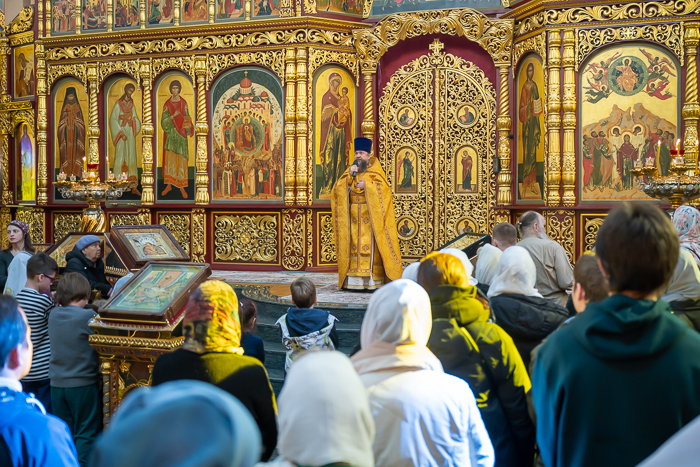
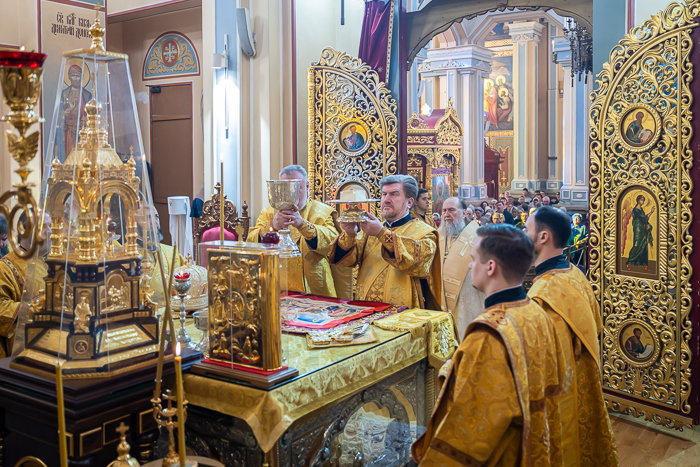
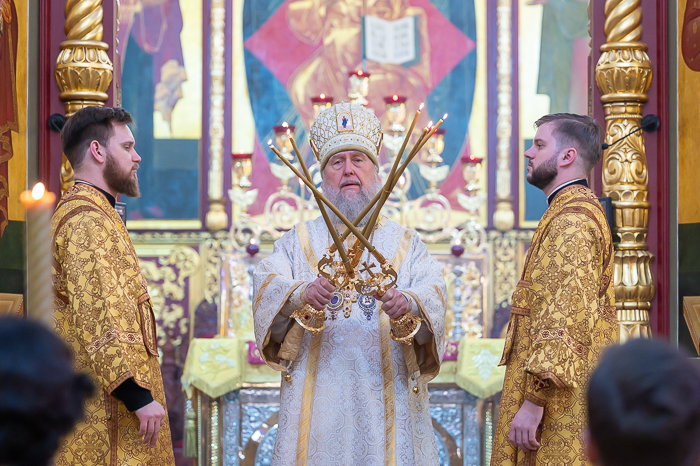
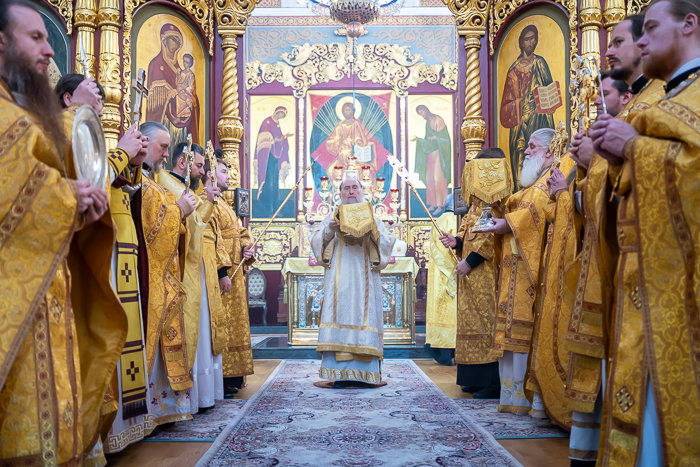
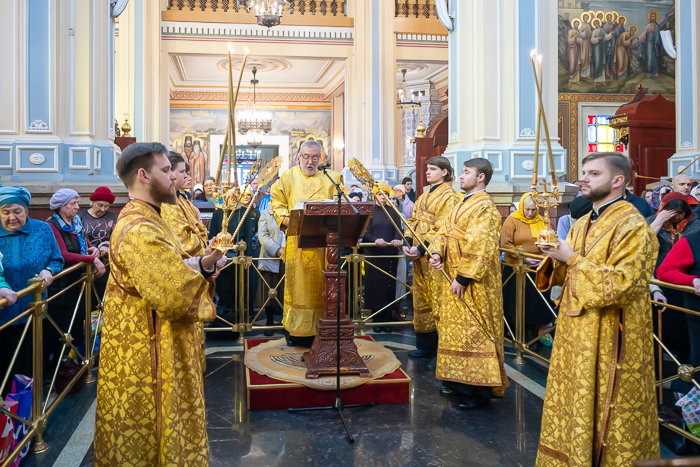
Metropolitan Alexander of Astana and Kazakhstan celebrated the Divine Liturgy at the Ascension Cathedral in the city of Almaty.
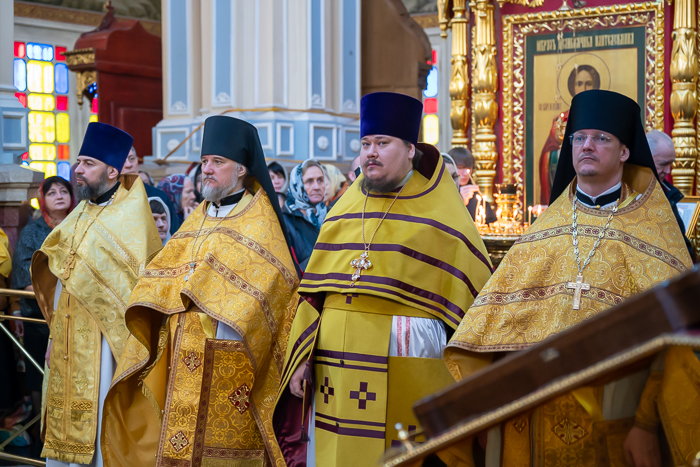
Concelebrating with the Head of the Kazakhstan Metropolitan District were Archimandrite Iosif (Yeremenko), sacristan of the cathedral; Archpriest Alexander Suvorov, head of the Department for Public Relations of the Metropolitan District; Archpriest Evgeny Ivanov, rector of the Almaty Theological Seminary and head of the Information and Publishing Department of the Metropolitan District; Hieromonk Roman (Chistyakov); Hieromonk Onisim (Tulnikov); Hieromonk Prokhor (Endovitsky), head of the Metropolitan’s personal secretariat; Priest Georgy Sidorov, head of the Administrative Secretariat of the Head of the Metropolitan District; Priest Ioann Livinsky, vice-rector for educational work of the Almaty Seminary; Hieromonk Cherubim (Levin); Hieromonk Paisius (Tishakov); Protodeacon Nikolai Grinkevich; Protodeacon Roman Golovin, head of the Metropolitan’s protocol service; Protodeacon Vladimir Syrovatsky; Deacon Vitaly Bystrushkin; Deacon Alexander Piven; Deacon Ioann Zhuchkov; Deacon Georgy Tkachenko.
The hymns of the Liturgy were sung by the choir of the Metropolitan District under the direction of O.N. Ovchinnikov, Honored Worker of Arts of Russia, and the choir of the Ascension Cathedral under the direction of E. Boguslavets.
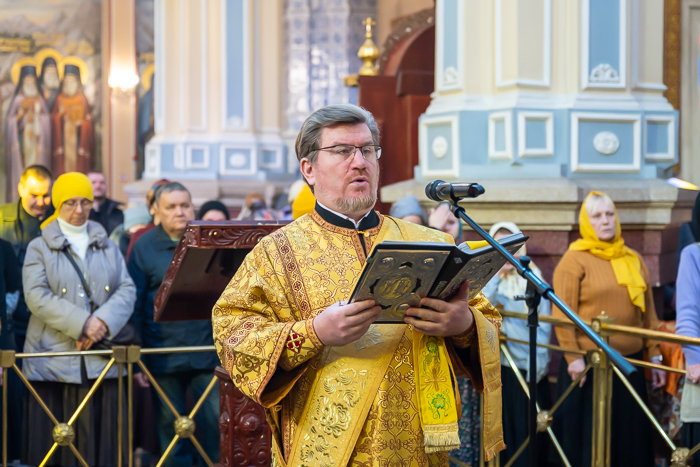
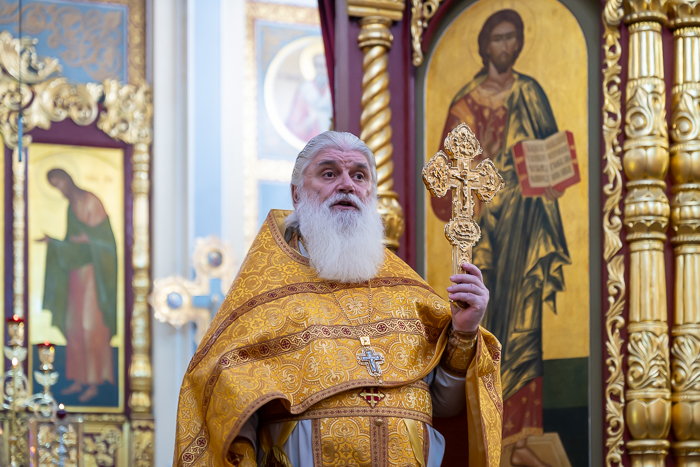
The sermon after the Communion verse was delivered by Archpriest Evgeny Ivanov.
At the conclusion of the service, the Head of the Metropolitan District addressed those gathered with a word of archpastoral instruction.
“By the mercy of God we enter upon the saving arena of Great Lent. For every Orthodox Christian there begins a special period, determined by Sacred Tradition for preparation to meet the ‘feast of feasts and triumph of triumphs’ – the radiant Resurrection of Christ. In the routine of daily life we forget that ‘our citizenship is in heaven’ (Phil. 3:20). Each year the arrival of the saving Lenten days grants us the opportunity to return to the ‘path of life’ (Ps. 15:11), to awaken from sleep and cast off the works of darkness (cf. Rom. 13:11–12). This is fostered both by the calendar season of the holy Forty Days – the ‘springtime of the soul,’ coinciding with the awakening of nature – and by the particular penitential character of all the services. During Great Lent the very atmosphere of the churches calls us to grieve over sinful deeds and thoughts, to reflect upon the correction of our life according to the Gospel commandments: compunctionate and extended chants are heard, the lighting is subdued, the clergy vest in dark vestments, prostrations are frequently made and penitential prayers repeatedly offered, and admonitory passages from the Old Testament are read. Of special significance in the gracious influence upon the human soul are the Great Penitential Canon of St. Andrew of Crete, which opens the evening services of the first four days of the Fast, and the prayer of St. Ephraim the Syrian, ‘O Lord and Master of my life.’ The Liturgy of the Presanctified Gifts, celebrated on Wednesdays and Fridays of the Forty Days, is filled with extraordinary inner beauty. Therefore, in order that Great Lent may bring tangible benefit to the soul, it is necessary to be in church as often as possible and to participate in common prayer, and above all to approach diligently, with a broken and contrite heart (Ps. 50:19), the sacraments of Confession and Holy Communion. This is especially important today, when the rapid pace of life and the ever-increasing worldly bustle darken the human mind, hinder reflection on the meaning of life, and impede spiritual growth. St. John Chrysostom says: ‘The soul is the most important thing in us.’ Overcoming various temptations, real and imagined difficulties, we must set aside time for the renewal of the inner man (cf. 2 Cor. 4:16), find moments and hours for prayer at home and in church, for reading the Holy Gospel, for reflection upon the writings of the holy Fathers, and for active help to our neighbor. ‘For what shall it profit a man, if he gain the whole world, and lose his own soul?’ (Matt. 16:26), the Savior warns us. The seven weeks of Great Lent are the time when we are called to correct our relationship with God, with ourselves, and with our neighbor, to set everything in accordance with the wise order originally established by the Creator. Through the observance of the Fast, with its rules and disciplines, we learn, according to the Gospel word, to render ‘to God the things that are God’s’ (Matt. 22:21) and to ‘please our neighbor for his good, unto edification’ (Rom. 15:2).” From the sermon of Metropolitan Alexander.
On Cheesefare Sunday Metropolitan Alexander Celebrates the Liturgy at the Principal Church of the Southern Capital
More details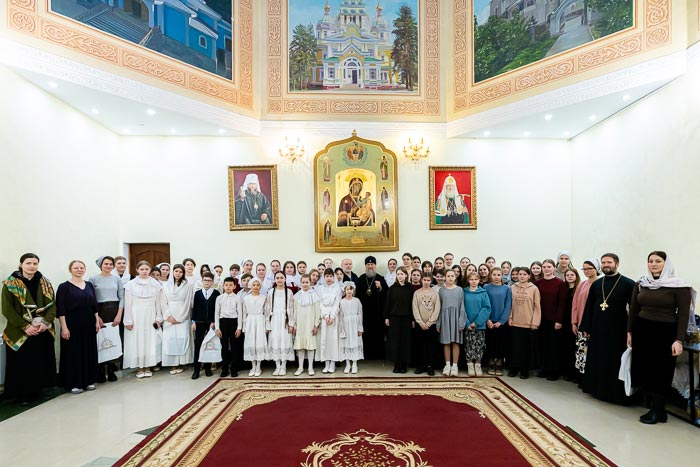
Metropolitan Alexander Meets with the Moscow Children’s and Youth Choral Studio “Tsarevich” and Choirs of Sunday Schools of Almaty and the Almaty Region
More details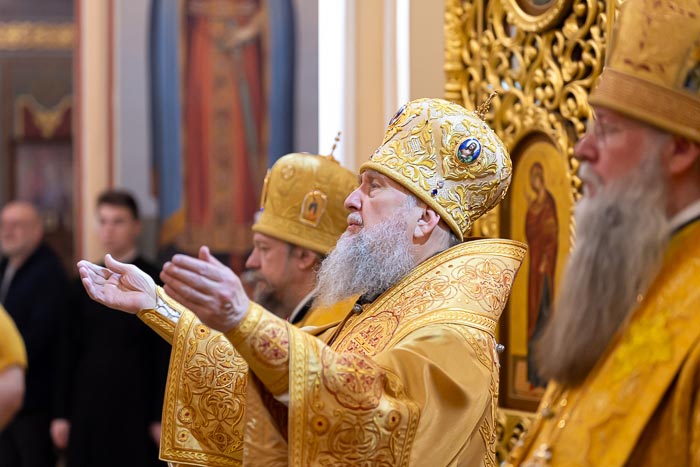
Children’s Divine Liturgy Celebrated at the Ascension Cathedral of the Southern Capital
More details



 Main
Main


Login or register, to write a comment!
Your comment has been successfully added and is currently being reviewed by the site administration