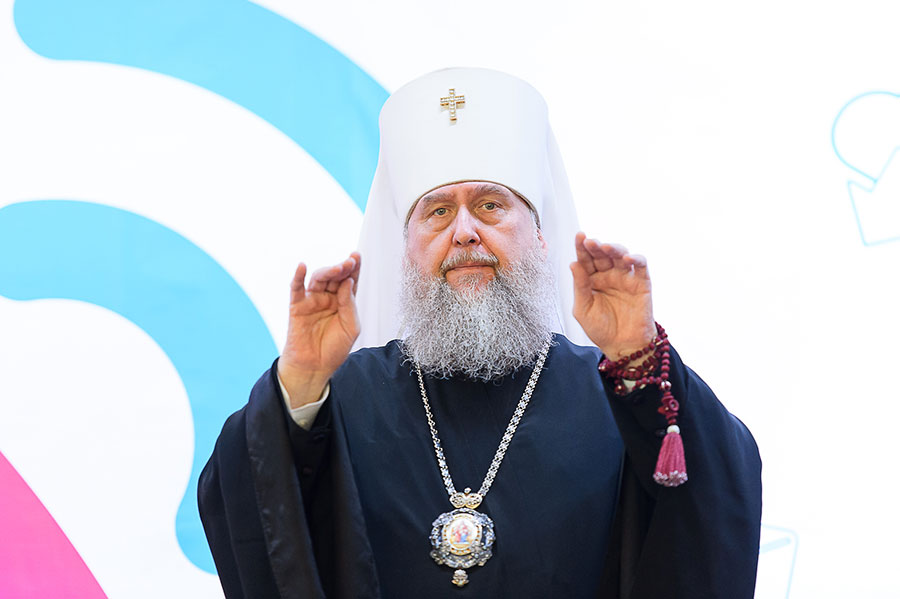
Your Graces, Reverend Fathers, dear brothers and sisters,
I warmly greet the organizers and participants of the Eurasian Orthodox Youth Forum “Sky. Man. Steppe.”
It is a great joy that, during this wonderful summer season, young men and women from different countries have gathered here for fellowship and shared work. They represent diocesan youth organizations and have come together with their spiritual mentors. We are also pleased to welcome the leadership of the Synodal Department for Youth Affairs of the Russian Orthodox Church, along with distinguished representatives of the Church and public life. I am confident that, thanks to their participation, the forum’s program will be not only fruitful but also engaging and inspiring.
Our youth gathering would not have been possible without the support of our benefactors. I wish to express heartfelt gratitude to the Eleos-Meirim Public Foundation, headed by its President V.M. Kapsamun, for its active role in preparing and organizing this forum.
Meeting with young people is always a special joy for me. We are all Orthodox Christians, believers united as brothers and sisters in Christ. There is no need to persuade one another to embrace the faith or to convince each other of the difference between good and evil. We share the same convictions. Therefore, what I wish to say today is not intended as instruction or admonition, but as a sincere sharing of my own life experience and reflections on issues that concern us all.
The modern world presents us with a complicated and often confusing picture. We live in a new reality shaped by an immense flow of information. For that reason, it is essential to develop an inner filter that enables us to reject what is unnecessary and to approach information with discernment. For Christians, that filter is the voice of conscience, strengthened by the centuries-old experience of the Church.
Allow me to offer a simple piece of advice about using the internet and other sources of information by recalling a well-known parable told by St. Paisios the Athonite.
“A meadow was filled with beautiful flowers—fragrant lilies, hyacinths, and irises. Bees worked among them, gathering nectar. A fly also happened to arrive there. A young bee, visiting the meadow for the first time, politely asked the fly, ‘Could you tell me where the white lilies are blooming?’ The fly replied, ‘I haven’t seen any flowers here. But nearby there’s a wonderful muddy ditch.’
At that moment an older bee flew over. Hearing the conversation, she said with surprise, ‘I have never noticed any muddy ditch here. But I can gladly tell you where the lilies, irises, and hyacinths are growing. There are so many beautiful and fragrant flowers!’ ‘You see,’ Father Paisios would say, ‘the poor fly thinks only about muddy ditches, while the bee knows where the flowers are. So it is in life: some people resemble the bee and seek what is good in everything, while others resemble the fly and search only for what is bad.’ Then the Elder would ask: ‘And which do you want to be—a fly or a bee?’”
One of the principal themes of our forum is the role of artificial intelligence in personal and public life. Humanity is rapidly embracing digital technologies, and the Church has a responsibility to reflect upon these developments in the light of the Gospel.
Technological achievements are the fruit of God’s gift to humanity and the unfolding of the creative talents He has bestowed upon us. In themselves they are morally neutral. They may serve either good or evil. A surgeon’s knife can save a person’s life, while the same knife in the hands of a criminal may become an instrument of destruction. Likewise, modern information technologies can make life easier and enrich society, yet they can also become tools of abuse, theft, or even destruction when placed in the hands of those who misuse them.
In closing, I would encourage you to value the experience of genuine, personal encounters rather than living only in a virtual world. Never allow the screen of a smartphone to become so dominant that it prevents you from seeing the beauty of the world around you and the people beside you.
Remember also one of the fundamental principles of Christian life: the ability to rejoice and to give thanks to God. Christianity fills the human person with tremendous spiritual strength. It truly liberates the soul, raises us above the passing circumstances of the present age, and opens before us the magnificent perspective of eternal life.
Joy and thanksgiving arise from trust in the Lord. It is no coincidence that the Church’s greatest Mystery—the Most Holy Eucharist—literally means “thanksgiving.” We gather together as the Body of Christ to give thanks to our Creator and Provider, because He leads us through this earthly life in such a way as to help us attain eternal life and enter His heavenly Kingdom.
Thank you for your attention. I wish all participants of the forum every success and a fruitful time together.
I invoke God’s blessing upon each one of you, my dear brothers and sisters.
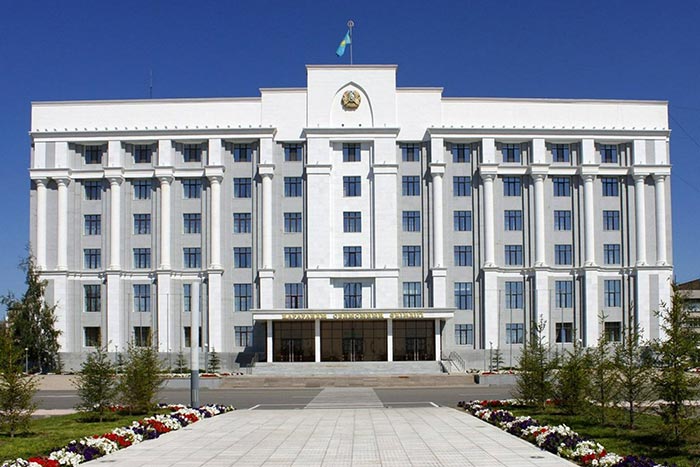
Participants in the Celebrations Marking the Bringing of the Relics of St. Spyridon to Kazakhstan Met with Karaganda Region Akim Y.K. Bulekpayev
More details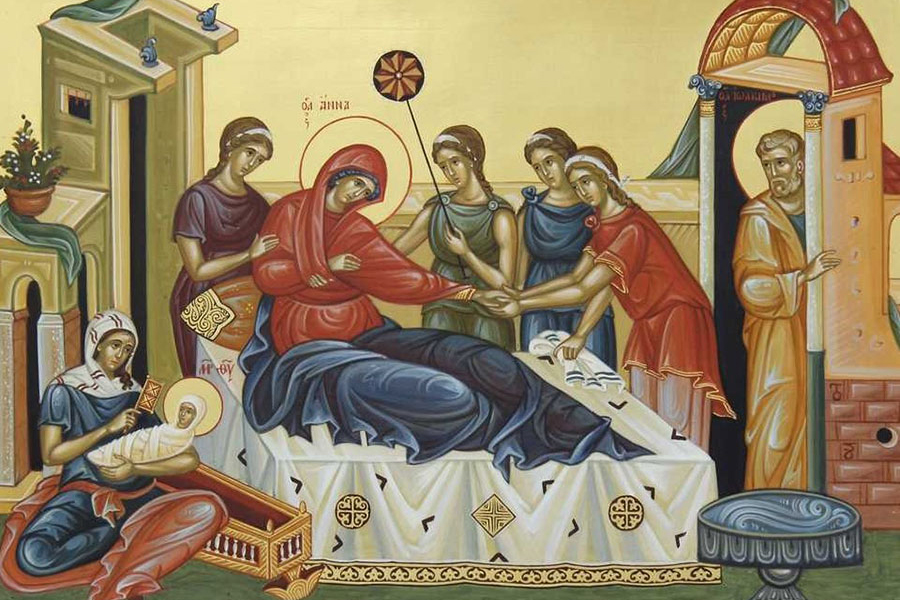
Metropolitan Alexander Celebrates the Liturgy at the Holy Trinity–St. Sebastian Cathedral in Karaganda on the Feast of the Nativity of the Most Holy Theotokos
More details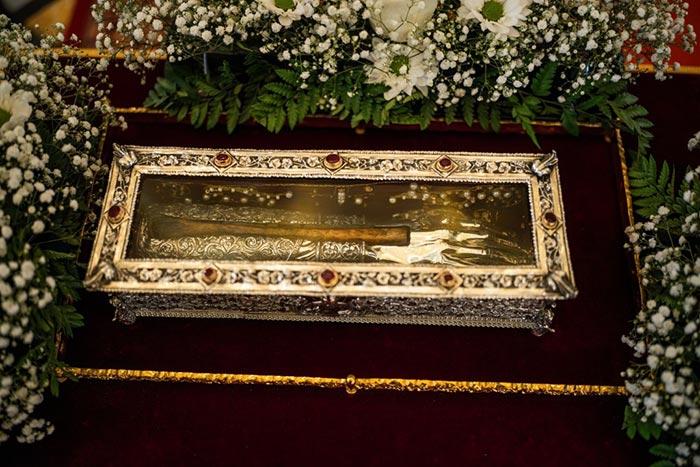
Kazakhstan Welcomes a Great Orthodox Shrine – the Incorrupt Right Hand of St. Spyridon of Trimythous
More details




 Main
Main


Login or register, to write a comment!
Your comment has been successfully added and is currently being reviewed by the site administration