May 17, 2026 – the 6th Sunday after Pascha, “of the Blind Man”; commemoration of the Martyr Pelagia, Virgin of Tarsus.
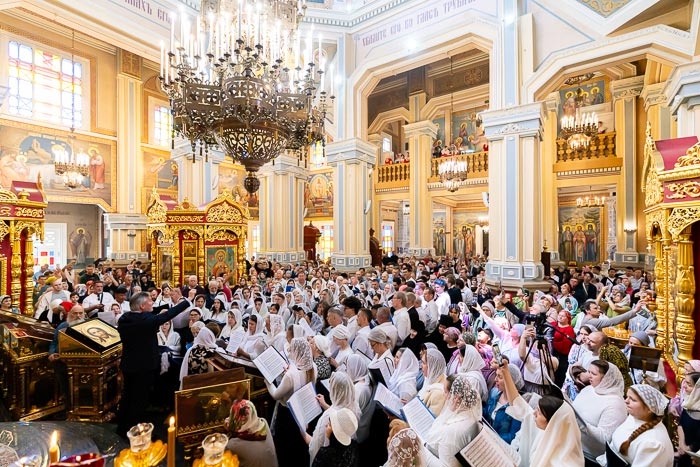
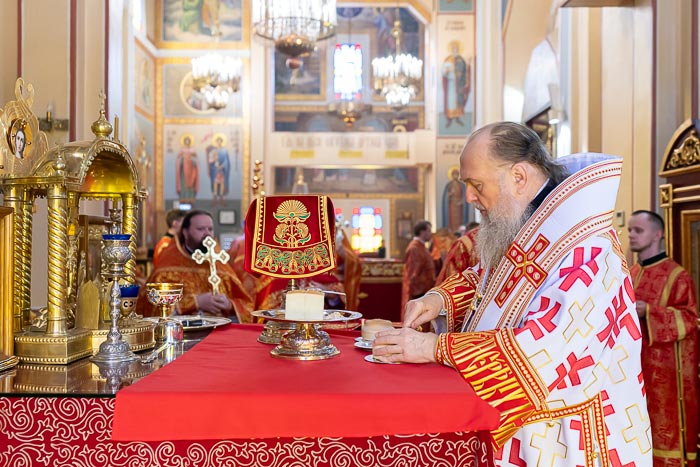
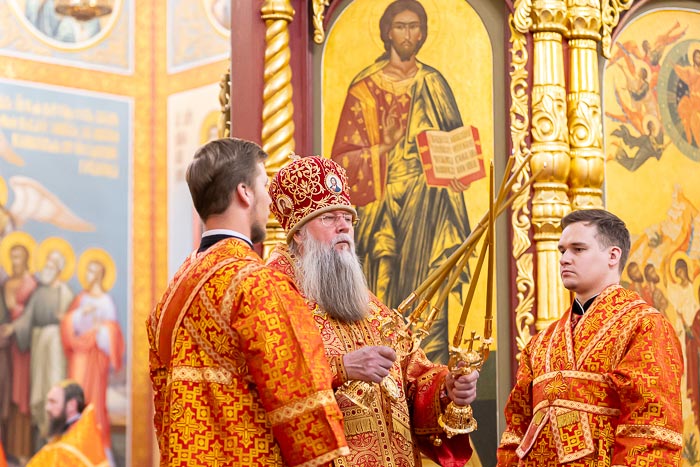
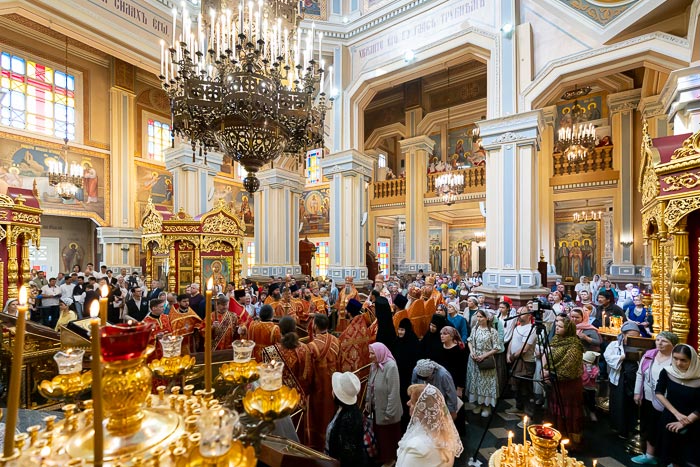
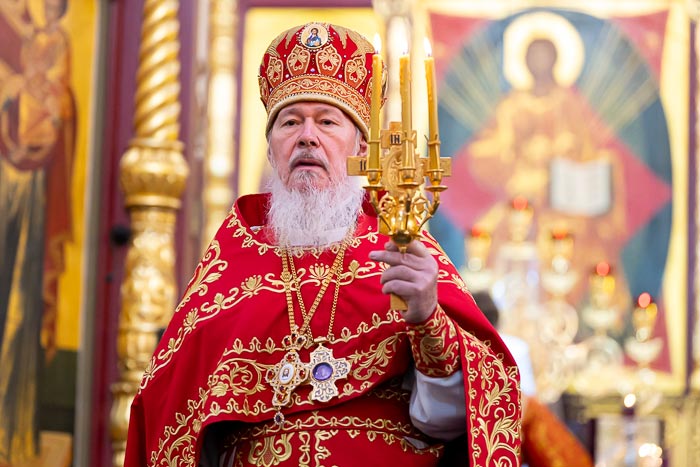
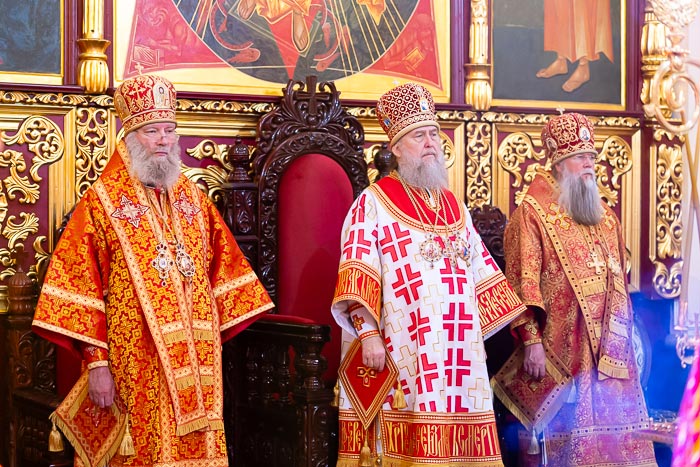
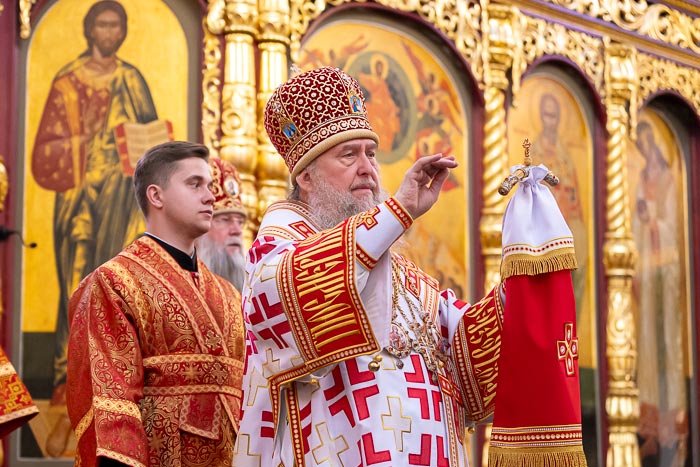
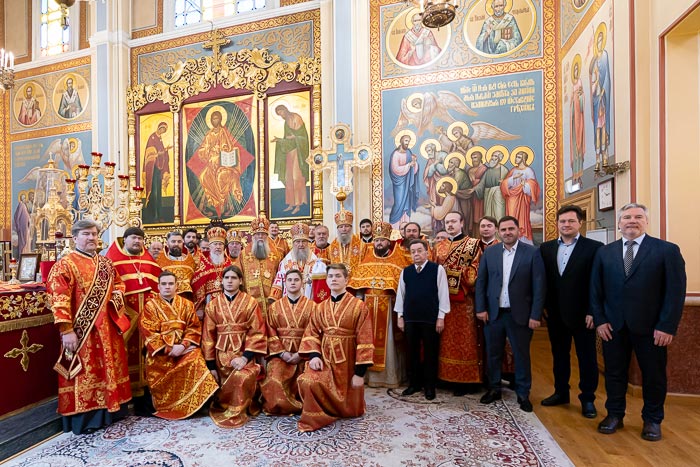
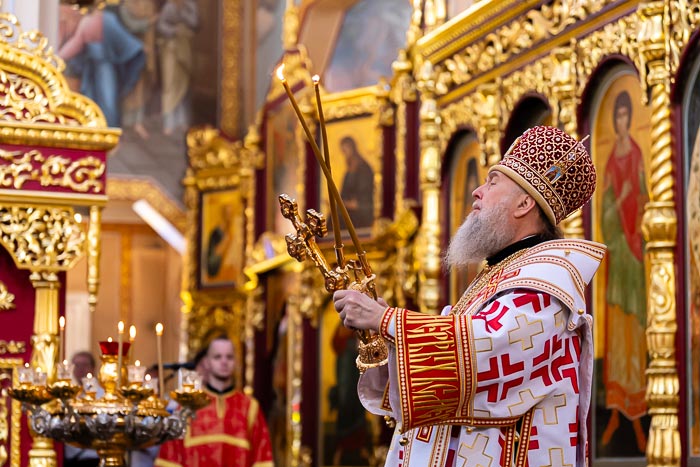
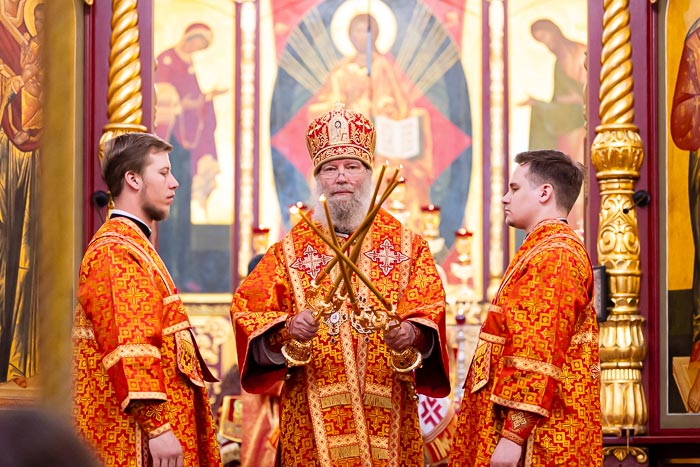
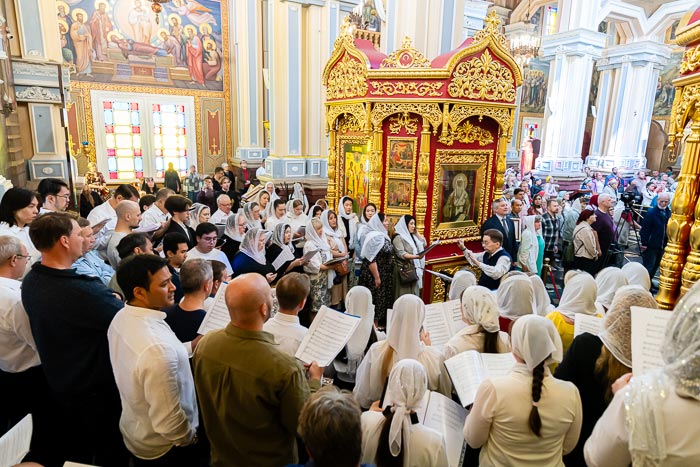
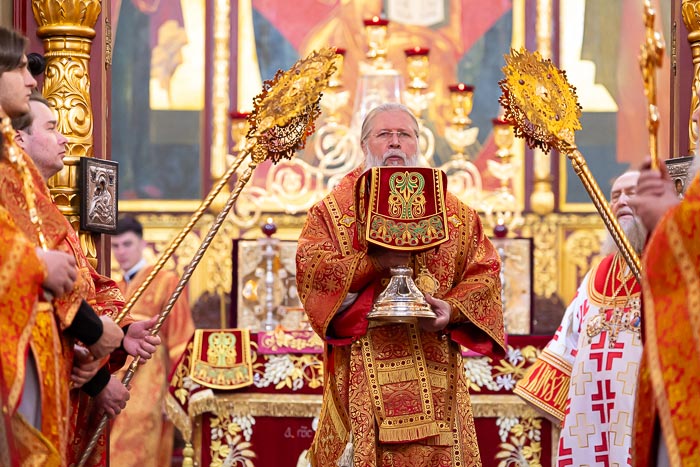
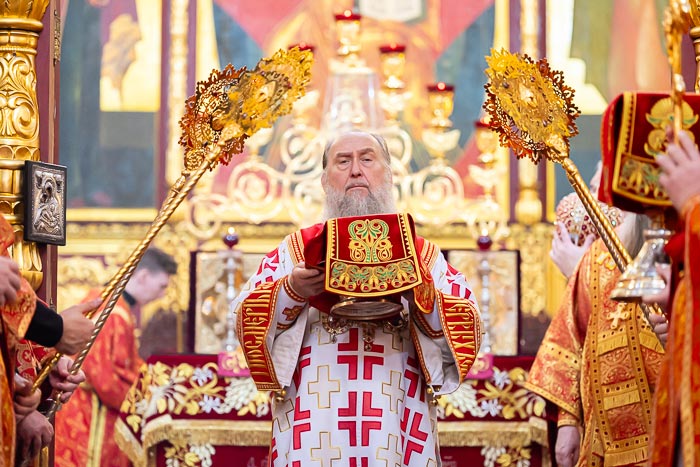
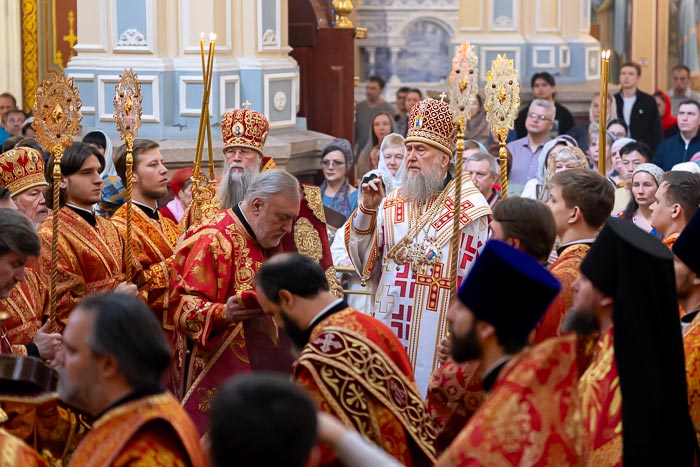
Metropolitan Alexander of Astana and Kazakhstan celebrated the Divine Liturgy at the Ascension Cathedral of Alma-Ata.
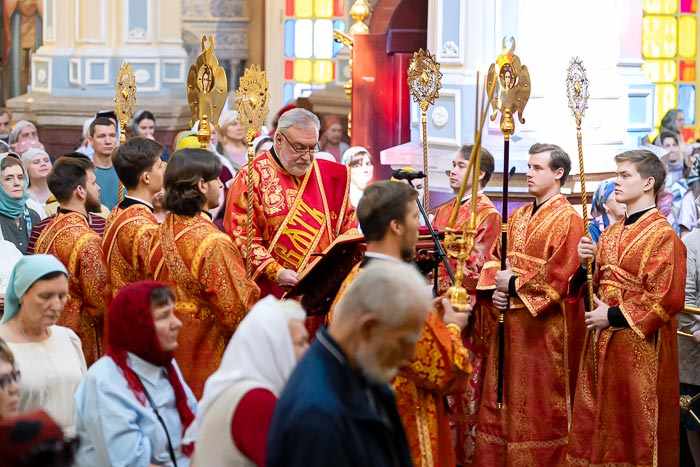
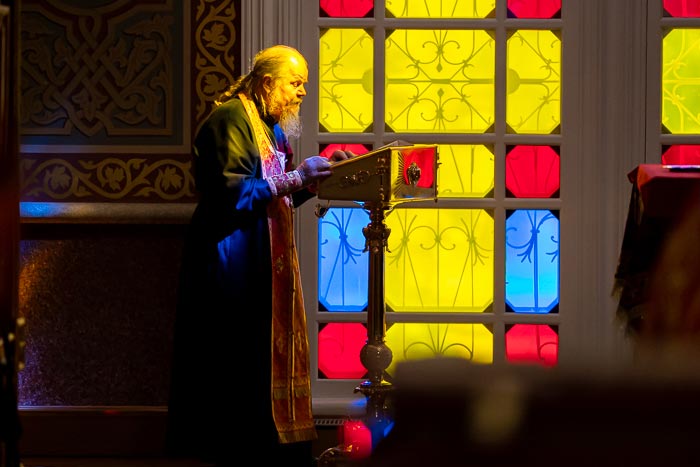
Concelebrating with the Primate of the Orthodox Church of Kazakhstan were: the vicars of the Astana diocese, Bishop Claudian of Taldykorgan and Bishop Benjamin of Talgar; dean of the churches of the Southern Capital and rector of St. Nicholas Cathedral Archpriest Valery Zakharov; Archimandrite Gerontius (Borisevich); rector of the Church of the Icon of the Mother of God “Joy of All Who Sorrow” in Alma-Ata Archpriest Evgeny Vorobyov; head of the diocesan department for the canonization of saints Archimandrite Joseph (Eremenko); keykeeper of the Ascension Cathedral and head of the Metropolitan District’s Department for Relations with Society Archpriest Alexander Suvorov; secretary to the Head of the Metropolitan District Hieromonk Dimitry (Baidek); Archpriest Dimitry Sidorov; head of the Metropolitan’s secretariat Hieromonk Prokhor (Yendovitsky); head of the administrative secretariat of the Head of the Metropolitan District Priest Georgy Sidorov; rector of Kazan Cathedral of Alma-Ata Priest Georgy Rublinsky; Protodeacon Nikolai Grinkevich; head of the Metropolitan’s protocol service Protodeacon Roman Golovin; Protodeacon Vladimir Syrovatsky; Deacon Andrey Pleten; Deacon Vitaly Bystrushkin; Hierodeacon Sophronius (Mazurenko); Deacon Alexander Piven; Deacon Ioann Zhuchkov; and Deacon Georgy Tkachenko.
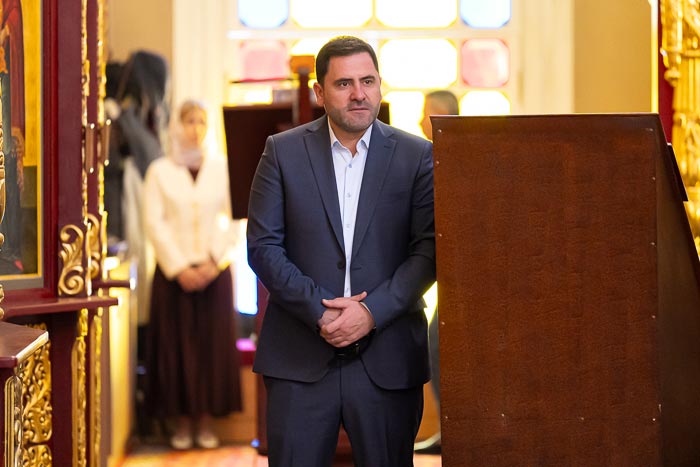
Praying during the service were: President of the public foundation “Eleos-Meirim” V.M. Kapsamun; staff of the Alma-Ata diocesan administration, students of the Alma-Ata Orthodox Theological Seminary, and numerous parishioners.
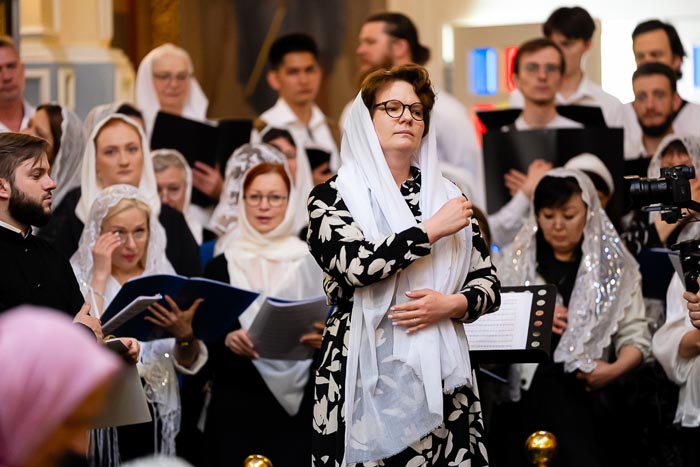
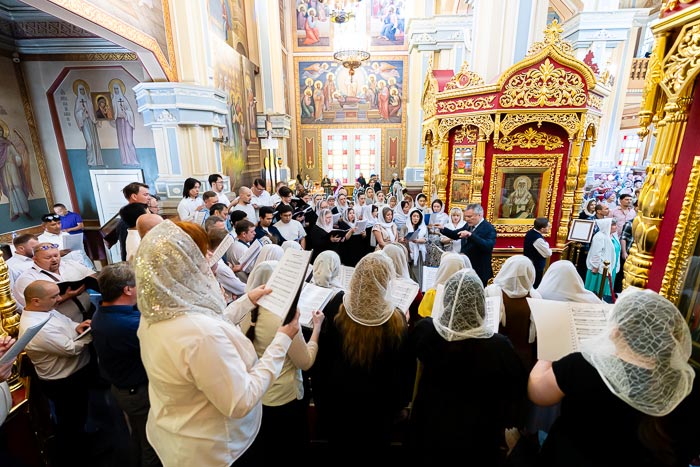
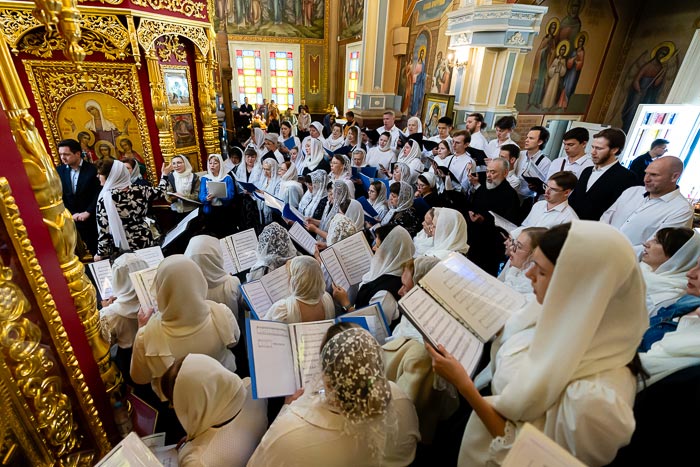
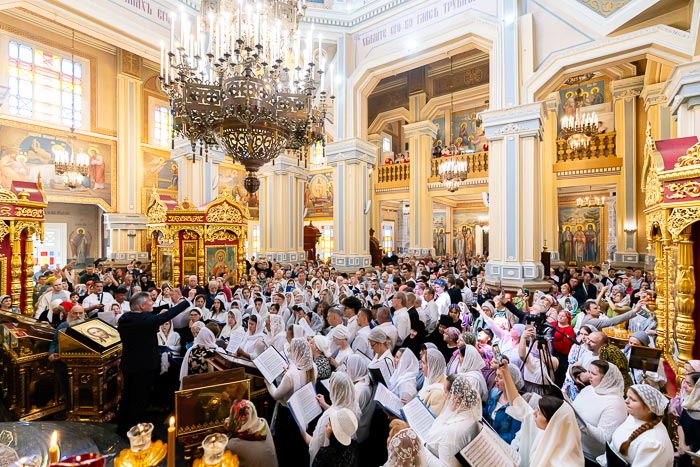
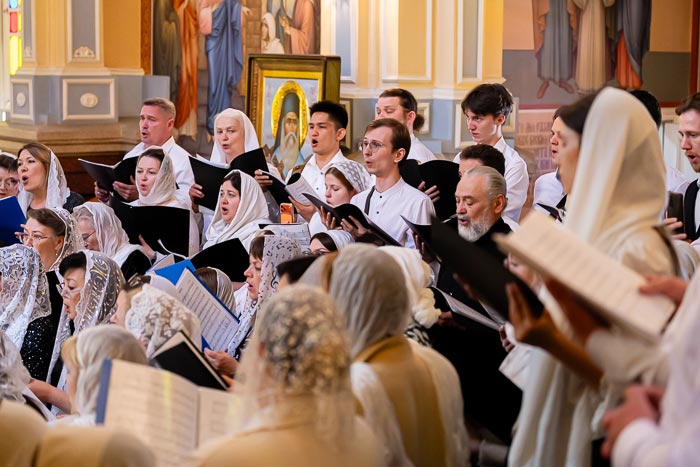
A distinctive feature of this воскресное богослужение was the participation in the Liturgy of the singers gathered for the international festival “Paschal Hymn.” Choirs from all dioceses of the Metropolitan District, together with guests from Russia, arrived in the Southern Capital of Kazakhstan for the choral forum, held with the blessing of His Holiness Patriarch Kirill of Moscow and All Rus’.
The festival, like other cultural, educational, youth, and outreach projects of the Orthodox Church of Kazakhstan, is conducted with the charitable support of the public foundation “Eleos-Meirim,” headed by President V.M. Kapsamun.
The combined choir of 150 singers was directed by members of the Patriarchal Church-Public Council for the Development of Russian Church Singing: regent of the Choir of the Metropolitan District, Honored Artist of Russia O.N. Ovchinnikov; artistic director and chief conductor of the Moscow Synodal Choir, Honored Artist of the Russian Federation A.A. Puzakov; regent of the Moscow Epiphany Cathedral in Yelokhovo A.K. Mayorov; and regent of the “Artos” Choir of the Church of St. Sergius of Radonezh in Solntsevo, Moscow, V.A. Volkova.
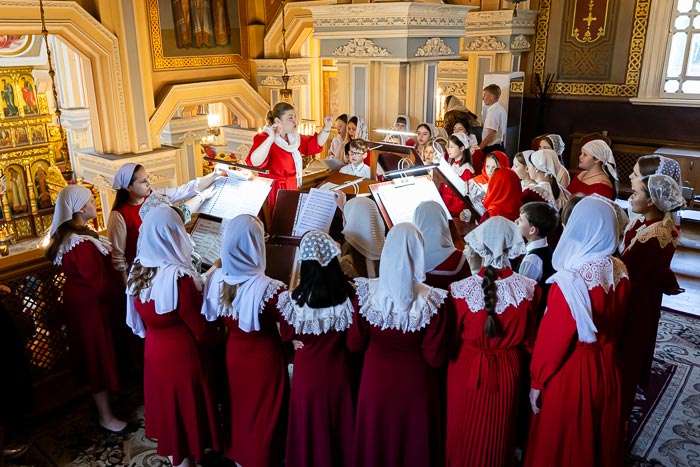
Joining the combined choir at the Liturgy was a united children’s choir of Alma-Ata Sunday schools under the direction of N.O. Golovina.
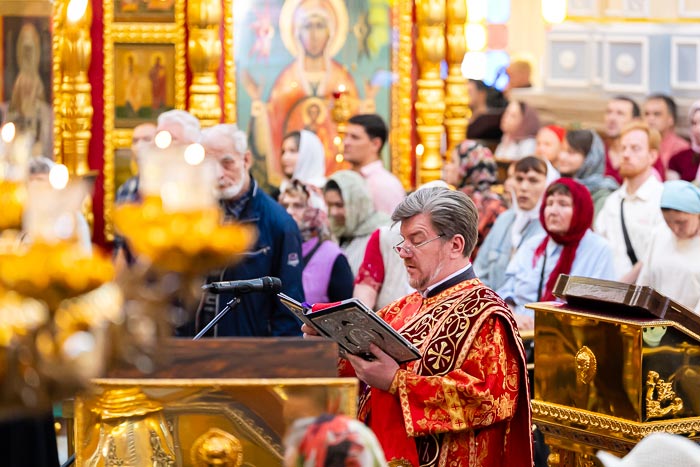
The sermon after the Communion verse was delivered by Archimandrite Joseph (Eremenko).
At the conclusion of the Liturgy, the Paschal glorification took place – the clergy, combined choir, and faithful sang the stichera of Holy Pascha, after which Metropolitan Alexander proclaimed “Christ is Risen!” in various ancient and modern languages.
Many Years was proclaimed for His Holiness Patriarch Kirill of Moscow and All Rus’, Primate of the Russian Orthodox Church; for the Head, hierarchs, clergy, monastics, and flock of the Metropolitan District; and for the President, authorities, armed forces, and people of Kazakhstan.
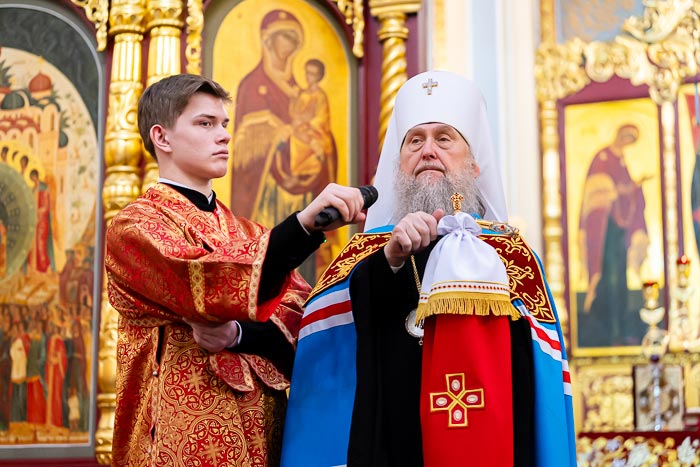
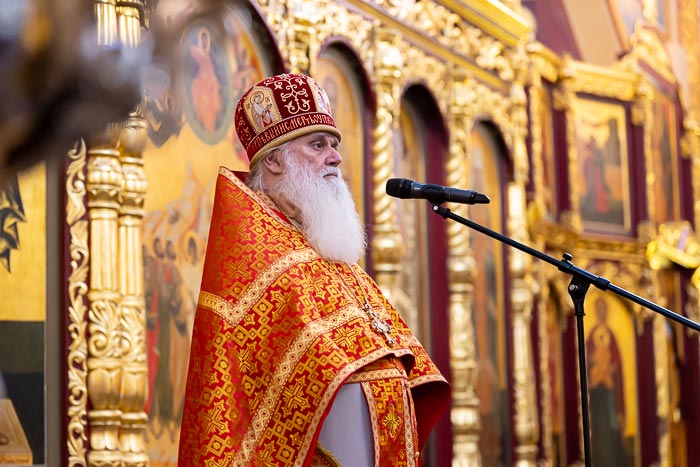
His Eminence congratulated the hierarchs, clergy, and laity on the Lord’s Day – the “little Pascha” – and offered words of instruction.
The Head of the Metropolitan District thanked the singers for their labors and the high quality of their performance of sacred works. Metropolitan Alexander noted that church choral singing plays an important role in preserving Orthodox traditions in the country, unites active believers in both urban and rural parishes, and especially engages young people.
“Just as iconography is called ‘theology in colors,’ so church music may rightly be called ‘theology in sounds.’ Singing, which has resounded in Orthodox churches from the most ancient times to the present day, is a wonderful means of awakening a person from indifference and spiritual sloth, inspiring spiritual labors, and contributing to the renewal of mind and heart. ‘If the sea is beautiful during the surf,’ writes St. Basil the Great, ‘is not divine worship far more beautiful, when, like a wave striking the shore, the single voice of men, women, and children rises to God in prayer?’ Over many centuries of history, the Orthodox Church has gathered an extraordinarily rich treasury of sacred musical heritage, including ancient Byzantine melodies, the distinctive chants of monastic communities, and the works of outstanding composers who harmonized medieval chants and created unique original compositions. It is heartening that today there is a living interest in Orthodox musical culture among children and youth, that church singing is taught in parish Sunday schools, and that choirs are being formed, participating in liturgical life alongside adults. May God grant that this aspect of spiritual enlightenment continue to develop actively. I wish all who have taken part in our choral gathering ‘Paschal Hymn,’ and especially the young singers, continued creative success, and for all of us – a deep and sincere love for the Church of God.”
Video coverage of the Metropolitan’s service was provided by the television studio of the Kazakhstan Metropolitan District “Semirechye” (director – Honored Worker of Culture V.L. Posadneva); photography was carried out by A. Shcheglov of the information department.
To mark the conclusion of the musical forum, Metropolitan Alexander hosted a festive reception.
From Metropolitan Alexander’s sermon:
“Today at the Divine Liturgy we heard a passage from the Acts of the Apostles – the account of the miraculous release of Christ’s disciples Paul and Silas from prison. The jailer, the chief guard, who first witnessed the fervent midnight prayer of the apostles, and then the earthquake that opened the prison doors and inexplicably freed the prisoners from their chains, turns to Paul and Silas with the central question of his life. Sooner or later, such a question arises before every thinking person. Bowing before the heralds of the Gospel, the guard asks: ‘What must I do to be saved?’ And he hears a simple yet all-encompassing answer: ‘Believe on the Lord Jesus Christ, and you will be saved, you and your household.’ The man sincerely sought the meaning of existence, and the Lord revealed to him, through apostolic instruction, the path to Truth, opening before him the doors of salvation and pointing him to the life-giving light of faith.
‘What could be harsher, what more severe than a jailer?’ asks St. John Chrysostom, reflecting on today’s apostolic reading. Yet even this hard-hearted man, having believed, rejoiced and received Baptism together with all his household, with his whole family.
The theme of spiritual enlightenment and faith in Christ – the true Light, enlightening and sanctifying every person – continues in the Gospel reading. The Apostle John the Theologian tells us of the Lord’s healing of a man blind from birth. The Savior granted the ability to see the material light and the surrounding world to one who from his mother’s womb had been deprived of this great blessing. Yet no less significant was the miracle that this restoration of sight became a step toward spiritual vision. He believed in the Son of God, while the scribes and Pharisees, proud of their knowledge of the Law and acquainted with the finest details of Scripture and Tradition, remained spiritually blind, despite the fact that their physical eyes could see.
Today the Word of God teaches us that only faith in the Lord Jesus Christ grants salvation unto eternity, heals the spiritual eyes darkened by sin, and illumines the Christian path like bright rays of sunlight, helping us clearly discern spiritual realities, distinguish good from evil, truth from falsehood, and the eternal from what is vain and passing.”





 Main
Main


Login or register, to write a comment!
Your comment has been successfully added and is currently being reviewed by the site administration