August 28, 2026 – the Great Feast of the Dormition of Our Most Holy Lady Theotokos and Ever-Virgin Mary.
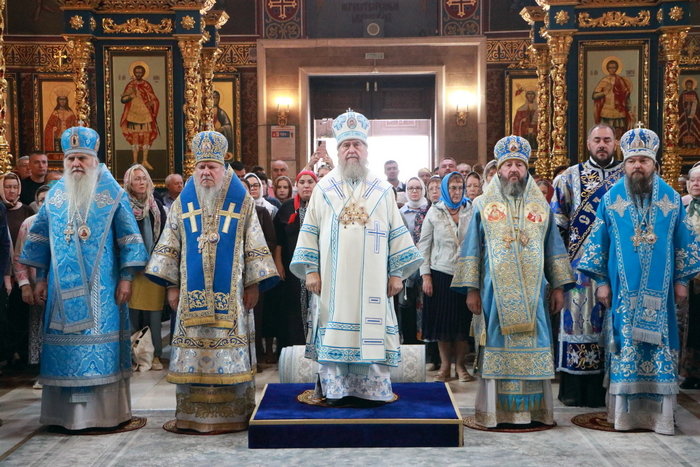
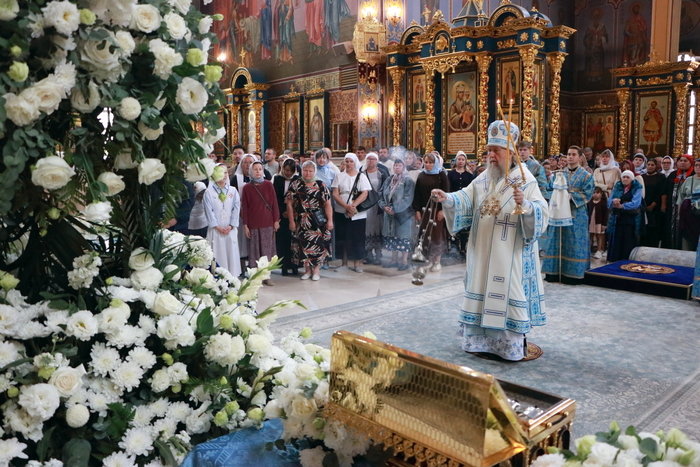
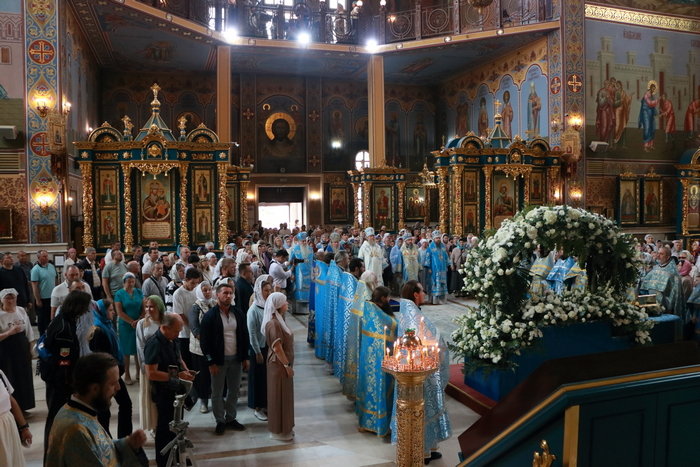
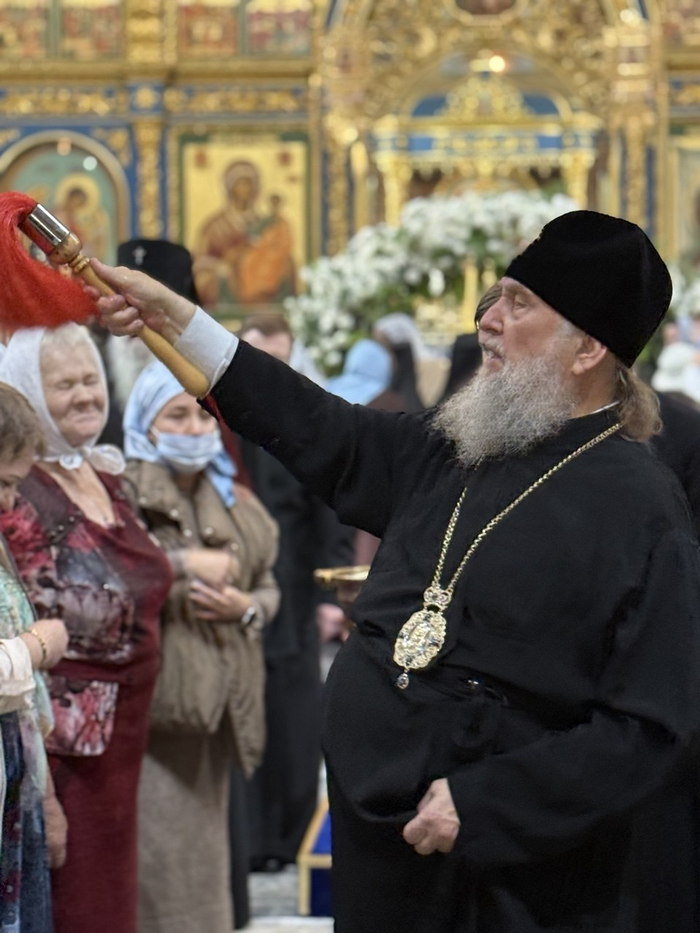
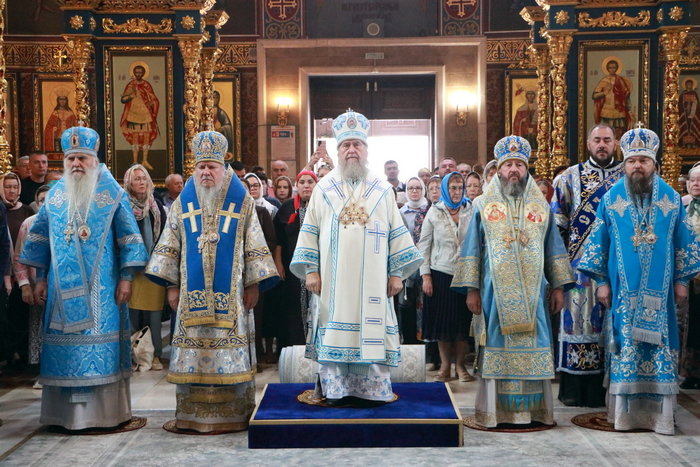
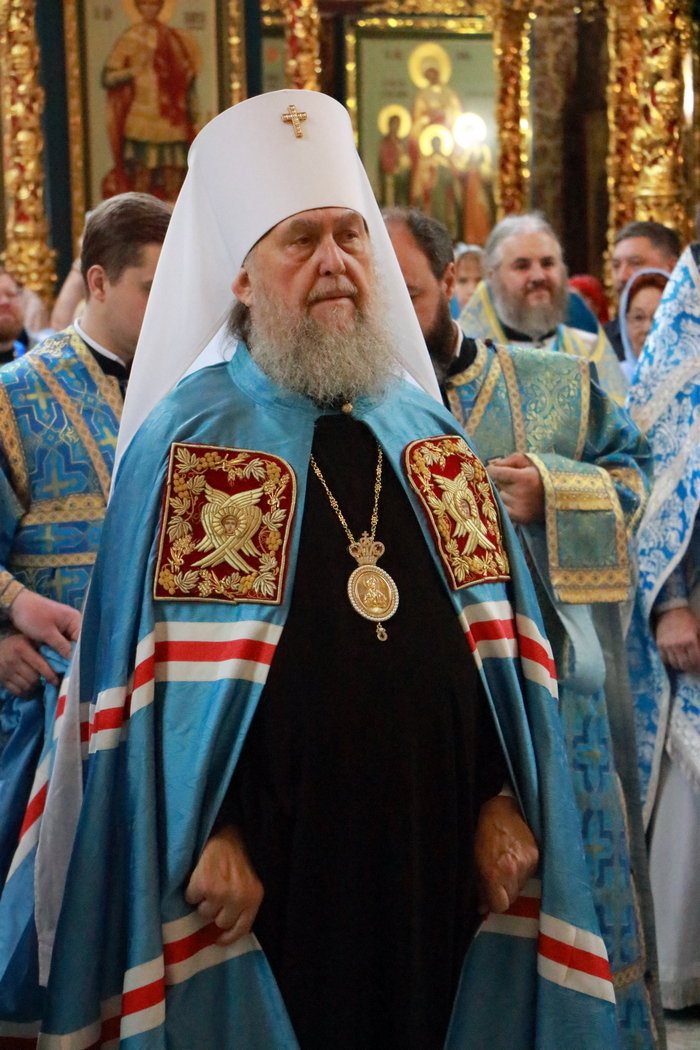
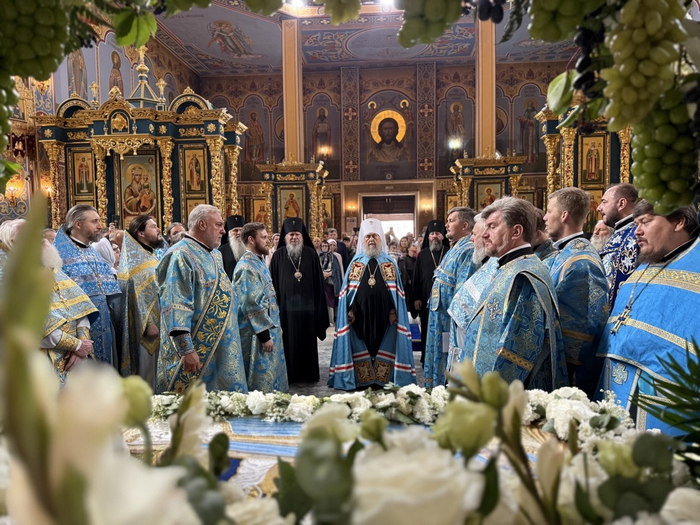
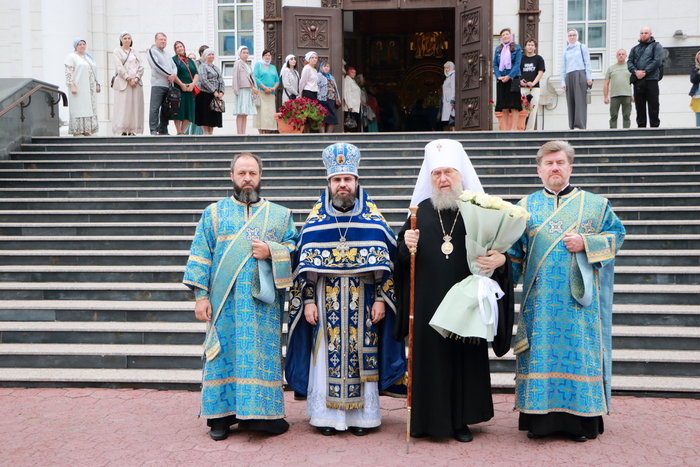
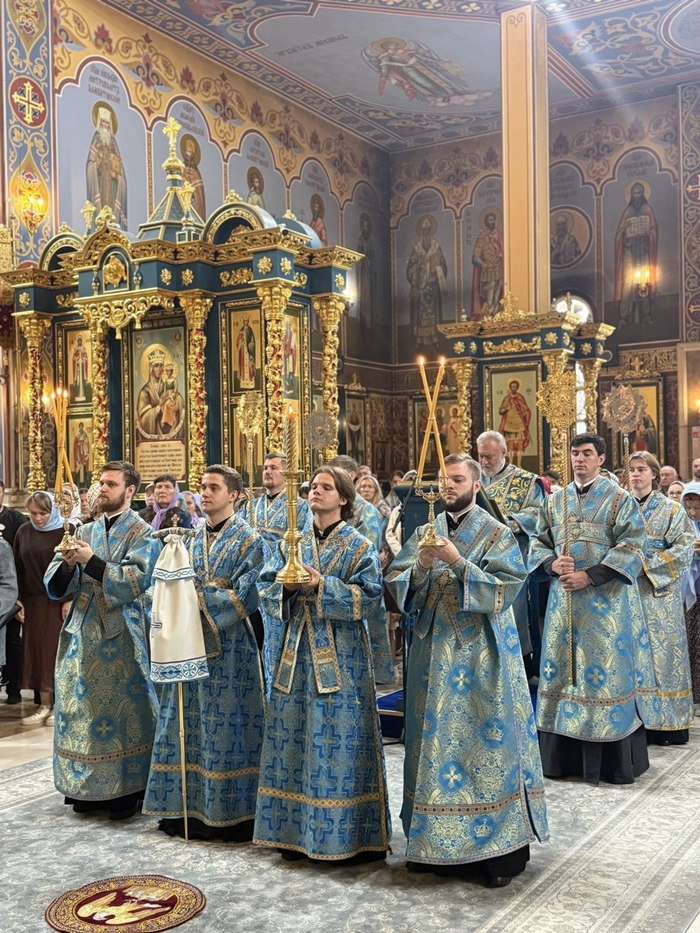
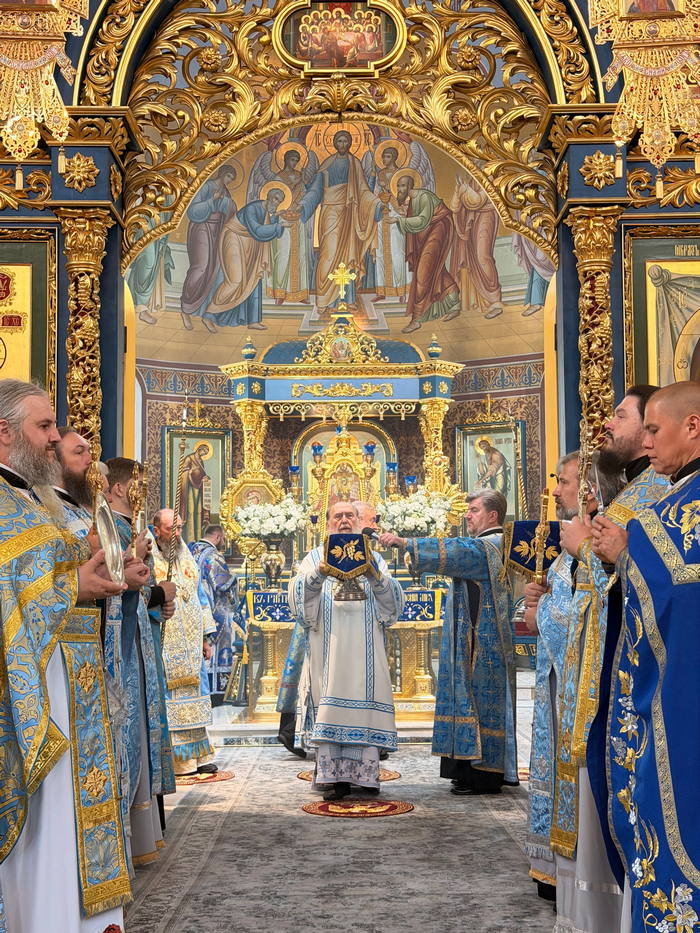
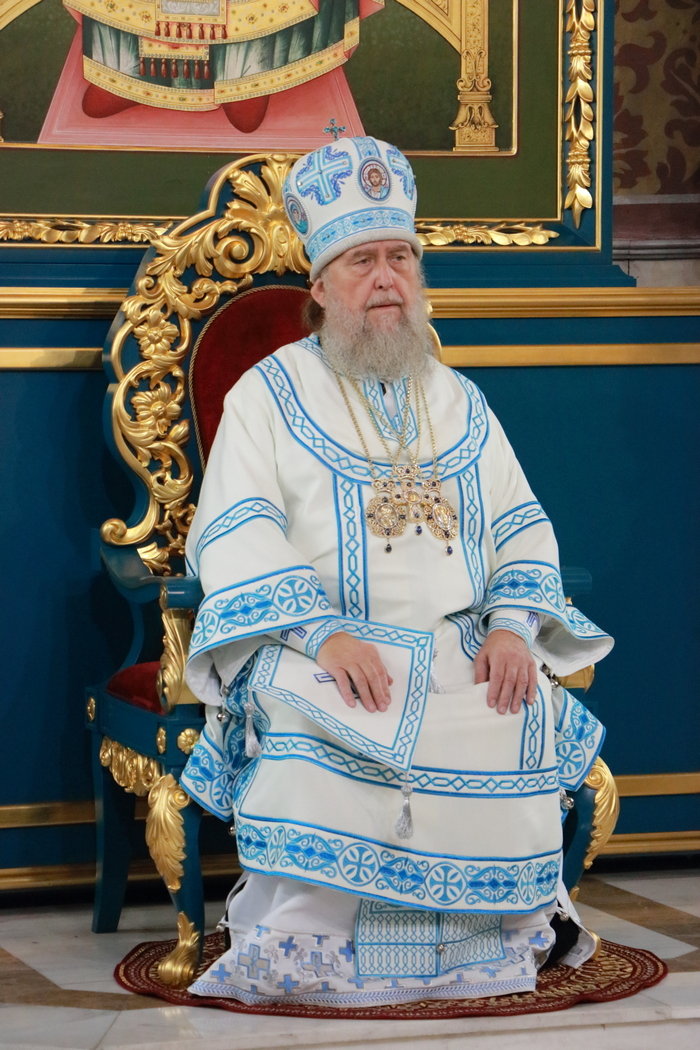
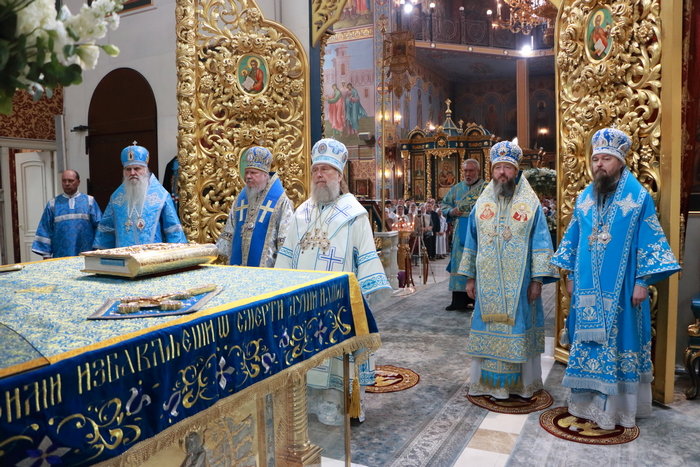
Metropolitan Alexander of Astana and Kazakhstan celebrated the Divine Liturgy at the principal church of Kazakhstan – the Dormition Cathedral in Astana, which was celebrating its patronal feast.
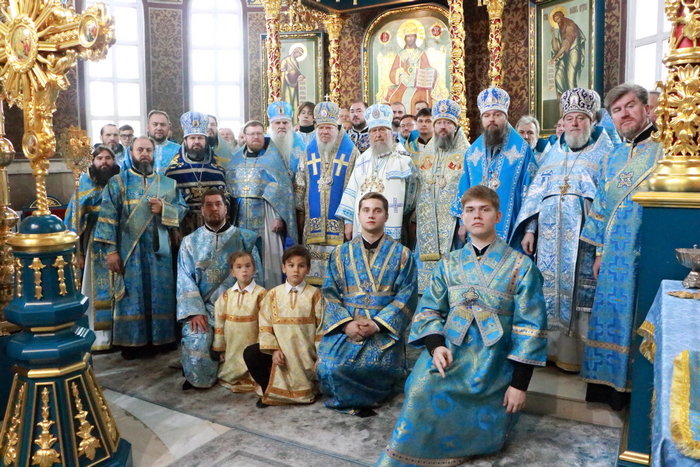
The Head of the Orthodox Church of Kazakhstan was joined in the celebration by: Archbishop Sebastian of Karaganda and Shakhtinsk; Archbishop Amphilochius of Ust-Kamenogorsk and Semipalatinsk; Archbishop Varsonofy of Kokshetau and Akmola; Bishop Vianor of Uralsk and Atyrau; Archimandrite Sergius (Karamyshev), Dean of the Astana Church District; Archpriest Evgeny Vorobyov, Rector of the Church of the Icon of the Mother of God “Joy of All Who Sorrow” in Alma-Ata; Hieromonk Dimitry (Baidek), Personal Secretary to the Head of the Metropolitan District; Hieromonk Siluan (Sinegubov), cleric of the Church of St. Seraphim of Sarov in Astana; Archpriest Anatoly Izmerov, Chairman of the Society of Orthodox Physicians of Kazakhstan; Archpriest Evgeny Korolkov, Dean of the Dormition Cathedral; Archpriest Vyacheslav Pugachev, Head of the Metropolitan District Commission for Charity and Social Ministry; Archpriest Sergiy Kaliyev, Dean of the Sts. Constantine and Helen Cathedral in Astana; Hieromonk Prokhor (Endovitsky), Head of the Metropolitan’s Secretariat; Priest Georgy Sidorov, Head of the Administrative Secretariat of the Head of the Metropolitan District; the cathedral clergy and clerics of the Alma-Ata Diocese, as well as clergy who had arrived with the visiting archpastors. The diaconal rank was headed by Protodeacon Nikolai Grinkevich.
By the beginning of the service, a reliquary containing a great Orthodox shrine – a portion of the Belt of the Most Holy Theotokos, kept at the Iveron-St. Seraphim house church of the Metropolitan’s residence in Alma-Ata – had been brought to the principal cathedral of Kazakhstan for the prayerful veneration and spiritual strengthening of the faithful.
Present in prayer at the Liturgy were: Abbess Sebastiana (Plotnikova), Superior of the Convent of the Icon of the Mother of God “Recovery of the Perishing” in Astana, with the sisters of the community; A.N. Borodavkin, Ambassador Extraordinary and Plenipotentiary of the Russian Federation to the Republic of Kazakhstan; participants in the First All-Kazakhstan Congress on Church Social and Charitable Work “Serving One’s Neighbor”; activists of the Astana Orthodox Youth Movement; and teachers and pupils of the Central Sunday School.
The liturgical hymns were performed by the cathedral choir under the direction of Olga Varentsova.
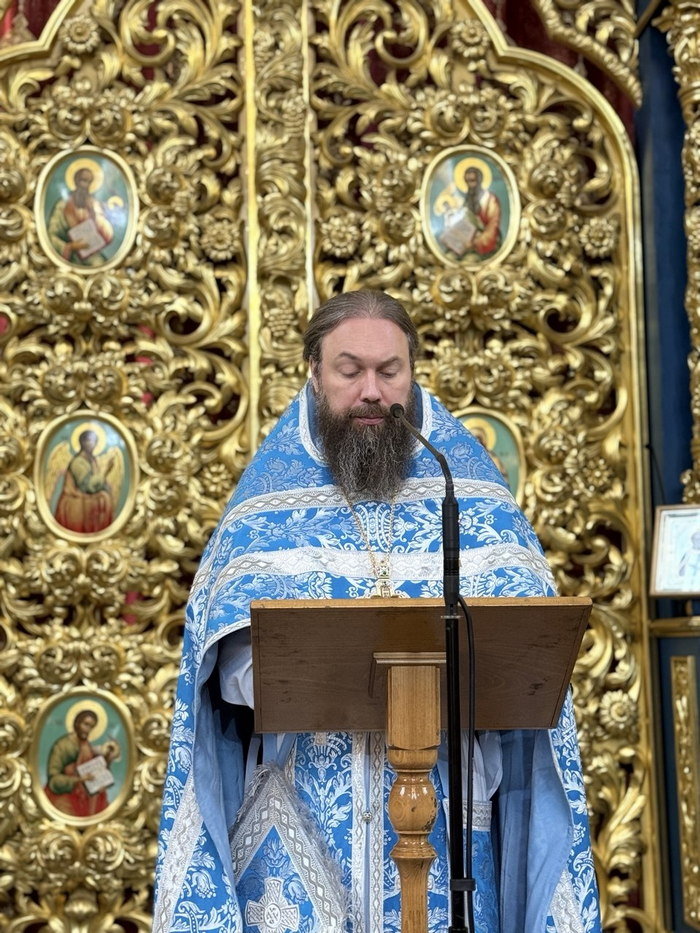
Following the Communion verse, Hieromonk Dimitry (Baidek) delivered a sermon.
The Liturgy concluded with the service of glorification of the Dormition of the Mother of God before the shroud adorned with flowers and grapevines, as well as the reliquary containing the Belt of the Queen of Heaven.
Many Years was proclaimed to the Primate of the Russian Orthodox Church, His Holiness Patriarch Kirill of Moscow and All Rus’; to the Head and the Most Reverend archpastors of the Kazakhstan Metropolitan District; to President of the Republic K.-J.K. Tokayev; to the authorities, the armed forces and all the people of Kazakhstan.
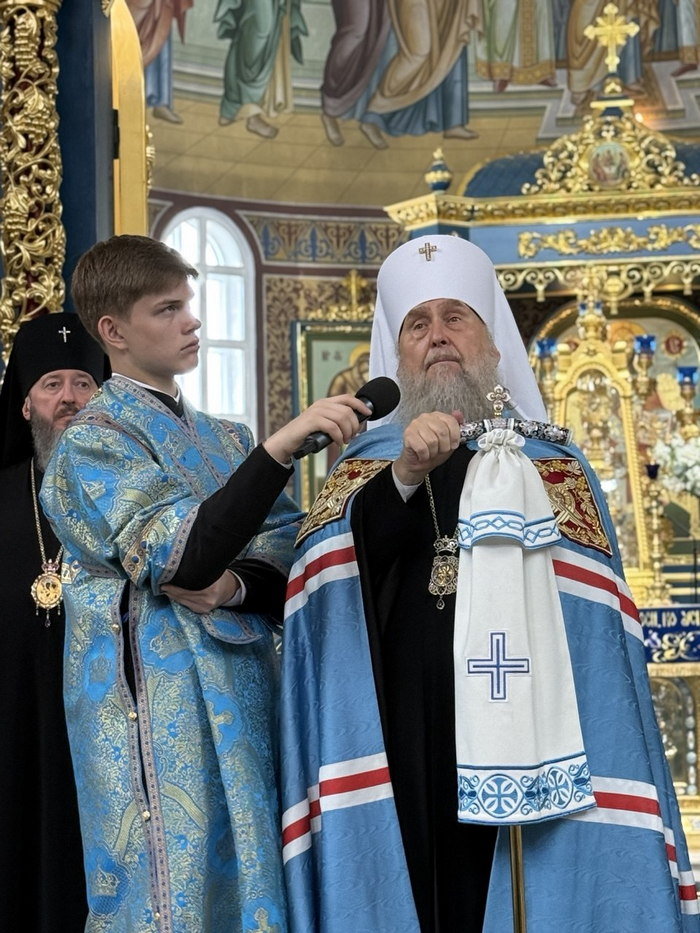
The Head of the Kazakhstan Metropolitan District warmly congratulated the archpastors, clergy, monastics and laity on the “Pascha of the Theotokos” and the patronal feast, and addressed those gathered with a sermon.
“Today we celebrate a great ecclesiastical solemnity – the Great Feast of the Dormition of the Most Holy Theotokos. ‘Neither the tomb nor death could hold the Theotokos, who is sleepless in her prayers and our unfailing hope in her intercessions,’ proclaim the joyful words of the ancient hymn today. Since apostolic times, this sacred event has been especially venerated by the faithful, for it was precisely on the day of the Dormition that the greatness of the Mother of God was revealed in its fullness, and before all people there visibly shone forth Her ineffable holiness, the beauty of Her virtues and the purity of Her soul, by which She surpasses the highest angelic powers – the Cherubim and the Seraphim. ‘The Most Pure Virgin has been exalted above everyone and everything,’ says St. Gregory Palamas in his homily for this feast. ‘She alone, standing between God and the human race, made God the Son of Man and made human beings sons of God; She made the earth Heaven and deified the human race.’
Tradition has carefully preserved for us the details of the Dormition of the Mother of God. In the icon of the feast we see its central moment – the Lord Jesus Christ descends in heavenly glory, surrounded by the angelic hosts, to the funeral bier of His Mother in order to receive Her immortal soul. ‘Verily, verily, I say unto you, He that heareth My word, and believeth on Him that sent Me, hath everlasting life, and shall not come into condemnation; but is passed from death unto life’ (Jn. 5:24), we hear the words of the Savior. This Gospel promise was fulfilled in its entirety in the Most Holy Theotokos. She passed through the immutable law of human nature and rested in the tomb, yet Her life did not cease; death lost all power over the Most Pure Virgin and became for Her the gateway to blessed eternity.
This is why the feast is called the Dormition, and among the Orthodox people it is known as the ‘Pascha of the Theotokos.’ ‘Thy death, O Pure One, became a passage to eternal and better life, transferring Thee, O Immaculate One, from temporal life to that which is truly divine and unchanging,’ we read in the festal canon. Having left the earth, the Mother of the Lord ascended to Heaven to reign eternally with Her Son and God. St. Ignatius (Brianchaninov) writes: ‘She reigns in Heaven; She, as the Mother of the King of Heaven, has been proclaimed the Queen of Heaven, the Queen both of the holy angels and of holy men.’
We remember from the Gospel the words of the Savior spoken before His Ascension into Heaven: ‘Lo, I am with you alway, even unto the end of the world’ (Mt. 28:20). The Lord was separated from His disciples only visibly, and throughout all ages He remains inseparably with His Church, with all who believe in Him, with each one of us. In the same way, the Most Holy Theotokos, having passed into the dwellings of Paradise and having been enthroned over Heaven and earth, has neither parted from nor become distant from the Christian race. On the contrary, through Her Dormition the Mother of God became even closer to those who believe in Her maternal protection and invoke Her with hope in their prayers. ‘While Thou didst live among men,’ St. Andrew of Crete addresses the Queen of Heaven, ‘only a small part of the earth possessed Thee; but since Thou hast left the earth, the whole world has Thee as its common propitiation.’
The Mother of God Herself testified to this truth when, on the third day after Her Dormition, She appeared in the radiance of heavenly glory to the apostles gathered together at their evening meal. She said to the disciples of Christ: ‘Rejoice! I am always with you!’ In response, the apostles exclaimed: ‘Most Holy Theotokos, help us!’
Faith in the prayerful intercession of the Mother of God and in Her constant participation in the life of the Church has at all times been a source of inspiration and consolation for Christians. There is no divine service at which the Queen of Heaven is not invoked in prayer, and there is no Orthodox home that is not sanctified by the presence of holy icons of the Sovereign Lady. The most sublime hymns and moving prayers have been composed in Her honor. Innumerable titles are joined to the name of the Mother of God: She is the Fervent Intercessor, the Joy of All Who Sorrow, the Unbreakable Wall, Gladness and Consolation, the Heavenly Gatekeeper, the Softener of Evil Hearts, the Assuager of Sorrows.
Indeed, in the life of the Church, in the historical destiny of the Fatherland, in the lives of the holy servants of God, and in the life of every believer, one can see the saving power of the Most Holy Theotokos. Chosen from among all people, She became the Mother of the Savior and forever became a source of divine gifts for the entire universe. St. Gregory the Theologian says: ‘To each of the elect grace is given in part; to the Virgin – the fullness of grace.’
As we celebrate and glorify the Dormition of the Most Holy Theotokos, singing hymns and lighting candles, we must remember that the best praise we can offer the Mother of God is a life lived according to the commandments of the Gospel. ‘Whatsoever He saith unto you, do it’ (Jn. 2:5), said the Mother of the Savior at the wedding in Cana of Galilee, addressing those taking part in the wedding feast. She addresses these words to each of us, calling us to listen to the Lord Jesus Christ and fulfill His commandments. St. John of Damascus reminds us that the Mother of God ‘is saddened and grieved by every evil and rejoices in every virtue as in Her own gift.’ Being not only the Mother of Christ but also His faithful disciple, She likewise expects us to hear the word of God and keep it (cf. Lk. 11:28).
The Feast of the Dormition of the Most Holy Theotokos is the patronal feast of the Dormition Cathedral in Astana – the principal church of our country, blessed Kazakhstan, sanctified by the struggles of the New Martyrs and Confessors. On this day, Hieromartyr Nicholas, Metropolitan of Alma-Ata, addressed the faithful with this exhortation: ‘Learn to glorify the Queen of Heaven, and She, the Merciful One, will not leave you without Her intercession either in this life or at the hour of death.’
Let us follow the testament of the apostles and hierarchs, the venerable and righteous, the ancient martyrs and the new sufferers for Christ, and at every time and every hour let us invoke the name of the Queen of Heaven, the Mother of God and our Mother. Let us pray before the holy shroud depicting the Theotokos, who is sleepless in Her prayers, that the Queen of Heaven may sanctify our lives with divine grace, grant us the mercy of Her Son and our God, and that the Mother of God may deem us worthy to behold Her radiant countenance in the blessed Kingdom of the Heavenly Father.”
From the sermon of Metropolitan Alexander.
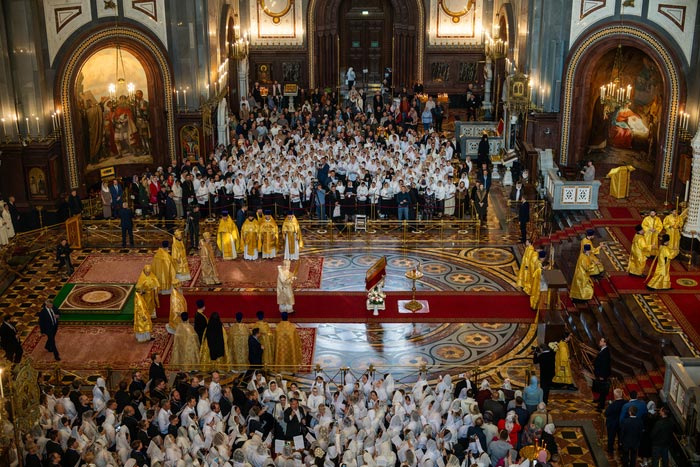
O. N. Ovchinnikov, choirmaster of the Kazakhstan Metropolitan District, took part in a patriarchal divine service held at the conclusion of the IV International Congress of Choirmasters and Singers of the Russian Orthodox Church.
More details
Patronal Feast Day at the Church of the Intercession in Almaty
More details



 Main
Main


Login or register, to write a comment!
Your comment has been successfully added and is currently being reviewed by the site administration