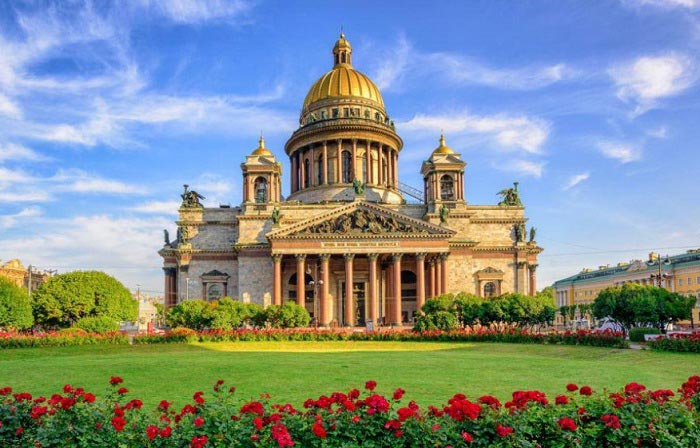
September 4, 2026. St. Petersburg, Russia. Metropolitan Alexander of Astana and Kazakhstan, who is making a pilgrimage to the shrines of the city on the Neva at the invitation of Metropolitan Barsanuphius of St. Petersburg and Ladoga, visited a number of churches.
The Head of the Orthodox Church of Kazakhstan visited St. Isaac’s Cathedral, one of the most beautiful churches of the Northern Capital, the tallest in the city (101.5 meters) and the largest in terms of capacity, accommodating up to 14,000 worshippers at a time. Construction began in 1825 and continued for almost forty years. In 1928, the cathedral was closed, and in 1957 it was opened as a memorial museum. In 1992, a decision was made to allow the cathedral to be used jointly by the faithful and the museum.
The cathedral has three altars: the central altar is dedicated to St. Isaac of Dalmatia; the left side chapel to the Holy Right-Believing Grand Prince Alexander Nevsky; and the right side chapel to Great Martyr Catherine. A particularly venerated shrine is a copy of the wonderworking Tikhvin Icon of the Mother of God.
Metropolitan Alexander prayed at the Church of the Resurrection of Christ, known as the “Savior on the Spilled Blood.” The church was built between 1888 and 1897 on the site where Emperor Alexander II was mortally wounded by a terrorist of the Narodnaya Volya movement, from which it derives its second name. It was consecrated on September 1, 1907 by Metropolitan Anthony (Vadkovsky). The church was closed in 1930. At various times it was used as workshops, warehouses and a vegetable storehouse, and during the Siege of Leningrad as a morgue.
Since 1970, it has had the status of a branch of the St. Isaac’s Cathedral State Museum. In 2014, an Orthodox parish was registered at the church, and regular divine services began to be celebrated there.
At Kazan Cathedral, the principal cathedral of the St. Petersburg Metropolia, the Primate of the Orthodox Church of Kazakhstan venerated the wonderworking Kazan Icon of the Most Holy Theotokos, which has been revered in the city on the Neva since 1710. This icon is a copy of the wonderworking image discovered in Kazan in 1579. It is believed to have been commissioned by Praskovia Feodorovna (1664–1723), widow of Tsar Ivan V Alexeyevich, and brought to St. Petersburg by order of Peter I.
The cathedral was built between 1801 and 1811 to a design by architect Andrey Voronikhin in the Russian Neoclassical style. Following the Patriotic War of 1812, it became a monument to Russian military glory. In 1813, the military commander Mikhail Illarionovich Kutuzov was buried there.
Another church where Metropolitan Alexander prayed was the St. Nicholas Naval Cathedral of the Epiphany, which houses a seventeenth-century Greek wonderworking icon of St. Nicholas the Wonderworker, Archbishop of Myra in Lycia, as well as venerated icons of the Most Holy Theotokos – the Tikhvin, Kazan, Vladimir and Three-Handed Icons, among others. The cathedral was built from 1753 to 1760 under the direction of architect S.I. Chevakinsky.
The cathedral is known as the “Naval Cathedral” because it was historically built for members of the Russian Navy and was located in a district inhabited by sailors.
The Primate of the Orthodox Church of Kazakhstan also visited Smolny Resurrection Cathedral, which was returned to the Russian Orthodox Church on January 25, 2016. Construction of the cathedral was begun by Francesco Bartolomeo Rastrelli in 1748 during the reign of Empress Elizabeth Petrovna and was completed by V.P. Stasov under Emperor Nicholas I in 1835. Following its consecration, the cathedral received the status of the principal church of all educational institutions.
The names of these educational institutions were inscribed in gold letters on the altar wall of the cathedral so that “prayer for the future of the Fatherland might never cease each day.” The cathedral was closed in 1932. In 1990, a concert and exhibition complex opened there. Regular liturgical life resumed in the cathedral in 2010.
During his visit to the Northern Capital, Metropolitan Alexander viewed the exhibitions of the Museum of Christian Culture. The museum houses monuments of world culture dating from the earliest centuries of Christianity onward. Its collection includes Russian icons of the modern period, paintings by Western European and Russian artists, jewelry and pilgrimage relics, with particular emphasis on icons belonging to the tradition of the “Northern Schools.”
Many of the works on display possess not only historical and artistic value but are also sacred objects. The establishment of the museum was initiated by Governor of St. Petersburg A.D. Beglov and K.V. Goloshchapov, benefactor of the Sts. Constantine and Helen Monastery.
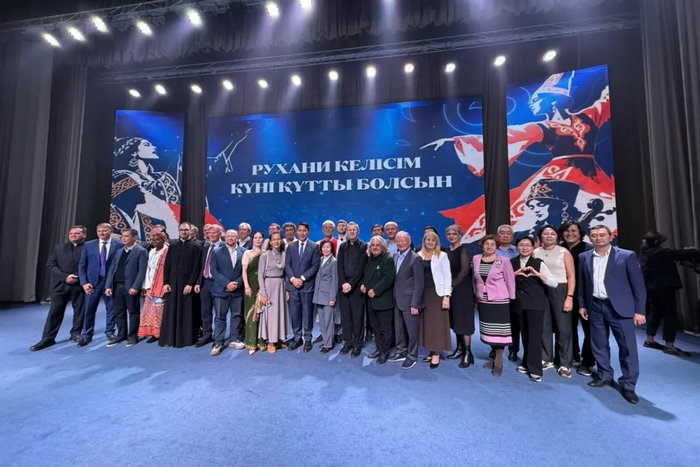
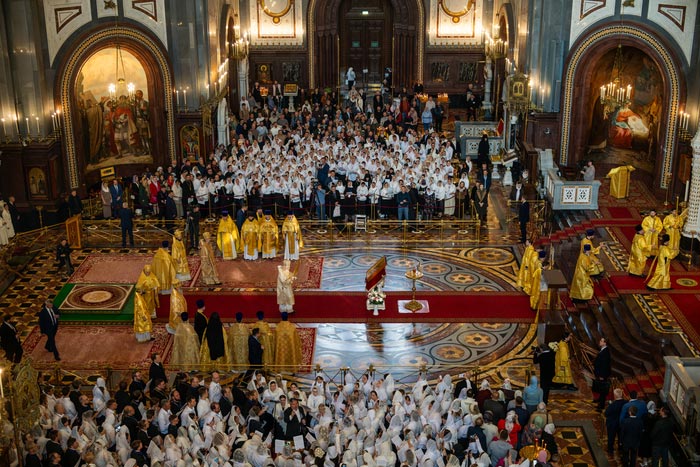
O. N. Ovchinnikov, choirmaster of the Kazakhstan Metropolitan District, took part in a patriarchal divine service held at the conclusion of the IV International Congress of Choirmasters and Singers of the Russian Orthodox Church.
More details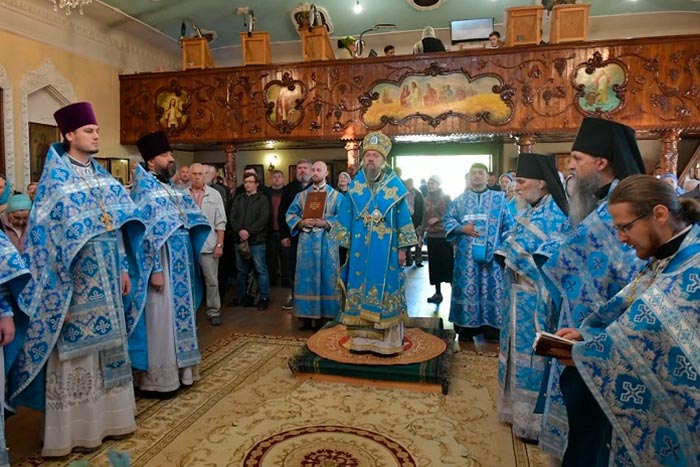
Patronal Feast Day at the Church of the Intercession in Almaty
More details




 Main


Login or register, to write a comment!
Your comment has been successfully added and is currently being reviewed by the site administration