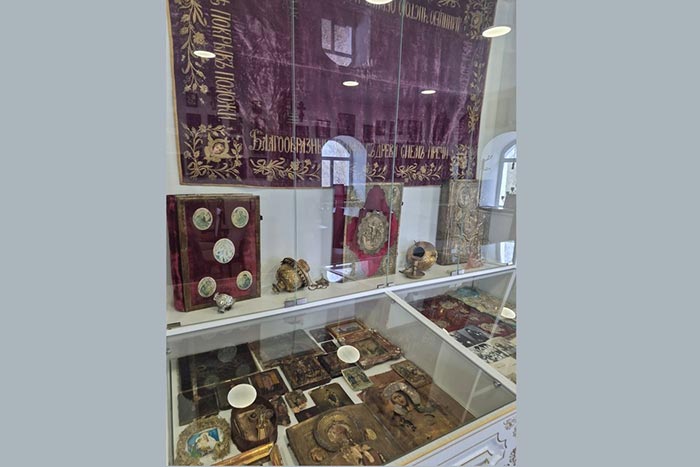
Ten years ago, the Head of the Orthodox Church of Kazakhstan, Metropolitan Alexander of Astana and Kazakhstan, gave his blessing for the creation of a diocesan church-archaeological museum at the Kazan Church in the settlement of Zatobolsk, now the city of Tobyl. We offer visitors of the official website of the Kazakhstan Metropolitan District an interview with the founder and director of the museum – Priest Andrey Krutin.
– Father Andrey, please tell us about your path to God and how you decided to devote your life to serving God and people.
– The choice of this path, of course, was not accidental, and the decision to follow it was not made instantly. At first, I simply sought to understand the meaning of faith in God and to learn more deeply about church life. Over time came the realization that being a priest, dedicating one’s life to serving God and people, is not only a personal choice, but a response to God’s call. Thus, in May 2011, I was ordained a deacon, and a year later, in 2012, my ordination to the priesthood took place.
– And how did your interest in church history arise?
– As for my interest in church history, it arose naturally and organically, since it became part of church ministry. When a person begins to live the life of the Church, he inevitably turns to its origins. The more I learned about the history of Orthodoxy in the Kostanay land, the more clearly I understood how important it was to preserve its memory. I began to study the church history of the region systematically in 2012, when I was appointed deputy head of the diocesan department for the canonization of saints, which at that time was headed by Archimandrite Anastasy (Ostapchuk). Some time later, I was appointed head of that department.
– How did the idea of creating a church-historical museum arise?
– The idea was not born at once. Serving as a priest and fulfilling the necessary obediences, I began to pay attention to many old items – icons, liturgical books, church vessels – and to the fact that they were undeservedly forgotten, lost, or stored carelessly, without proper attention. And yet behind each of these objects stands someone’s human life, prayer, faith – the living history of the Church. A desire arose not merely to preserve old things, but to bring them together so that they could begin to “speak” to modern people. Thus the idea was born of creating a museum that would not simply be a collection of exhibits, but a space of encounter with history. An important prerequisite for creating the museum was acquaintance with archival materials about the martyrs and confessors of the faith of the 20th century. There arose a desire to preserve the memory of their feat and to tell about the tragic pages of persecution against the Church that took place in the Kostanay land. It was necessary to begin a special study, and one of its key figures became the first Bishop of Kustanay – Bishop Timon, born Antonin Rusanov.
– Please tell us in more detail about Bishop Timon and his contribution to church life in the Kostanay land.
– Before receiving episcopal rank, Bishop Timon spent many years developing parish education in the Turgay region, effectively forming its system. After the revolution of 1917, severe trials began for the future bishop: his brother, Archpriest Nikolai Rusanov, was arrested and shot in 1920. In 1924, Father Antonin himself was arrested for opposing the Renovationist schism. After imprisonment, he was consecrated bishop with the name Timon and headed the diocese for more than five years during an extremely difficult period for it and for the country – a time of church closures and persecution of the clergy. His ministry became a spiritual support for the faithful of the region. In 1930, Bishop Timon suddenly reposed. Decades later, during reburial, the incorruption of his body was attested, which many perceived as a sign of his holiness.
It may be said that work with archival and biographical materials about Bishop Timon (Rusanov) became the starting point of our research path. Later, numerous details were discovered about other confessors of the faith who suffered in the Kostanay land. Gradually, as extensive material accumulated, we came to the thought that it was necessary to create a museum exhibition that would cover both the pre-revolutionary history of Orthodoxy in our land and the history of persecutions against the Church.
– What finally convinced you of the need to create a museum of church history in the Kostanay land?
– Probably a sense of responsibility. There comes a moment when you understand: it can no longer be postponed. If no effort is made today, tomorrow may be too late. Of course, there were doubts – would there be enough strength, resources, and support? But the success of such undertakings is largely determined by trust in God. When there is this trust, when there is confidence that the work is necessary, the opportunities for its realization gradually appear.
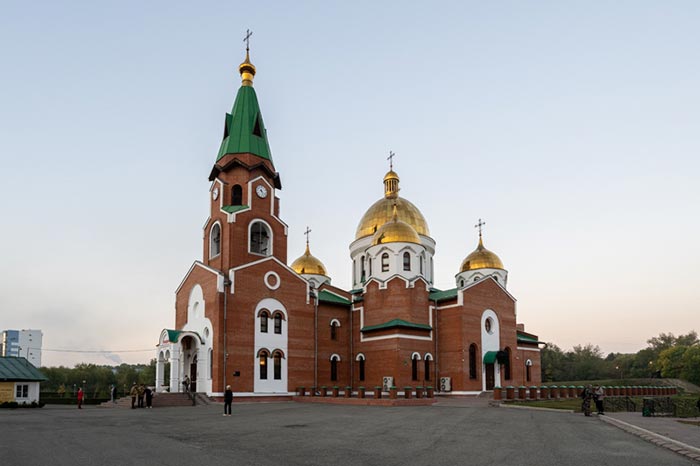
Gradually came the understanding that the parish lacked a separate building that could house a chapel with a funeral hall, a church shop, utility rooms, a Sunday school, and, of course, a church-historical museum. The final decision to build the museum building was made in 2016, when I became rector of the church in honor of the Kazan Icon of the Mother of God in the settlement of Zatobolsk, now the city of Tobyl, after the death of Father Viktor Petrov.
– How was the museum building constructed?
– First, we prepared the building design, and only in the spring of 2017 did we begin construction work: a foundation pit was dug and the foundation was laid. This became the symbolic and practical beginning of the creation of the museum. Moreover, we began construction without having any funds for it. But by the mercy of God, benefactors appeared – both organizations and private individuals – who helped with financing. Already in June 2019, construction was completed, and on the Feast of the Ascension of the Lord the newly built structure was consecrated. The new chapel was consecrated in honor of the Ascension of Our Lord and God Jesus Christ. After the consecration, the church shop was moved from the church to the chapel, the funeral hall was placed on the first floor, and the Sunday school on the second. But approximately another six months were needed to form the museum exhibition and equip the viewing halls with the necessary equipment – shelves, display cases, and so on. Only in the autumn of 2019 was the church-historical museum opened.
– Did you have to face any difficulties in creating and opening the museum?
– There were enough difficulties. First of all, organizational issues: how to systematize the exhibits, how to preserve them properly, how to make the museum accessible to people. Sometimes there was a feeling that the task was simply impossible and beyond our strength. But precisely in such moments help was especially felt – help from God, which also came through people who brought objects of value to the museum, helped with advice, or helped in practical ways. Such support strengthened us and gave us the strength to continue.
– How was the first collection of the museum assembled?
– The foundation of the first collection consisted of old liturgical objects and church literature that had been gathered over many years. People brought family relics to the church – icons, books, items of church life – carefully preserved in their homes. Behind each such exhibit there is often its own story – sometimes bright and joyful, and sometimes connected with difficult periods in people’s lives. At some point it became clear that before us was no longer a random set of old objects, but an integral collection representing the living memory of the Church. It was precisely the combination of archival documents, old icons, and liturgical books that became the basis of the first museum exhibition.
– What was the most important factor determining the future success of the project?
– Personal communication with relatives of clergy and monastics who served in the early and mid-20th century, as well as with people preserving valuable testimony about events in church history of that period, played an important role in forming the collections. These meetings made it possible to significantly expand the exhibition: the museum was enriched with personal documents, written memoirs, and photographs. Archival materials connected with the first hierarch of the Kustanay Diocese, Bishop Timon (Rusanov), were of particular importance. In particular, information was obtained about the incorruption of his body – this was written in a report to Metropolitan Joseph (Chernov) by Archpriest Nikolai Pasko, who was personally present at the reburial. The incorruption of the bishop’s body was also witnessed by the workers who participated in the work. Valuable materials concerning the biography of Bishop Timon – memoirs, photographs, and personal documents – were given to the museum by his relatives living in the Russian Federation. A substantial amount of information was also received from Vera Nikolaevna Smirnova, a close friend of the bishop’s daughters, Yulia and Klavdia, who lives in Moscow. Since the 1940s she had maintained a close friendship with them and was able to preserve and pass on memories of their lives, personal photographs, and other materials. I would also like to mention one more fact. In 2013–2014, I served in St. Nicholas Church in the village of Presnogorkovka and became acquainted there with local historian Sergey Nikolaevich Vinichenko, who told me the story of the martyrdom in 1921 of Priest Vasily Preobrazhensky and Abbess Eupraxia (Kazina). From the relatives of Archpriest Vasily Preobrazhensky, we received memoirs and photographs that allowed us to reconstruct details of Father Vasily’s ministry and the circumstances of his martyric death. Meetings with relatives of other clergy – Father Ioann Nadolinsky, Father Nikolai Pasko, and others – were also of great importance. Thus, the daughter of Father Nikolai Pasko donated to the museum his personal belongings, liturgical books, diaries, and numerous photographs. All this made it possible to form separate thematic sections of the exhibition.
– As far as is known, fairly extensive work with archives was carried out?
– Certainly. A significant expansion of the museum collections became possible thanks to large-scale work in archives. Over several years, my assistant, Hieromonk Methodius, and I conducted research in archival institutions in Kazakhstan and Russia – in Kostanay, Almaty, Orenburg, Omsk, Chelyabinsk, Kurgan, and St. Petersburg. As a result, unique documents were discovered: photographs, maps, plans, drawings of churches, and other materials. Their study and systematization required serious scholarly research work, and at the same time they helped build a logical structure for the museum exhibition and fill it with deep content.
– What exhibitions are presented in the museum today?
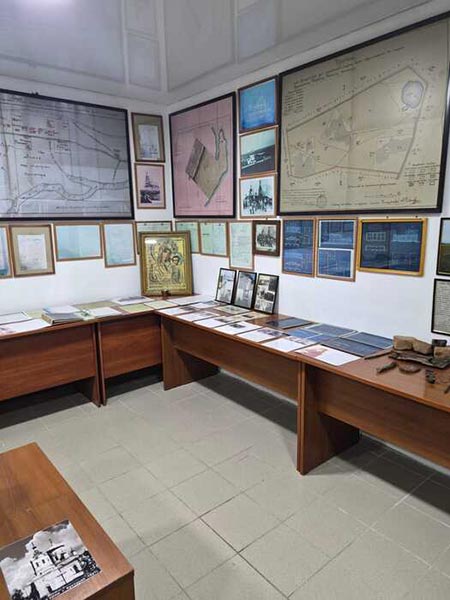
– This is a very broad question, but I will try to answer it as thoroughly as possible. The exhibitions in the museum are arranged in such a way that a certain sequence of historical events connected with the history of Orthodoxy in the Kustanay land can be traced. This was exactly the task we set for ourselves from the very beginning – to present not separate, scattered facts, but an integral historical path, and I think we have succeeded in this to some extent. When a visitor first crosses the threshold of the museum, he seems to enter living history. Already in the first hall, the path of Orthodoxy in our Kostanay land gradually opens before him – a long and difficult path, yet one filled with faith and spiritual labor by those who walked it. This hall displays unique maps from the 19th and 20th centuries, showing the first parishes, churches, settlement routes, and the spread of the Orthodox faith. Looking at them, the visitor seems to be transported to the time when church life was only beginning to take root in this land. Here one can see how, with the beginning of the resettlement movement of the 1870s and 1880s, the faith of Christ became rooted among the people and became the foundation of their lives. At the same time, we remind our visitors that the first churches on the borders of the present Kostanay Region appeared as early as the 18th and first half of the 19th centuries: in the stanitsa of Presnogorkovka the first church was built in the 1760s, in the stanitsa of Mikhailovskaya in 1855, in the stanitsa of Konstantinovskaya in 1857, and in Turgay in 1852. There are also such old churches in other places.
– As can be seen, a separate exhibition is devoted to the persecutions against the Church in the 20th century?
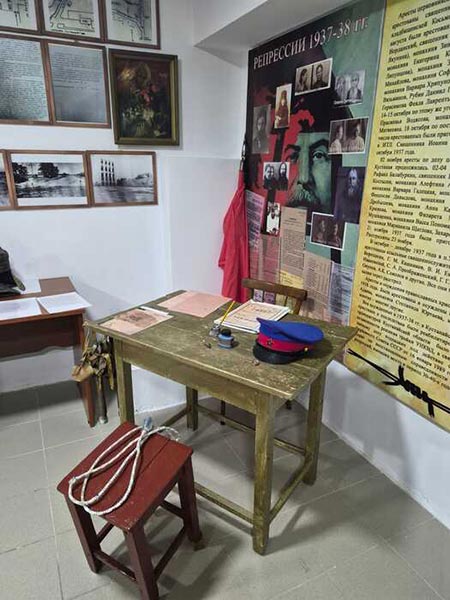
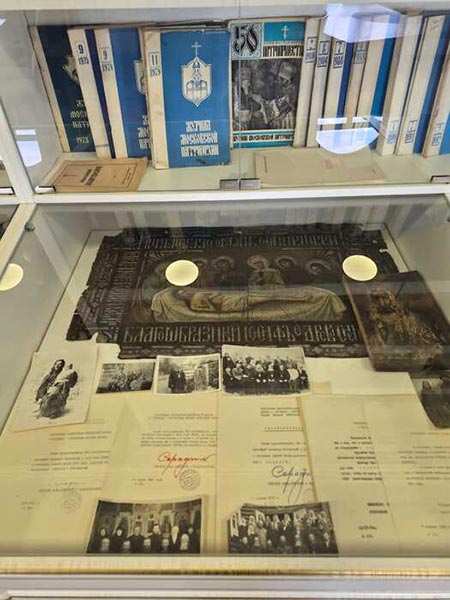
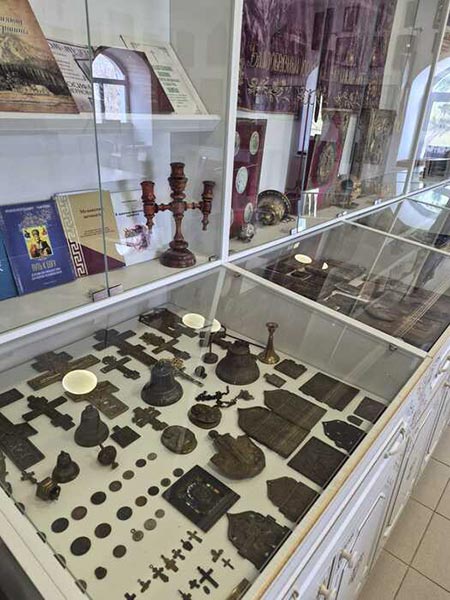
– Yes. Precisely beside this bright page of history, about which I spoke above, another page opens – a sorrowful one. In the same hall, the visitor encounters the tragedy of the 20th century, the time of persecutions against the Church. Archival documents, personal files, and photographs of clergy and laypeople who suffered for the faith make one stop, reflect, and look closely into the faces of those who preserved faithfulness to Christ even during the cruel persecutions against the Orthodox faith. This is not simply an exhibition – it is living memory, which cannot leave anyone indifferent. Among the exhibits are items found during excavations conducted at the sites of destroyed churches and monasteries. The exhibition includes bricks from St. Nicholas Cathedral, destroyed in Kustanay in 1937; iron objects, including a sickle and bricks from the monastery courtyard of the Holy Iveron Monastery; iron objects from the excavation site of St. Nicholas Monastery in the village of Kara-Oba, and so on. Among the exhibits in this hall is an exact 3D model of the destroyed St. Nicholas Cathedral and a copper bell, presumably from one of the destroyed churches of our region.
– What is located on the second floor of the museum?
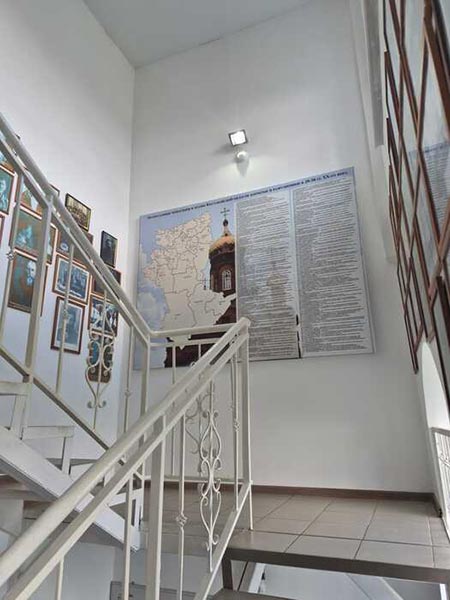
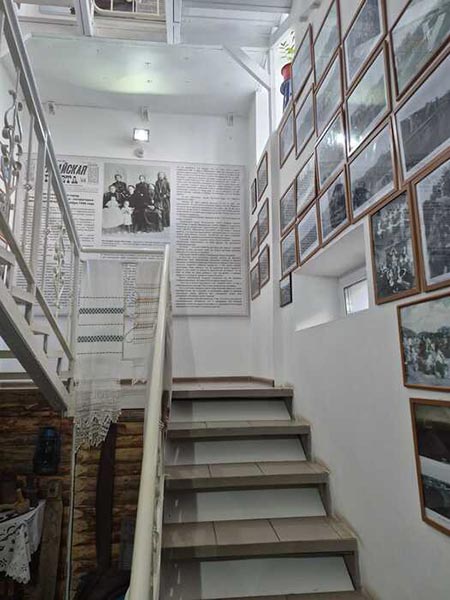
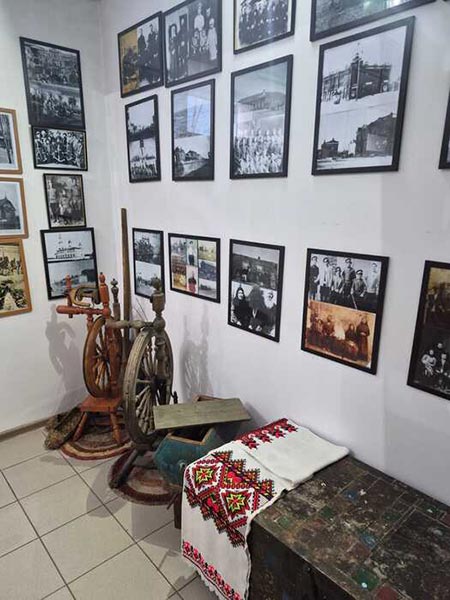
– Even on the way to the second floor, as visitors go up the staircase, they are accompanied along the stairways by numerous photographs of Orthodox churches and ascetics of piety – clergy, monks, and laypeople. There, on the landing of the basement floor, a small corner has been arranged with elements of peasant life from the late 19th and early 20th centuries. Visitors, as it were, immerse themselves in the everyday life and atmosphere of the first settlers, which helps them better understand this historical period. On the landing between the first and second floors there is a map showing the churches built on the territory of our region before 1918 – more than 180 in total. Of these, only four churches have survived and are active today, and two more are in a semi-ruined state.
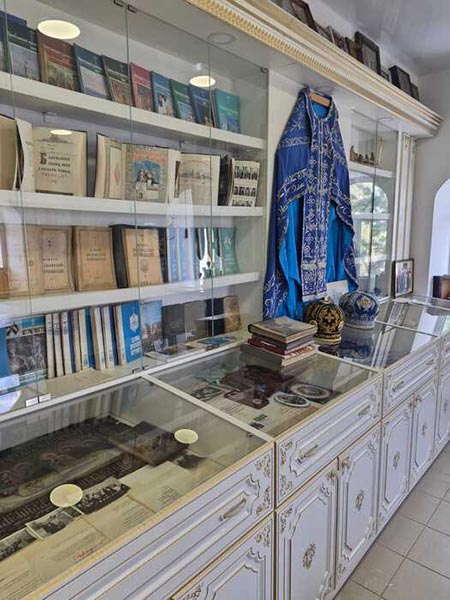
Having gone up to the second floor, the visitor enters the second exhibition hall, the basis of which consists of old icons, church vestments, crosses, and personal belongings of clergy and ascetics of piety of the Kustanay land. These personal belongings and photographs no longer merely tell – they testify. In them one feels the breath of prayer, the warmth of the hands of those who served at the Throne of God. This hall contains exhibitions dedicated to Father Nikolai Pasko, Father Viktor Petrov, Metropolitan Joseph (Chernov), and others.
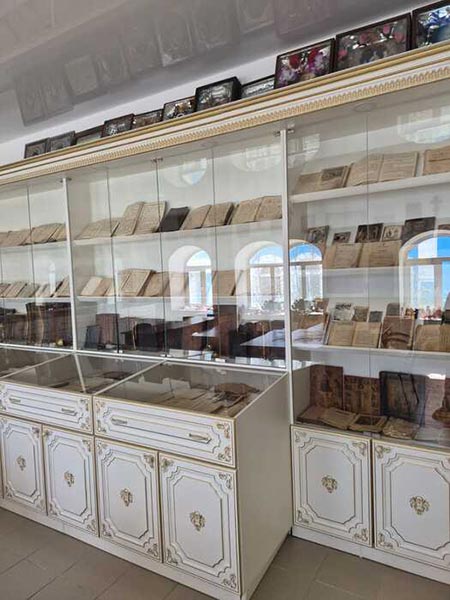
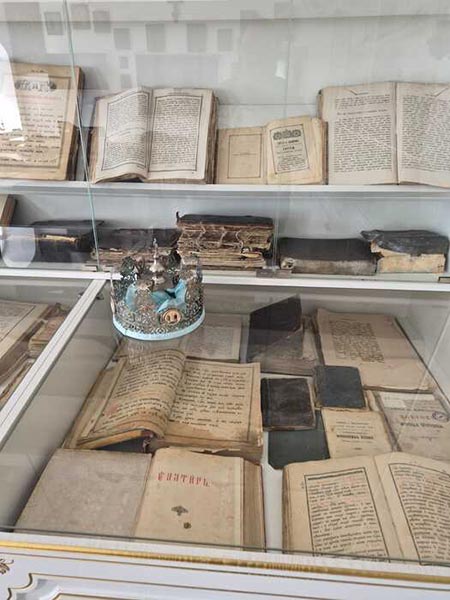
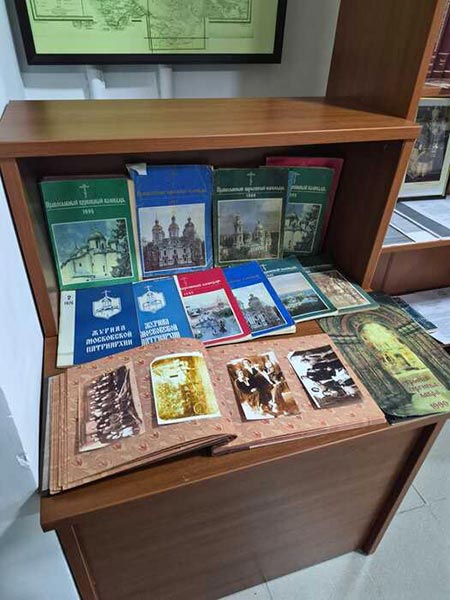
In the third hall, the spiritual heritage captured in the written word opens before the visitor. Here are presented liturgical books of the 18th–20th centuries and rare printed editions. The pages of these books, darkened by time, seem to preserve within themselves the sound of prayer offered by many generations of believers. Through them one can feel the depth of church tradition, its continuity, and its living presence in history. Among the collected editions are rare books of the 18th and 19th centuries, many still with wooden covers. Some books bear inscriptions by which the history of a particular printed edition can be traced.
– The museum has its pearl – the study of Bishop Timon (Rusanov) of Kustanay.
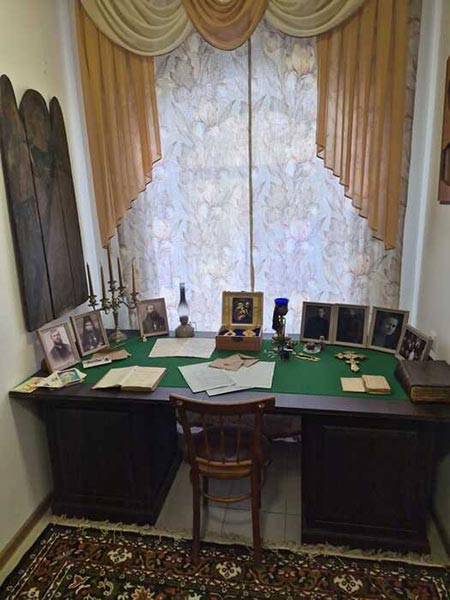
– Yes, the study of Bishop Timon (Rusanov) of Kustanay, located in a separate room next to the third exhibition hall, is without exaggeration one of the pearls of our museum. Personal photographs of the bishop, copies of archival files, old icons, and furniture – all this creates for visitors a sense of living presence in the distant past and helps them better understand how the ministry of one person can beneficially influence the spiritual life of an entire region. Bishop Timon is greatly venerated in the Kustanay land: for me personally and for many believers of our region, he remains an example of martyric feat and confession during the years of persecution against the Church.
– Are there any exhibits that are especially dear to your heart?
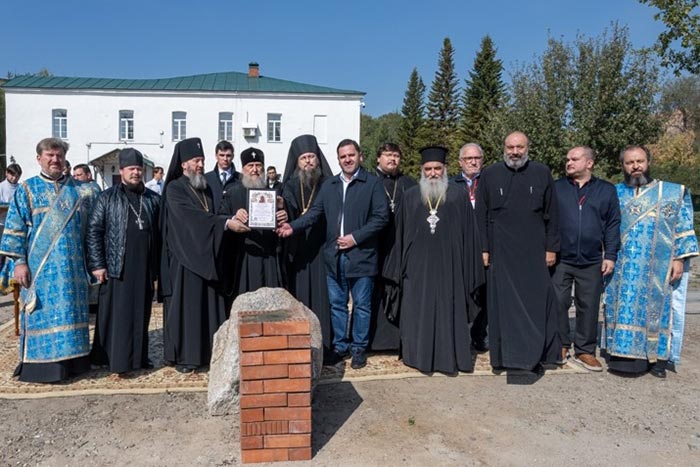
– Without a doubt, there are such exhibits. Of special value to us are the gifts of Metropolitan Alexander of Astana and Kazakhstan. Among them are antimensia signed by Metropolitan Nicholas (Mogilevsky) and Metropolitan Joseph (Chernov), as well as a collection of awards and other significant relics. These gifts are dear to us for their historical and spiritual significance, and also as evidence of the attention and support of our ruling hierarch. In many ways, it was precisely thanks to his active participation that the creation of the first church-historical museum in our Kostanay land became possible. Materials connected with the destinies of people who preserved faith in God in difficult times for the country and its people are also very dear. Without doubt, these include the exhibitions dedicated to Bishop Timon (Rusanov) and other martyrs and confessors of the faith. Such exhibits, which occupy a significant part of the museum exhibition, are perceived not merely as historical relics, but as testimonies of spiritual feat. They remind us of the price at which faith was preserved and make us think about our own lives.
– In what do you see the spiritual mission of the museum?
– A church-historical museum is not simply a place where old objects are stored. Its task is to help a person think about himself, about his life, about faith, about the life of his country, and to feel the connection between times. Through contact with history, a person begins to understand better that the Church is a living community whose life is unending and lasts for centuries. In addition, the museum can become that quiet, mysterious space in which an inner dialogue may take place in a person’s soul. Sometimes one thing seen or heard here can touch the heart more strongly and enter it more deeply than long discussions – about faith, about the meaning of life, about God.
– How do visitors react to what they see in the museum?
– Reactions vary, but most often there is surprise and gratitude. People come with interest and leave reflecting. Some visitors, after viewing the museum exhibitions, tell us that they begin to perceive history differently and feel greater closeness to the Church than before. There are cases when a person returns to the museum again, bringing relatives. This is especially joyful – it means the museum truly lives and that its “life” finds a response in people’s hearts.
– Who visits the museum?
– The museum is visited by very different groups – Sunday school pupils, parishioners of diocesan churches, students of universities and schools of the Kostanay Region. Since last year, the church history museum of the city of Kostanay has been included in a tourist route that includes visits both to the museum and to other significant Orthodox shrines of the Kostanay Region – the Iveron-Peter and Paul Convent in the village of Oktyabrskoye, the Church of Cosmas and Damian in the village of Borovskoye, and others.
– How does the museum help modern people understand the Church?
– Today people often perceive history as something distant. The museum makes it visible and tangible. When a visitor sees authentic objects connected with church life, prayer, worship, and the life of believers, he begins to perceive the Church itself differently – it ceases to be an abstract concept and is revealed as a living spiritual reality passing through the centuries and continuing in the present, a reality that every person can touch and become part of.
– Father Andrey, how do you see the further development of the museum?
– I would like the museum to continue developing – both in terms of further expansion of the collection and in terms of educational activity. It is important that the museum not remain static, but live, develop, and find a response among different generations.
– Has this difficult work changed you and your colleagues who help you develop the museum?
– Without a doubt, it has changed us. This work teaches patience, attention to detail, and the ability to see value in what at first glance may seem insignificant. But most importantly, it helps one understand more deeply the responsibility for preserving spiritual heritage. Over time, research and museum work cease to be simply a task and become part of life and ministry. That is true for me. Similar changes occur with those who work alongside me. For some, it is a path toward a more conscious church life; for others, toward a vocation. A telling example is my deputy, Hieromonk Methodius. He began helping with research work back in 2018, while still a layman, when his name was Vladislav. Gradually, the work of creating the museum became for him not merely an interesting task, but the true meaning of life. Later this path led him to the priesthood. In 2023, he received monastic tonsure with the name Methodius – in honor of the hieromartyr and confessor of the faith, Bishop Methodius (Krasnoperov) of Petropavlovsk. Afterward he was ordained a hierodeacon and then a priest. Today Father Methodius serves in the revived Iveron-Peter and Paul Convent in the village of Oktyabrskoye.
Incidentally, the revival of this monastery in 2023 became possible in many respects precisely thanks to the many years of research carried out by the staff of the department for the canonization of saints. During this period, it was possible to reconstruct almost completely the history of the monastery: unique archival documents, plans, maps, lists of monastics, and other valuable materials were found. All this made it possible to begin the restoration of the monastery on the basis of historical accuracy – in effect, to return the monastery to life on its historical site, on the site of the former monastery courtyard. In essence, this is the revival of a monastery opened at the end of the 20th century and closed in 1925, one hundred years ago.
– What would you like to wish our readers?
– I would wish each of them not to forget their roots. History is not only the past; it is what shapes us today. If you have the opportunity, come to our museum, become acquainted with the exhibitions, ask questions. Through contact with history, a person often discovers something important in his own soul.
Interview conducted by Priest Kirill Konoplev.



 Main
Main


Login or register, to write a comment!
Your comment has been successfully added and is currently being reviewed by the site administration