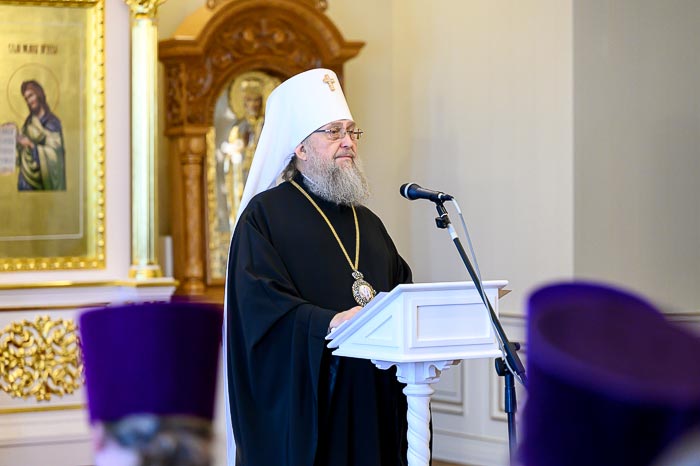
Your Graces,
Reverend Fathers, dear brothers and sisters,
I wholeheartedly congratulate the Rector, administration, faculty, and students of the Almaty Orthodox Theological Seminary on the completion of another academic year, and I congratulate the graduates on the successful defense of their qualification theses and the awarding of diplomas.
It is always a great joy for me to be present at the annual ceremony of our theological school. By tradition, this gathering serves as an occasion to review the results of the academic year that has passed and to outline tasks for the future.
The presence of the Primate of the Church at this event is not merely an external tribute to the celebration; it is a testimony to the fact that theological education remains a serious priority for the Church’s hierarchy. It is evident that the character of church life in our country for decades to come will depend, to a significant degree, on the quality of theological education and on the kind of graduates prepared by the seminary.
Despite objective difficulties, the Almaty Seminary continues to live and, God willing, with the support of dedicated and concerned people, will not only endure but continue to develop. The hierarchy, faculty, and benefactors are united by one goal: that the principal theological school of the Orthodox Church of Kazakhstan should correspond to its high calling not only through its curricula and academic programs, but also through the quality of the real knowledge and practical skills acquired by its students.
Theological education possesses its own historical traditions as one of the important manifestations of Church life and, at the same time, as a social phenomenon oriented toward fostering interreligious and intercultural communication. One factor that can help us realize our planned reforms is transdisciplinary cooperation—interaction with theological and secular institutions of higher learning, and collaboration with specialists from Kazakhstan and abroad in theology, history, cultural studies, and philosophy.
At the same time, the entire educational process must remain firmly grounded in the Patristic Tradition. It is essential that the study of theological and secular disciplines not be separated from liturgical experience and ascetic practice. Special attention must be devoted to the deepest possible study of Holy Scripture.
The seminary is a unique ecclesial community, a large family that unites its administration and faculty—hierarchs, clergy, and lay specialists alike. It is a home for students pursuing both full-time and part-time education. All graduates of the seminary continue to belong to this community.
The completion of studies is undoubtedly a bright and significant event in the life of every person. Behind you now lie lectures and seminars, diligent work with scholarly literature, and intensive preparation for examinations and assessments. In years to come, many of you will remember this period with gratitude as a time of intellectual growth and spiritual formation. The knowledge, skills, and abilities you have acquired are to be employed for the benefit of others, “that the name of our Lord Jesus Christ may be glorified in you, and you in Him” (2 Thessalonians 1:12).
I recall how one of my spiritual mentors, the ever-memorable His Beatitude Metropolitan Vladimir (Sabodan), who presided over my episcopal consecration in 1989, spoke of his youthful desire to enter a theological seminary.
“When a bell is cast,” he would say, “silver, a noble metal, is added to the molten mixture. The greater the amount of this noble metal, the purer, stronger, and more melodious the sound will be. I desired that the sound of my soul might remain clear and harmonious throughout my life. For this, I needed to acquire a supply of ‘noble metal’—the pure light of evangelical truth and love. I hoped to receive this ‘noble metal’ in the theological seminary.”
Indeed, the education received in theological schools constitutes the fundamental body of knowledge necessary for proclaiming the truth of Christ.
It provides an understanding of how the Church has acted throughout history, how it resolved disciplinary matters, how it defended the purity of the faith, and how, strengthened unceasingly by the Holy Spirit, it overcame every hardship and trial. It is inconceivable and unacceptable for a clergyman to remain estranged from this treasury of knowledge and experience.
The Lord commanded His disciples and Apostles to be the “light” and the “salt” of the earth (Matthew 5:13–14), to go forth and awaken people, calling them from the darkness of sin into the Kingdom of divine truth, love, and peace (Matthew 28:19–20; Mark 16:15). The words and commandments of Christ addressed to the Apostles apply equally to you—the present and future servants of the Church. For the principal aim of every pastor’s life and ministry is to attain personal salvation through obedience to the Gospel commandments and to lead others to salvation, those whom God Himself entrusts to his care and guidance.
All of us are called to bear a great and glorious fruit for eternal life, which the Lord grants to all who sincerely love Him (2 Timothy 4:8).
The foundation of blessed success in pastoral ministry is love for Christ united with diligence, patience, and perseverance. An ancient saying from the Desert Fathers relates the following story.
A young priest once came to an elder and said in disappointment: “Father, I see no point in preaching to people. They do not listen to me and do not become better.”
The elder handed him an old, dirty pitcher and said: “Go to the spring, fill it with water, and bring it to me.”
The disciple obeyed, but the water was cloudy because of the sediment accumulated inside the vessel. The elder instructed him to pour it out and repeat the task. This continued many times. Finally, exhausted, the priest returned with crystal-clear water—the constant washing had made the pitcher clean and bright.
“Do you see?” said the elder. “Even fresh spring water could not cleanse this pitcher instantly. It required time, effort, and patience. In the same way, the word of God that you speak works upon a sinful soul. A person does not change after a single conversation. But if you continue patiently, again and again, to pour into him the living water of the Gospel, his heart will be cleansed and his mind renewed.”
As we conclude another academic year at the Almaty Seminary, I offer my heartfelt thanks to all who labor sacrificially within its walls, who organize and carry out the educational and formative process, conduct scholarly research, and manage the practical affairs of the institution.
I also express sincere gratitude to the Eleos-Meirim Public Foundation and its President, V.M. Kapsamun, for the many forms of assistance provided toward the development and strengthening of our theological school.
In parting, dear students and graduates, I would like to recall an old saying:
“Blessed is he who knows the truth; twice blessed is he who strives for it; and thrice blessed is he who lives by it.”
“In diligence do not be slothful,” as the Apostle commands, “be fervent in spirit, serve the Lord, rejoice in hope, be patient in tribulation, be constant in prayer” (Romans 12:11–12), and above all, make it your rule to live for the good of others and for the Church of Christ.
May the mercy of the Lord, the intercession of the Most Holy Theotokos, and the prayerful protection of the New Martyrs and Confessors of Kazakhstan abide with us all.
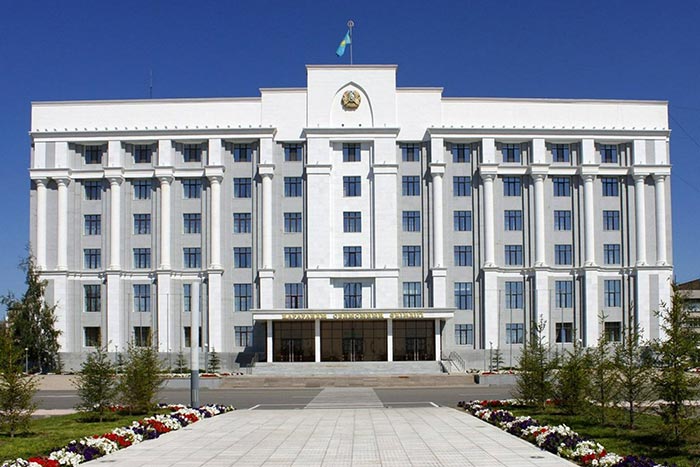
Participants in the Celebrations Marking the Bringing of the Relics of St. Spyridon to Kazakhstan Met with Karaganda Region Akim Y.K. Bulekpayev
More details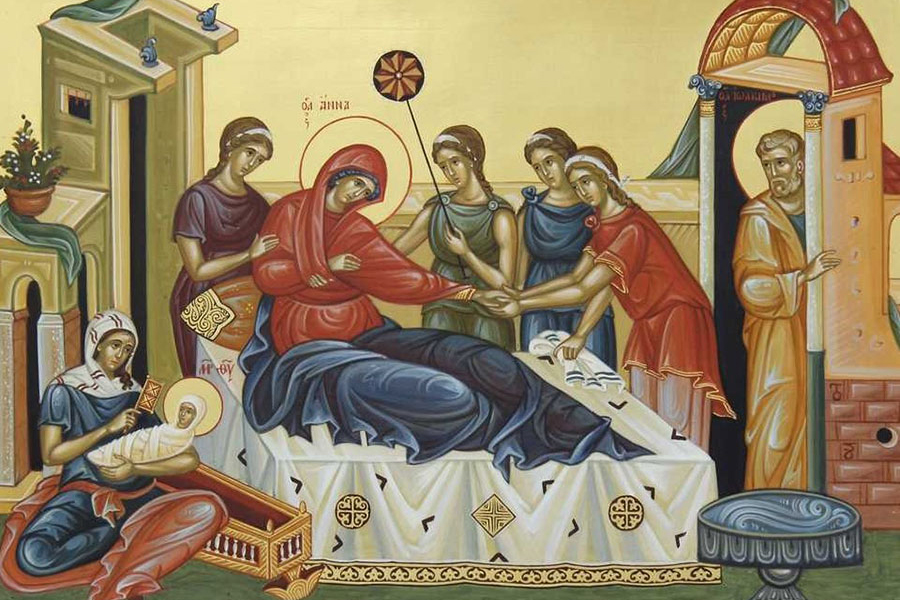
Metropolitan Alexander Celebrates the Liturgy at the Holy Trinity–St. Sebastian Cathedral in Karaganda on the Feast of the Nativity of the Most Holy Theotokos
More details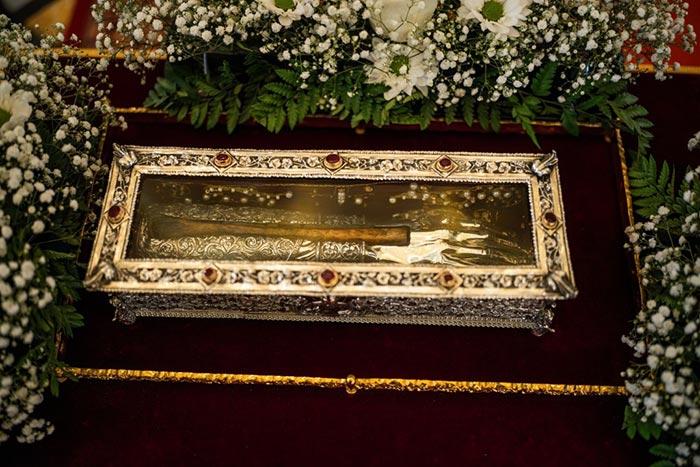
Kazakhstan Welcomes a Great Orthodox Shrine – the Incorrupt Right Hand of St. Spyridon of Trimythous
More details




 Main
Main


Login or register, to write a comment!
Your comment has been successfully added and is currently being reviewed by the site administration