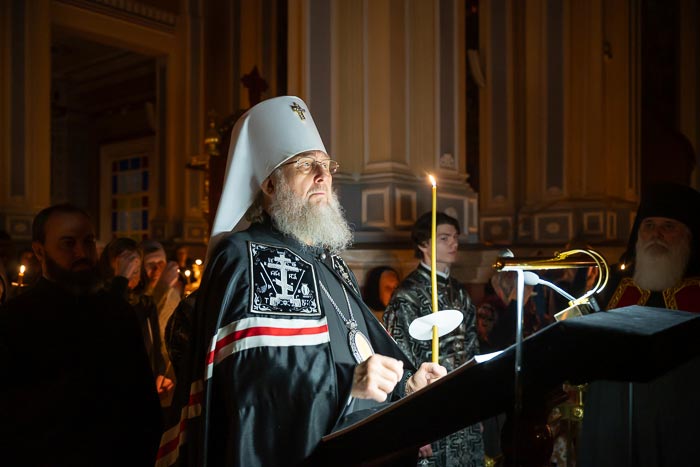
24 February 2026 – Tuesday of the first week of Great Lent; the commemoration of the Hieromartyr Blaise, Bishop of Sebaste.
In the morning, Metropolitan Alexander of Astana and Kazakhstan prayed at the appointed service in the Iveron-Seraphim house church of the metropolitan residence and attended the service at the seminary church of Blessed Matrona of Moscow.
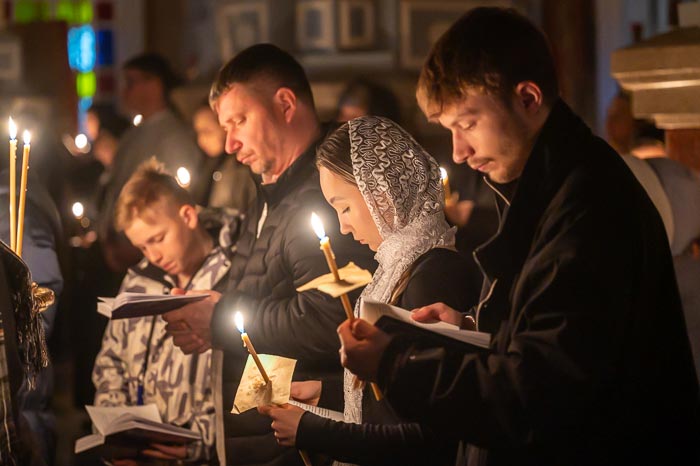
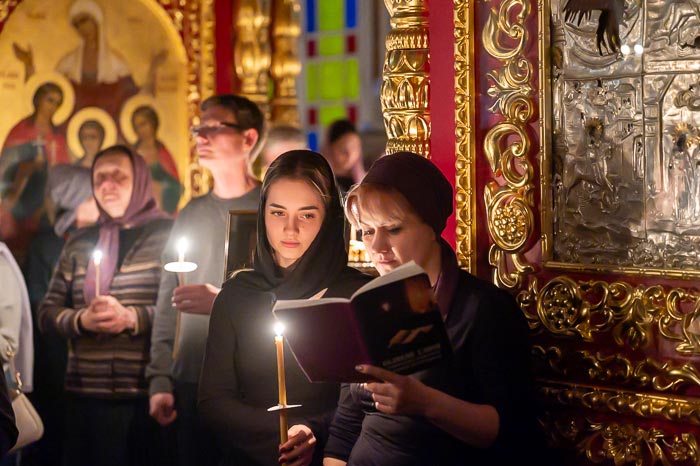
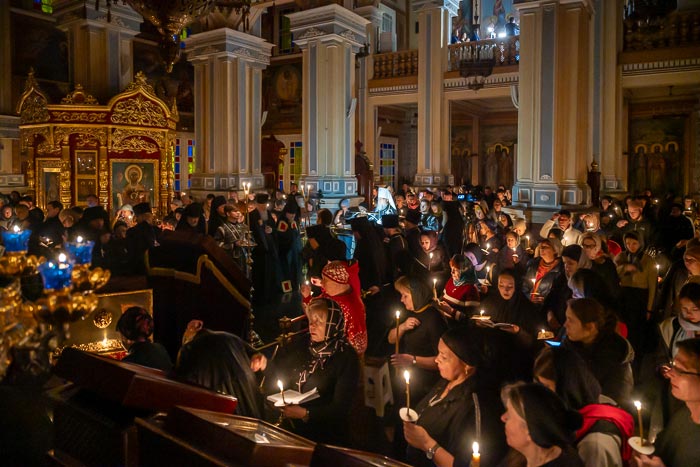
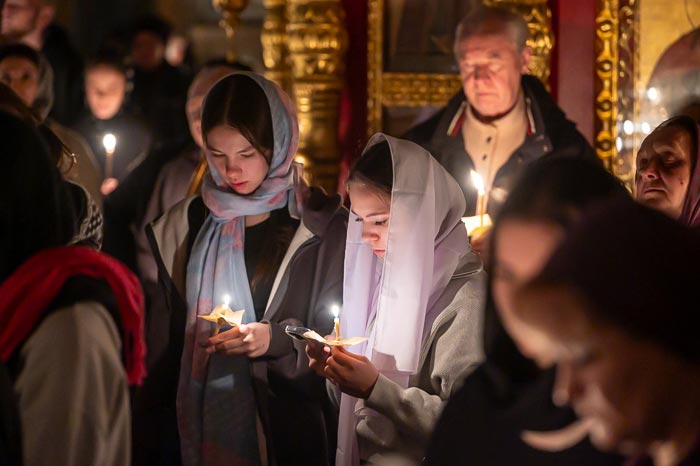
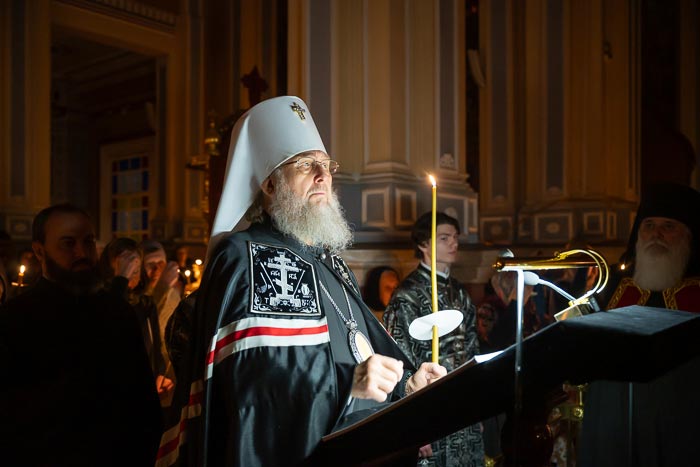
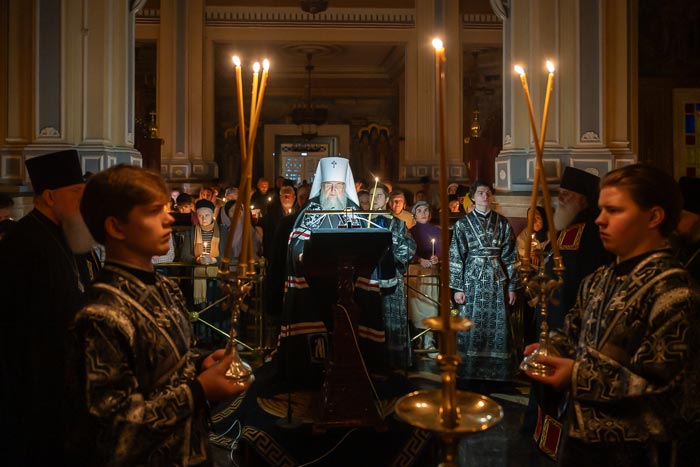
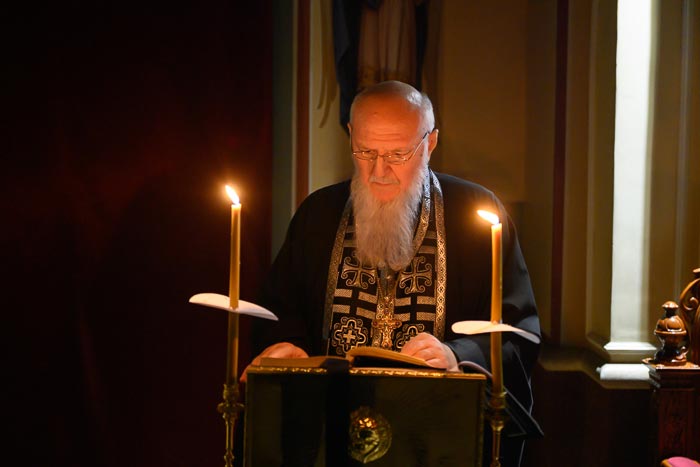
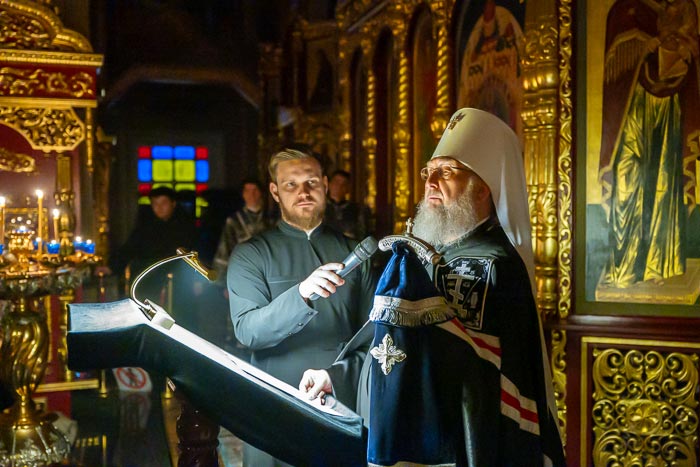
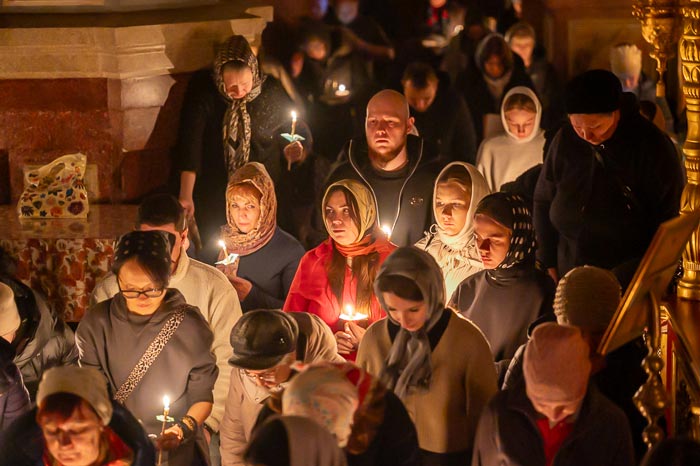
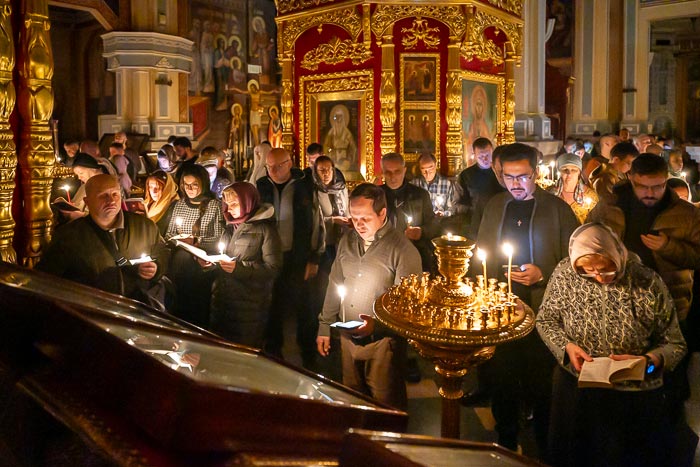
In the evening, the Head of the Orthodox Church of Kazakhstan celebrated Great Compline with the reading of the Penitential Canon of St Andrew of Crete at the Ascension Cathedral of the city of Almaty.
After the ninth ode of the canon, the archpastor imparted his blessing to the faithful and addressed the parishioners with a sermon.
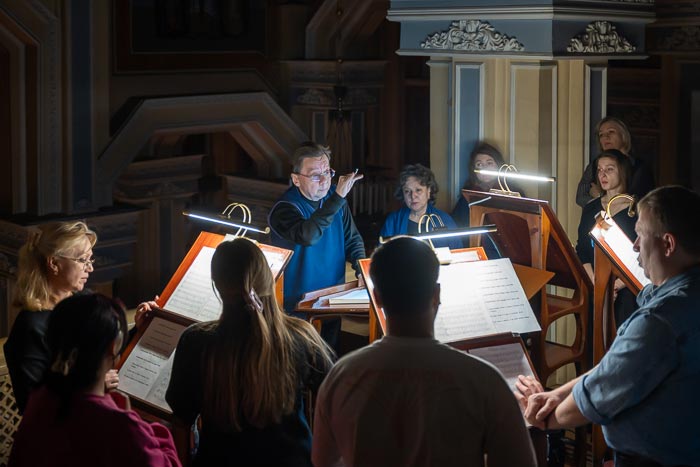
The hymns of Compline were sung by the choir of the Metropolitan District under the direction of Honored Artist of Russia O.N. Ovchinnikov and the choir of the Ascension Cathedral under the direction of E. Boguslavets.
For the spiritual consolation and strengthening of the faithful, a shrine was present in the cathedral – an image of the Life-Giving Cross of the Lord created with the blessing of Metropolitan Alexander, with the saints standing before it: Equal-to-the-Apostles Emperor Constantine and Empress Helen, Equal-to-the-Apostles Great Prince Vladimir and Great Princess Olga, the Right-Believing Great Prince Alexander Nevsky and Venerable Alexander of Svir.
Praying at the service together with the parishioners were heads of departments of the Metropolitan District, clergy of the Ascension Cathedral and staff of the Almaty diocesan administration.
A live broadcast of the reading of the Canon of St Andrew of Crete was carried on the YouTube channel of the Kazakhstan Metropolitan District “Semirechie.”
On Wednesday morning, Metropolitan Alexander will celebrate the Liturgy of the Presanctified Gifts (beginning at 8:30 a.m.), and in the evening he will continue the reading of the Penitential Canon of St Andrew of Crete at the Ascension Cathedral of Almaty (beginning at 6:00 p.m.).
“Today we continue the reading of the Penitential Canon of St Andrew of Crete. The text of this remarkable poetic prayer is not easy for an unprepared person to perceive. Yet for one who knows well the history of the Old and New Testaments and the foundations of Orthodox theological teaching, it offers rich spiritual nourishment and disposes the soul toward communion with the Lord.
Let us turn today to one of the penitential troparia of the canon, especially difficult to understand. At the end of the eighth ode there is an address to the Most Holy Theotokos: ‘As from purple dye, O Most Pure One, the noetic purple robe – the flesh of Emmanuel – was woven within thy womb; therefore we truly honor thee as the Theotokos.’
What is meant here? The troparion speaks of the Incarnation from the Most Blessed Virgin Mary of the Second Hypostasis of the Most Holy Trinity – God the Word. We address the Theotokos: ‘Within thy womb was woven the purple robe or porphyry – a precious garment.’ By the purple robe is meant the most pure flesh of the Son of God – Emmanuel. The porphyry, the red royal garment, signifies the kingly dignity of Christ. The Lord Jesus Christ is our King and Ruler. The ancient Hebrew name ‘Emmanuel’ is translated ‘God with us’; it is one of the names of the Incarnate Creator.
Moreover, the text of the troparion refers us to Church Tradition, according to which the Virgin Mary, while being raised at the Jerusalem Temple, learned the craft of sewing. When she was entrusted to the care of the Righteous Joseph the Betrothed, she was given the task of making a new veil for the Jerusalem Temple – the very veil that closed the entrance to the Holy of Holies. This veil, the katapetasma, enclosed the place where God Himself was invisibly yet truly present. It was while sewing this veil that the Archangel Gabriel found the Virgin Mary on the day of the Annunciation.
With hope we turn today to the Most Holy Theotokos, that she may strengthen us on the saving path of repentance and help us acquire the grace of God, which cleanses and transforms our souls.” From the instruction of Metropolitan Alexander.
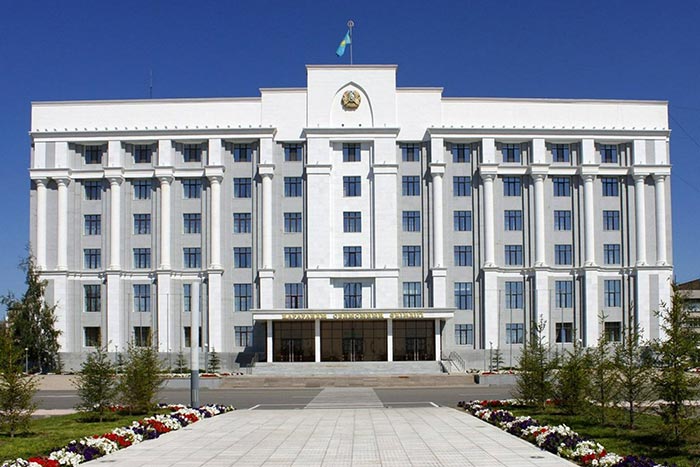
Participants in the Celebrations Marking the Bringing of the Relics of St. Spyridon to Kazakhstan Met with Karaganda Region Akim Y.K. Bulekpayev
More details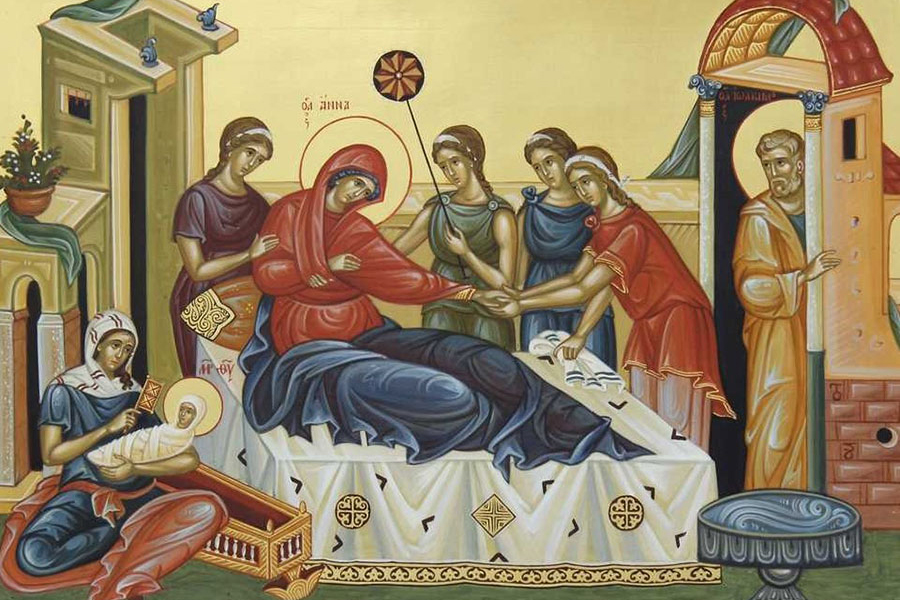
Metropolitan Alexander Celebrates the Liturgy at the Holy Trinity–St. Sebastian Cathedral in Karaganda on the Feast of the Nativity of the Most Holy Theotokos
More details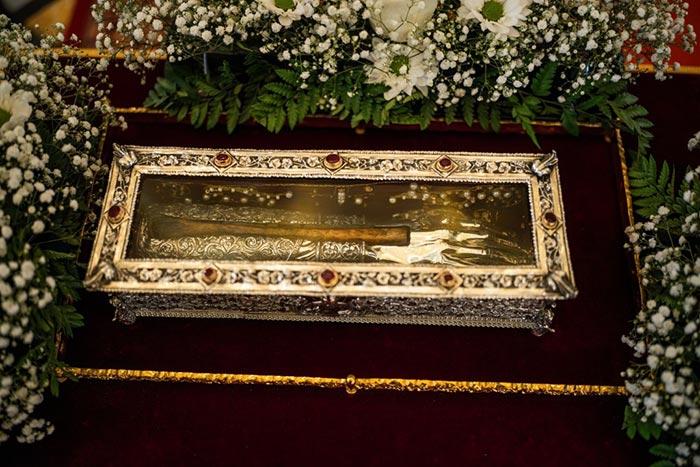
Kazakhstan Welcomes a Great Orthodox Shrine – the Incorrupt Right Hand of St. Spyridon of Trimythous
More details



 Main
Main


Login or register, to write a comment!
Your comment has been successfully added and is currently being reviewed by the site administration