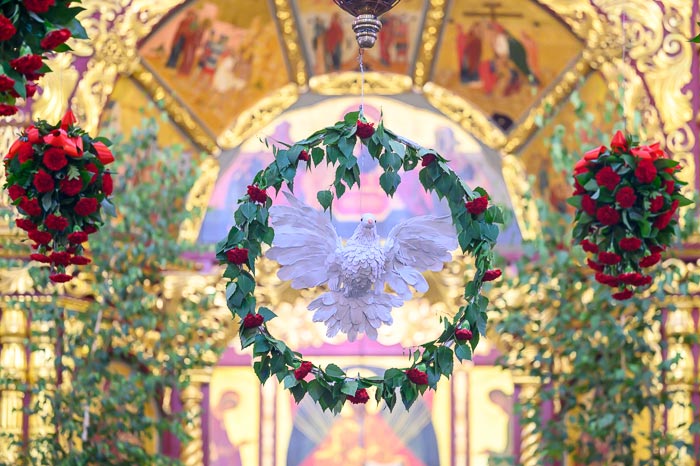
May 31, 2026 – the feast of the Most Holy Trinity, Pentecost, the commemoration of the descent of the Holy Spirit upon the Apostles.
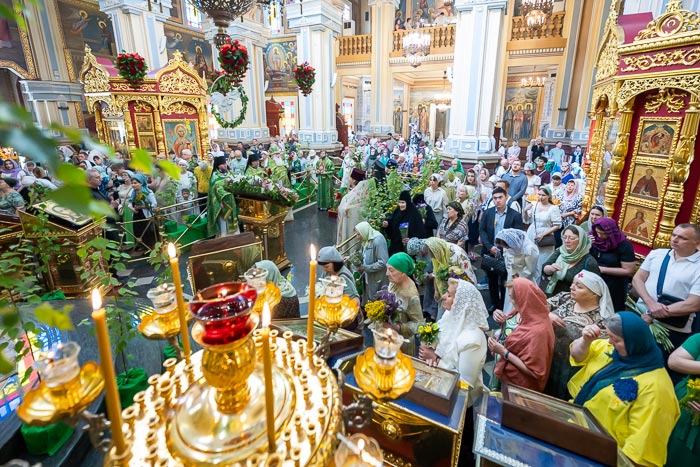
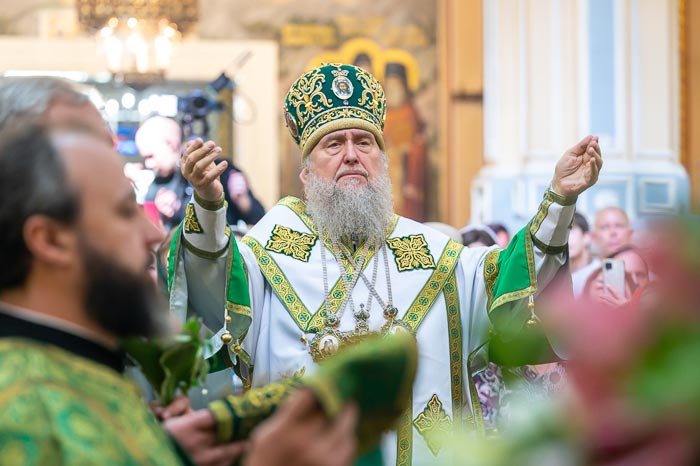
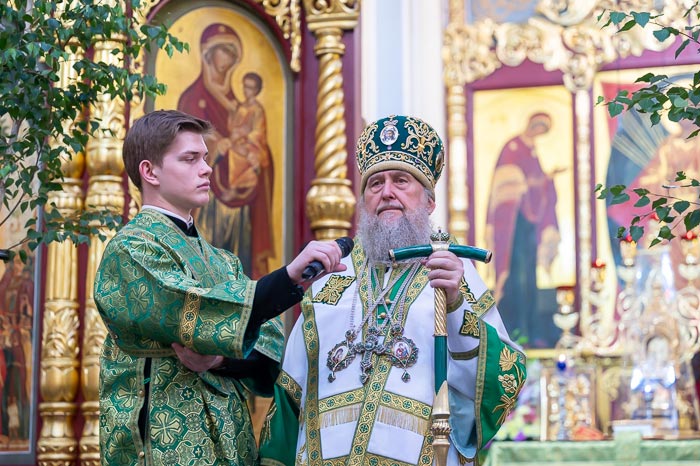
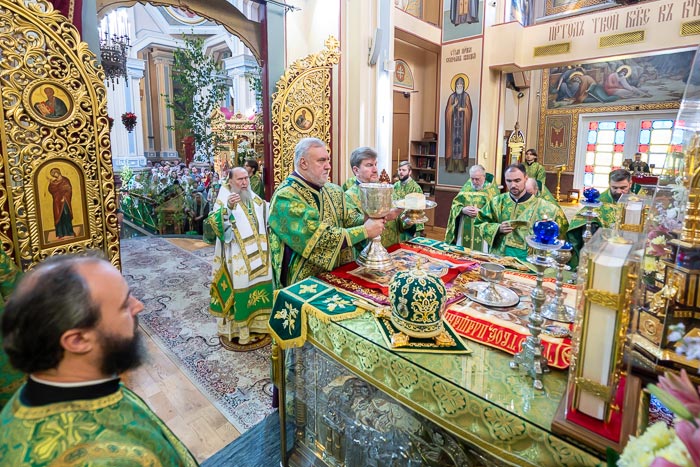
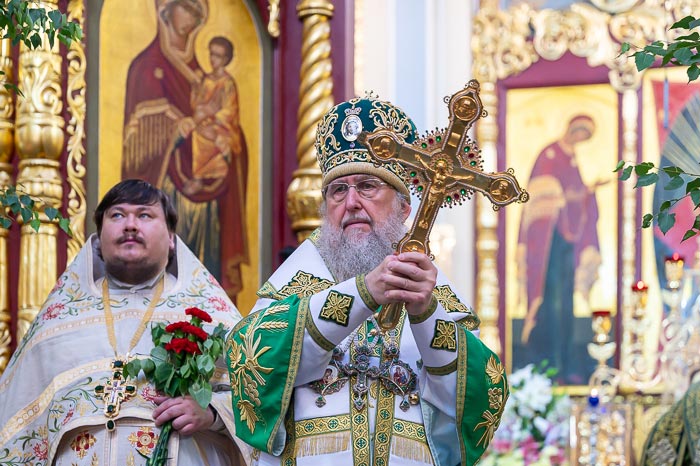
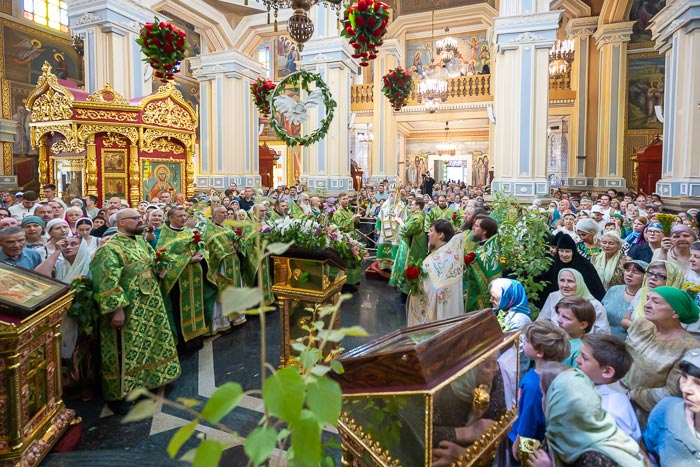
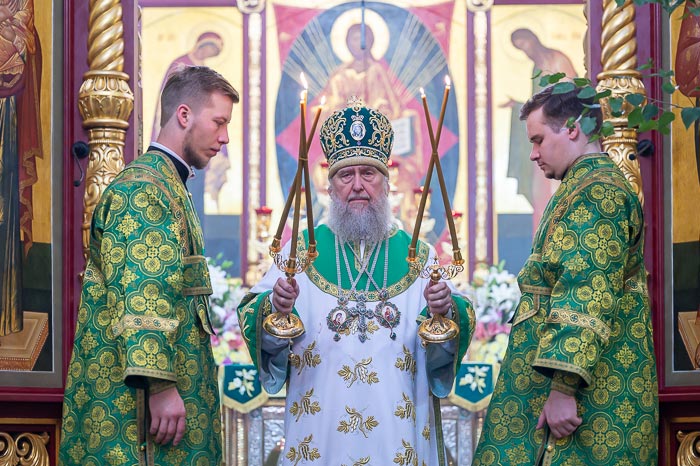
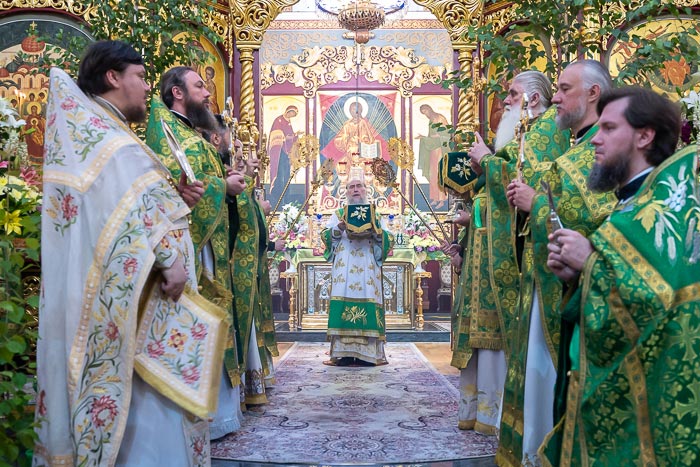
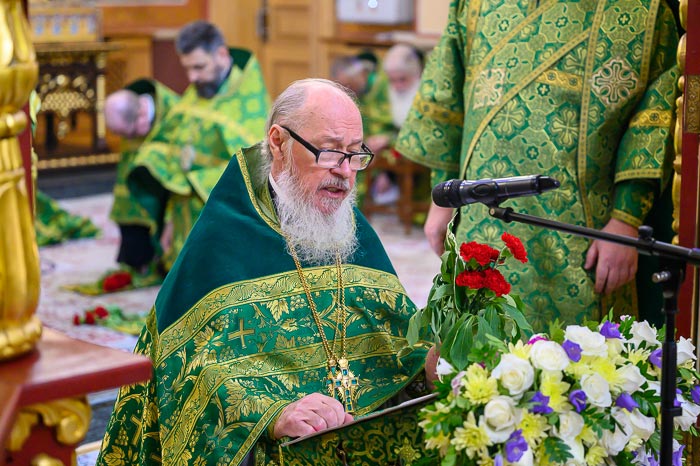
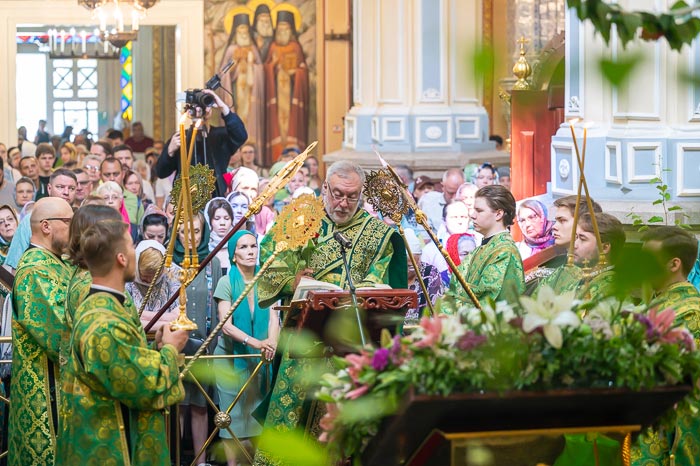
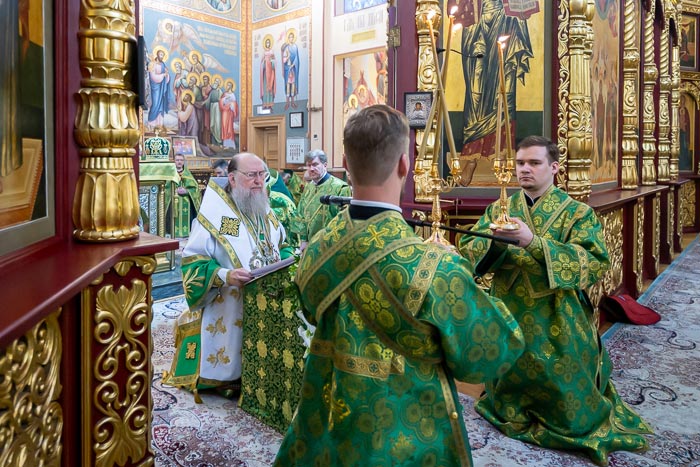
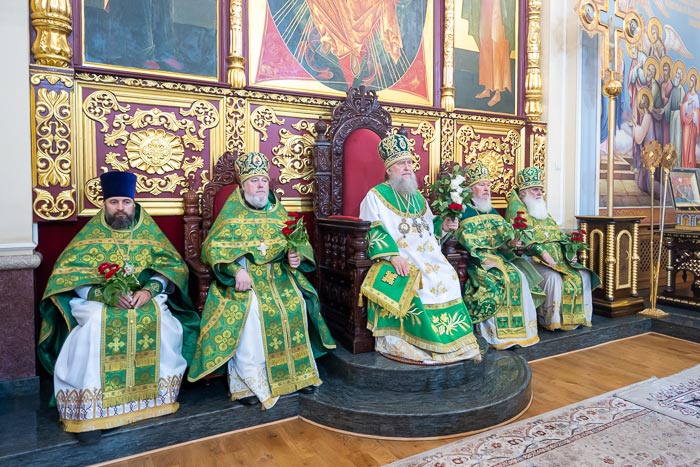
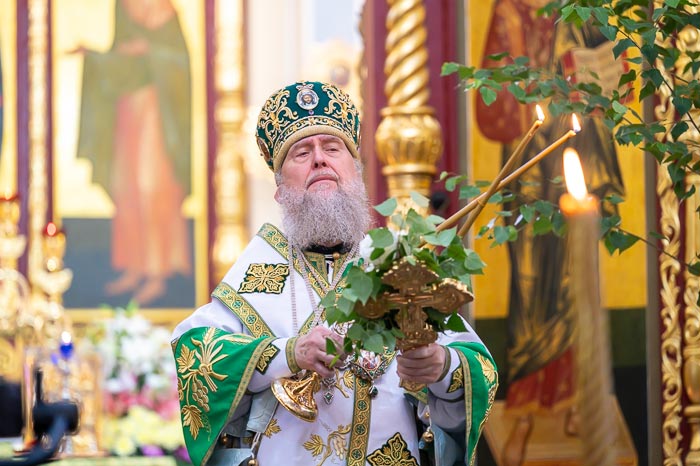
Metropolitan Alexander of Astana and Kazakhstan celebrated the Divine Liturgy at the Ascension Cathedral in the city of Alma-Ata.
Concelebrating with the Primate of the Orthodox Church of Kazakhstan were: Archpriest Valery Zakharov, Dean of the churches of the Southern Capital and rector of St. Nicholas Cathedral; Archpriest Evgeny Vorobyov, rector of the Alma-Ata church dedicated to the Icon of the Mother of God Joy of All Who Sorrow; Archimandrite Ioann (Sazonov), spiritual father of the Alma-Ata Diocese; Archimandrite Joseph (Yeremenko), Head of the Diocesan Department for the Canonization of Saints; Archpriest Alexander Suvorov, dean of the Ascension Cathedral and Head of the Metropolitan District Department for Public Relations; Hegumen Onisim (Tulnikov); Hieromonk Dimitry (Baidek), Secretary to the Head of the Metropolitan District; Hieromonk Prokhor (Yendovitsky), Head of the Metropolitan’s Secretariat; Priest Georgy Sidorov, Head of the Administrative Secretariat of the Head of the Metropolitan District; Protodeacon Nikolai Grinkevich; Protodeacon Roman Golovin, Head of the Metropolitan’s Protocol Service; Protodeacon Vladimir Syrovatsky; Deacon Vitaly Bystrushkin; Deacon Alexander Piven; Deacon Ioann Zhuchkov; and Deacon Georgy Tkachenko.
Praying during the divine service were staff members of the Alma-Ata Diocesan Administration and numerous parishioners.
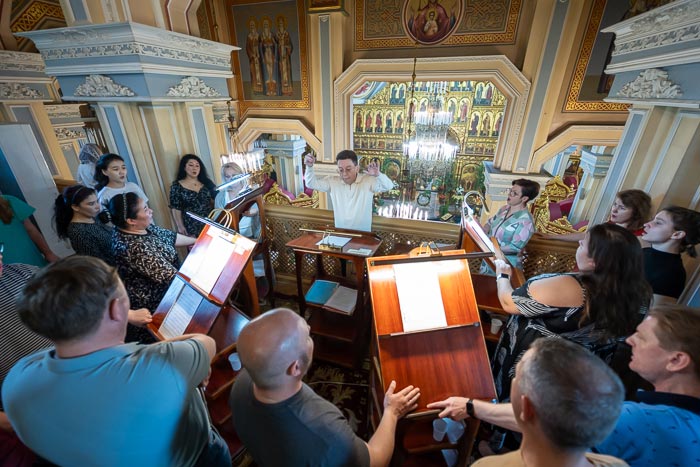
The hymns were performed by the choir of the Metropolitan District (choir director – O.N. Ovchinnikov, Honored Worker of Kazakhstan, Honored Artist of the Russian Federation, member of the Patriarchal Council for the Development of Russian Church Singing; choirmaster – V. Dudareva) and the choir of the Ascension Cathedral (choir director – E. Boguslavets).
In accordance with the liturgical Typikon, special antiphons composed of prophetic psalms are sung at the Liturgy of Pentecost: Psalm 18, “The heavens declare the glory of God, and the firmament proclaims the work of His hands”, with the refrain “Through the prayers of the Mother of God, O Savior, save us”; Psalm 19, “May the Lord hear thee in the day of trouble”, with the refrain “Save us, O Good Comforter, who sing unto Thee: Alleluia”; and Psalm 20, “O Lord, in Thy strength the king shall rejoice”, with the refrain – the troparion of the feast: “Blessed art Thou, O Christ our God, who hast revealed the fishermen as most wise.”
Instead of the Trisagion, the baptismal hymn “As many as have been baptized into Christ…” is sung at the Liturgy, in remembrance of the ancient tradition of baptizing catechumens on this day.
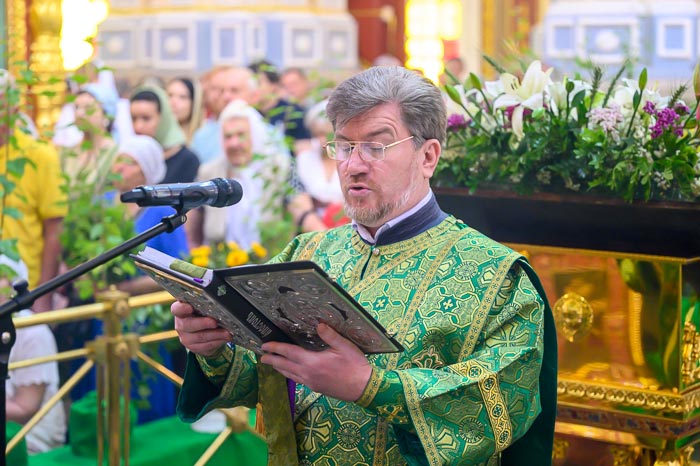
The Apostolic reading at the Liturgy contains the account of the very event of the descent of the Holy Spirit (Acts of the Holy Apostles, chapter 2, verses 1–11). The Gospel reading (John 7:37–52; 8:12) contains the Savior’s promise of the outpouring of the grace of the Holy Spirit upon all those who “thirst spiritually,” a grace which, through those who receive it and believe in the Lord Jesus Christ, is to be poured forth upon the whole world.
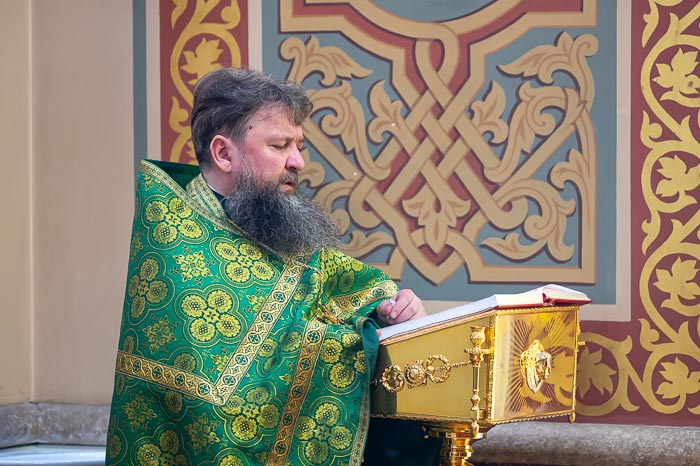
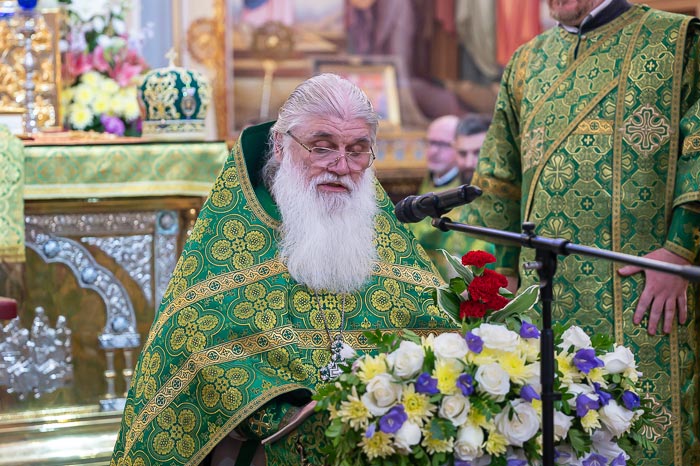
The sermon following the Communion verse was delivered by Archimandrite Joseph (Yeremenko).
A great number of communicants approached the Holy Mysteries of Christ.
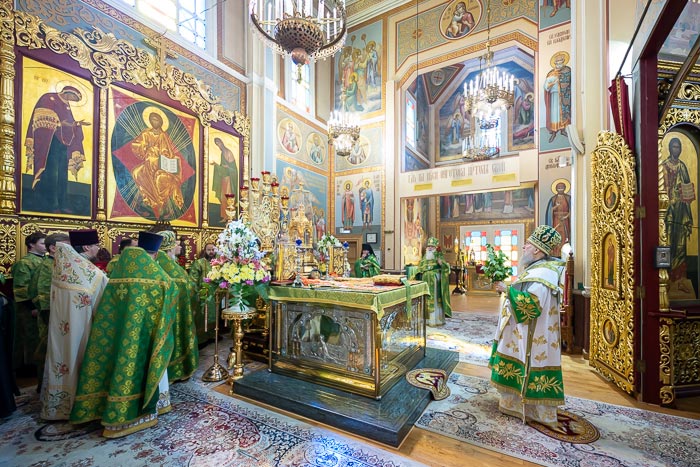
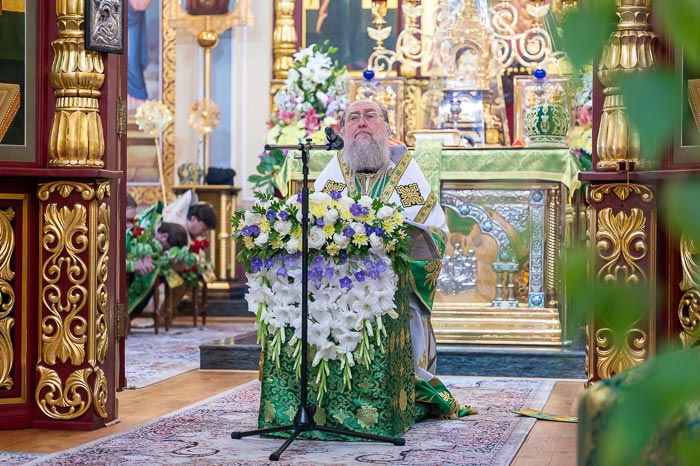
Following the conclusion of the Divine Liturgy, Metropolitan Alexander presided over the Great Vespers with the reading of the kneeling prayers of St. Basil the Great.
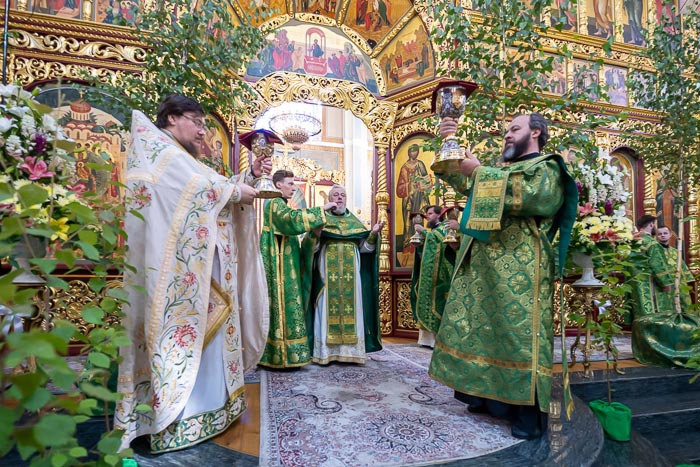
For prayerful veneration, clergy brought forth from the altar to the center of the church a reliquary containing an ancient biblical holy object – a portion of the Mamre Oak.
At the beginning of Vespers, the prayer to the Holy Spirit, O Heavenly King, was sung by all the faithful. According to the liturgical Typikon, special petitions are added to the usual supplications of the Great Litany, including invocations “for the people here present and awaiting the grace of the Holy Spirit,” “for those bowing their hearts before the Lord and bending their knees,” and others. The Great Prokeimenon was chanted: “Who is so great a God as our God? Thou art the God who workest wonders.”
The principal characteristic of the Great Vespers of Holy Pentecost is the reading of the kneeling prayers composed in the fourth century by St. Basil the Great.
In the first prayer, offered to God the Father, the faithful confess their sins and ask forgiveness and gracious heavenly assistance against the snares of the enemy. In the second, the faithful pray for the gift of the Holy Spirit, who instructs and strengthens them in keeping the commandments of God for the attainment of blessed life. In the third prayer, addressed to the Son of God, who has “fulfilled the whole dispensation (economy) of the salvation of the human race,” the Church prays for the repose of “our departed fathers and brethren.” This prayer contains petitions “for those held in Hades” and that the Lord may grant them rest “in a place of light, a place of verdure, a place of refreshment.”
The festal Vespers concludes with the special dismissal: “He who emptied Himself from the Father’s and divine bosom and descended from Heaven to earth…” In its opening phrase, remarkable for its theological richness, all the saving acts of the Lord are glorified, beginning with the Incarnation and concluding with the Crucifixion and the sending down of the Holy Spirit upon the Apostles.
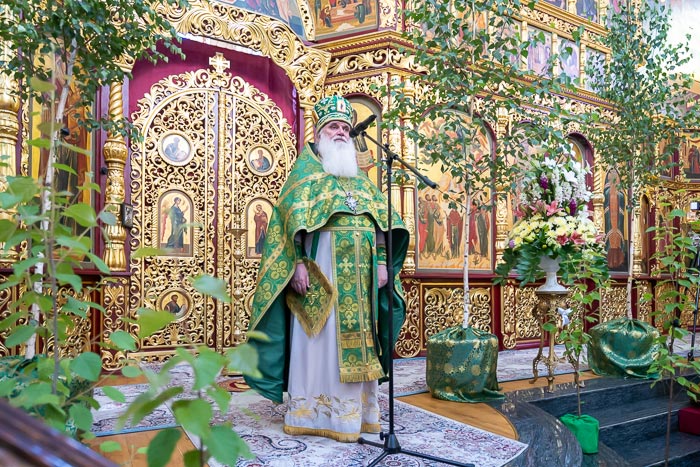
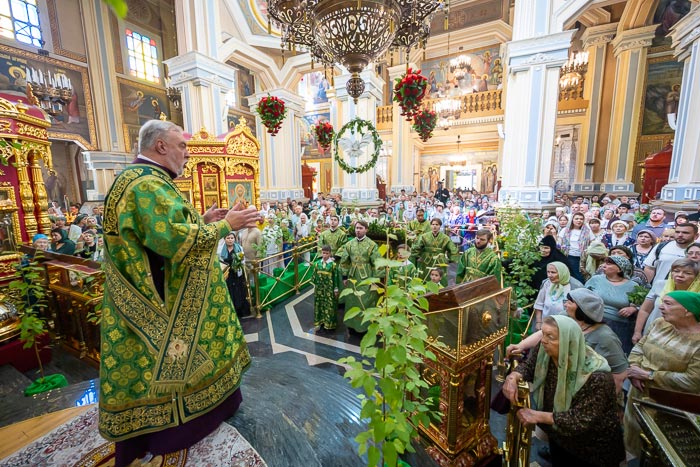
After the proclamation of Many Years to His Holiness Patriarch Kirill of Moscow and All Rus’, to the hierarchs of the Kazakhstan Metropolitan District, to the President, authorities, armed forces, and all the people of Kazakhstan, Metropolitan Alexander addressed those gathered with a sermon.
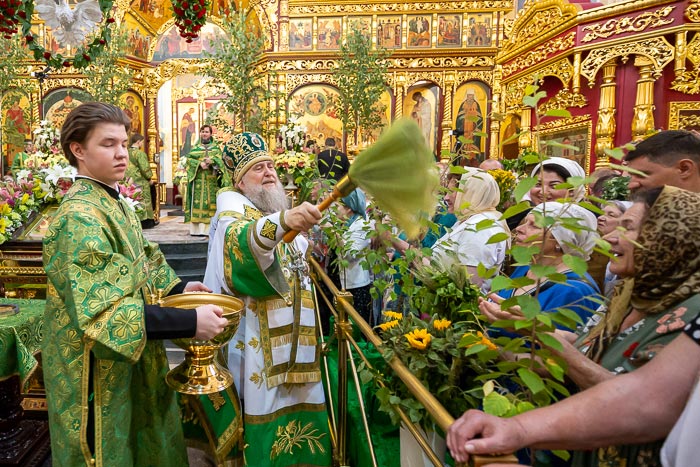
According to an ancient custom, dating back to Old Testament times, the church was adorned for Pentecost with branches of trees, plants, and flowers. Throughout the divine services, clergy and parishioners held flowers and branches in their hands, symbolizing the mysterious renewal of human souls through the power of the Holy Spirit.
The hierarch sprinkled the faithful with holy water.
A live broadcast of the Divine Liturgy was transmitted on the Proobraz YouTube channel through the initiative and support of the public foundation ELEOS-MEIRIM (President – V.M. Kapsamun).
Video coverage of the divine service was carried out by the television studio of the Kazakhstan Metropolitan District Semirechye (Director – V.L. Posadneva, Honored Worker of Culture; cameraman – A. Schmidt); photographic coverage was provided by A. Khalin, сотрудник информационного отдела Metropolitan District and the Eleos-Meirim Foundation.
“Holy Trinity Day, the feast of Pentecost, fills the hearts of the faithful with a special joy. We rejoice in the awareness that, in response to the prayers of the Church, Christ grants us from the Father the Holy Spirit. The Comforter, the Heavenly King, whom we invoke, accomplishes our divine adoption and brings us into unity with God the Father and the Lord Jesus Christ.
The Holy Spirit brings about the unity of Orthodox Christians, who become one body – the Church, the Kingdom of God in this world. With the coming of the Holy Spirit into the world, the mystery of the Life-Giving Trinity was partially revealed to humanity. Humanity came to know that Almighty God, the Creator of Heaven and earth, is one in His Essence, yet at the same time triune in Persons.
We believe in the One God – Father, Son, and Holy Spirit; we worship the Consubstantial and Indivisible Trinity. Yet our reason is incapable of fully comprehending this sacred and great truth.
The teacher of the Church, Blessed Augustine, in his outstanding spiritual work Confessions, recounts how he reflected deeply upon the Holy Trinity and ardently desired, yet could not comprehend, this mystery. One day he went for a walk and came to the seashore. There he saw a child who had dug a small pit in the sand and was carrying seawater to it by handfuls. Blessed Augustine watched the boy and finally asked what he was doing. The child replied that he had dug a hollow in the sand and was now carrying water in order to transfer the sea into his pit.
Blessed Augustine marveled at the child’s lack of understanding and exclaimed: ‘Do you not realize that it is impossible to pour the sea into a pit? It cannot contain the sea!’
Then the child, who in truth was an angel sent to instruct Augustine, answered: ‘And how do you expect to contain within your mind the ocean of the Holy Trinity?’”
From the homily of Metropolitan Alexander.
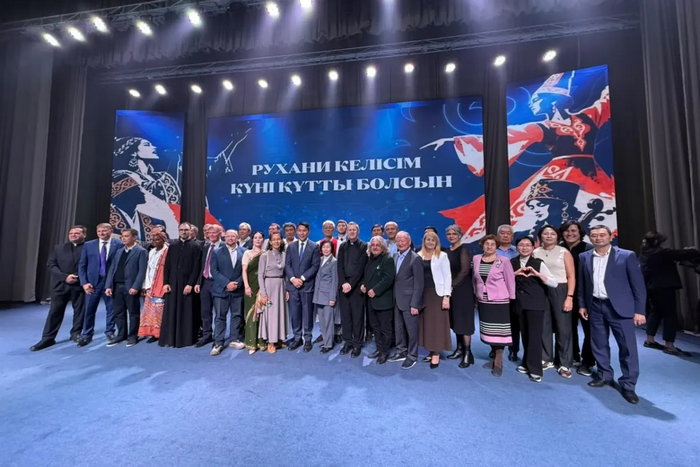
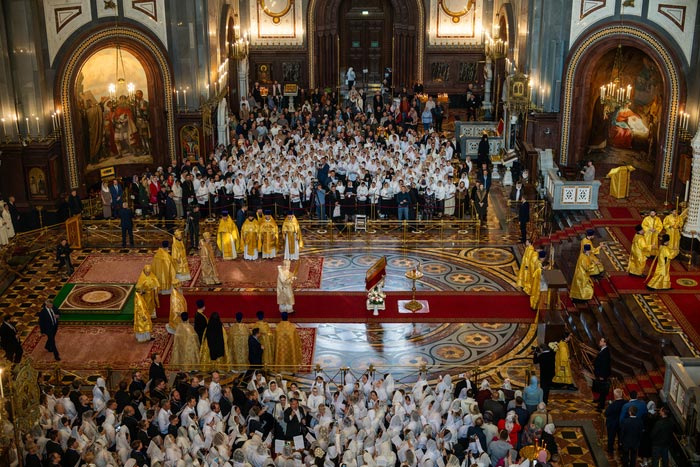
O. N. Ovchinnikov, choirmaster of the Kazakhstan Metropolitan District, took part in a patriarchal divine service held at the conclusion of the IV International Congress of Choirmasters and Singers of the Russian Orthodox Church.
More details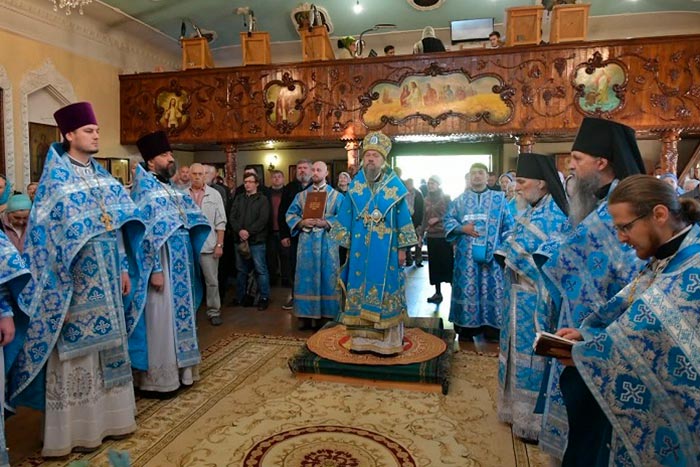
Patronal Feast Day at the Church of the Intercession in Almaty
More details




 Main
Main


Login or register, to write a comment!
Your comment has been successfully added and is currently being reviewed by the site administration