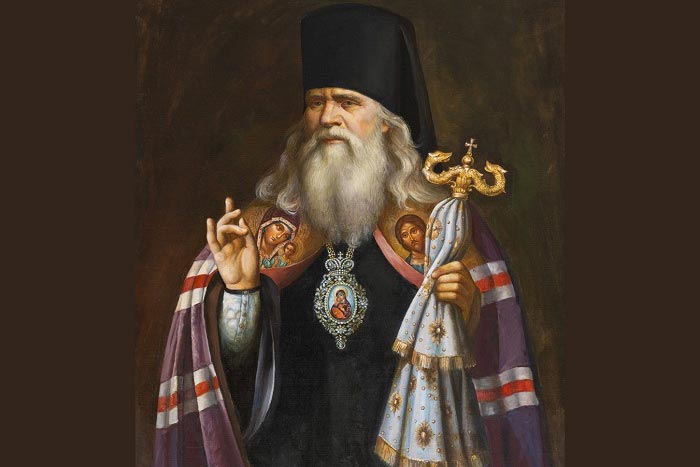
The report of the Head of the Orthodox Church of Kazakhstan, Metropolitan Alexander of Astana and Kazakhstan, delivered at the IV International Conference “Philosophy of Religion in the East and the West,” is entitled: “The First Turkestan Hierarch, Archbishop Sophronius (Sokolsky) (1872–1877), as a Researcher of the Religious Life of Christians in the Middle East.”
In 1872, Archimandrite Sophronius was elevated to the episcopate and appointed to the newly established Turkestan see in the city of Verny. To broad circles of society, both in his homeland and abroad, he was known, on the one hand, as an experienced church administrator and active pastor, and on the other – as one of the few individuals in Russia who possessed many years of direct experience in studying the Christian East. For the Russian Church of the mid-19th century, such a combination of scholarship, linguistic preparation, personal travel, and acquaintance with ancient Eastern communities was an exceptional phenomenon. Bishop Sophronius knew the East not from retellings or academic books, but from his own observations, from conversations with clergy and adherents of various confessions, from participation in the life of their communities, and from the search for and collection of documentary evidence.
The beginning of this path was laid in 1848, when, in the rank of archimandrite, the future hierarch Sophronius was appointed rector of the church of the Russian diplomatic mission in Constantinople. The very position of the Russian embassy church opened before him a wide range of opportunities: representatives of the Greek, Syrian, Armenian, Arab, and Western worlds gathered there; church news, manuscripts, and information about Patriarchates, monasteries, and theological schools were received there. Father Sophronius quickly entered this milieu and began to systematically collect materials on the contemporary state of the Eastern Churches. He maintained contacts with the theological school on the island of Halki, took interest in its curricula, faculty, and the level of theological education of the Greek clergy. He gathered information about dioceses and monasteries of the Patriarchate of Constantinople, collected patriarchal documents, liturgical manuscripts, and contemporary theological writings. In essence, this was systematic research work, rare for a church figure of that time.
Equally important was the fact that Saint Sophronius observed the living liturgical practice of the Greek Church. He attended patriarchal services and episcopal consecrations, noting differences between the Russian and Greek rites. His attention was drawn to details that another traveler might consider insignificant: the manner of proclaiming litanies, the participation of the people in liturgical singing, the absence of certain external episcopal distinctions in the presence of the Patriarch, the order of clergy processions, and particular gestures during prayers. These observations testify that Saint Sophronius was interested not only in dogmatics, but also in real ecclesiastical culture – that is, in how faith is embodied in ritual, discipline, and everyday practice.
Of particular importance was Sophronius’ pilgrimage to the Holy Land in the summer of 1850. He visited Beirut, Jerusalem, and the region of the Jordan River. His notes are valuable in that they combine a pious perception of holy sites with sober observation of contemporary reality. The pastor described roads, travel conditions, the behavior of pilgrims, the protection of caravans, the participation of Bedouins, and the attitudes of the local population toward sacred places. On the way to the Jordan, he observed Arab tribes, their appearance, armament, forms of communication, and their role in escorting travelers. For the Russian public of that time, such information was valuable because it presented not an imagined world of legends, but the real East of the 19th century.
However, Sophronius’ principal scholarly achievement was his study of the Syriac Jacobite Church, completed in 1852–1853 and later published in expanded form. For the mid-19th century, this was a work of exceptional level. In Russia, there were almost no specialists capable of describing Syrian Christian communities on the basis of direct sources. Bishop Sophronius built his work on a combination of written materials and live inquiry among bearers of the tradition.
His main interlocutors were the former Jacobite Nikolai Shamiya, who served as an intermediary on Eastern affairs at the Russian embassy, as well as two hierarchs of the Syriac Jacobite Church – Metropolitan Jacob of Damascus and Metropolitan Macarius of Amida. Archimandrite Sophronius held lengthy conversations with them, recorded their answers, repeatedly returned to the same questions, and verified the consistency of the information received. This is extremely important: he did not rely on a single account but effectively applied a method of cross-checking data. Moreover, he personally visited the Diyarbakir metochion in Constantinople, where he could directly observe Jacobite worship.
What new insights did he establish? First of all – the actual structure of Jacobite ecclesiastical life. In the Russian milieu, the Jacobites were poorly known and were usually counted among the vaguely defined “Eastern heretics.” Father Sophronius demonstrated that this was in fact a numerous and stable church community with its own hierarchy, patriarch, metropolitans, clergy, monasteries, and an established system of internal governance. He estimated the number of Jacobites at approximately 165,000–185,000 people, which for that time was a significant statistical clarification.
Secondly, he described the geography of their settlement: Syria, Mesopotamia, the regions of Diyarbakir, Mardin, and other areas of the Ottoman Empire. For the Russian reader, this dispelled the previous notion that such communities existed only in isolated monasteries. The future hierarch Sophronius showed the existence of a network of ecclesiastical centers connected with one another and preserving a common identity.
Thirdly, he thoroughly examined their liturgical life. He established the existence of sixteen liturgical orders in use among the Jacobites. The most widespread was the Liturgy of the Apostle James. Archimandrite Sophronius translated its text, described the structure of the service, the order of entrances, prayers, exclamations, and the actions of the clergy. He noted numerous differences from Byzantine liturgical practice – by his count, no fewer than twenty. This was the first systematic access for the Russian reader to a living Syriac liturgical tradition.
Fourthly, he identified features of Jacobite religious consciousness. According to his observations, they were distinguished by strong adherence to ancient tradition, respect for their hierarchs and liturgical authors, persistence in preserving the Syriac language in worship, and at the same time adaptation to a multilingual environment in everyday life. In other words, Sophronius demonstrated the mechanism of survival of a small confessional community: preservation of the sacred language and rite alongside practical flexibility.
He also noted the absence among the Jacobites of a uniform system for assigning liturgies to each day of the year in the Byzantine sense; there existed considerable diversity of rites depending on local circumstances. This observation remains important today, as it indicates a lower degree of centralization in liturgical life compared to the Greek and Russian traditions.
No less significant was the mission of the future Archbishop Sophronius in Transcaucasia in 1861–1862, when he was sent to study the situation of the Urmian Nestorians (Assyrians), who showed interest in rapprochement with Orthodoxy. Here too he acted as a researcher rather than an office-based functionary. Over several months, he gathered data on 89 villages in Persia and Turkey, numbering about 4,050 households and up to 20,000 inhabitants. He recorded the presence of six bishops, forty-eight priests, and forty-seven churches. For the Russian government and the Holy Synod, these were the first such systematic data.
Yet quantitative data were only part of the work. Sophronius studied the religious life of the Nestorians. He established that they preserved seven sacraments, baptized infants by triple immersion, practiced chrismation, maintained regular worship, and possessed a stable church organization. Thus, the widespread notion that this community was in a state of near total decline was refuted.
At the same time, he noted the continuing dogmatic differences. The Nestorians did not fully accept Orthodox veneration of the Mother of God, were cautious toward icons, and had a limited understanding of the invocation of saints. Therefore, Bishop Sophronius presented the situation without embellishment: ecclesiastical rapprochement was possible, but required serious catechesis, clergy education, and gradual effort.
Particularly far-sighted was his practical conclusion: mission among Eastern Christians should be based not on the suppression of local tradition, but on respect for language, rite, and the historical memory of the people. The later Urmian Mission of the late 19th century effectively followed this path, confirming the correctness of his approach.
It should be emphasized that Archbishop Sophronius’ methods were notably ahead of his time. He compared written sources with oral testimonies, observed worship directly, collected statistics, compared the answers of different informants, and paid attention to language, gesture, everyday practice, and the internal self-understanding of communities. That is, he engaged not only in ecclesiastical polemics but also in what would now be called field religious studies and church ethnography.
Thus, when in 1872 Saint Sophronius arrived in Verny to organize the Turkestan Diocese among a multilingual and multi-confessional population, he came as a man who already understood the East from within. He knew how religious minorities lived, how faith was preserved in the midst of a different culture, and how church rite, language, and cultural memory were interconnected. His works on the Jacobites and Nestorians were not an incidental episode of scholarship, but a preparation for ministry in a region where such experience was of particular value. For this reason, the first Turkestan hierarch came to the expanses of the Great Steppe not only as a bishop, but also as a mature expert on the Christian East.





 Main
Main


Login or register, to write a comment!
Your comment has been successfully added and is currently being reviewed by the site administration